- What makes Cloudenergy batteries different from lead-acid?
- They use lithium iron phosphate cells, so they weigh far less than equivalent lead-acid banks and deliver usable capacity down to near-full discharge. The built-in BMS handles overcharge, over-discharge and short-circuit protection. Cycle life is rated in the thousands of cycles rather than the hundreds typical of flooded lead-acid.
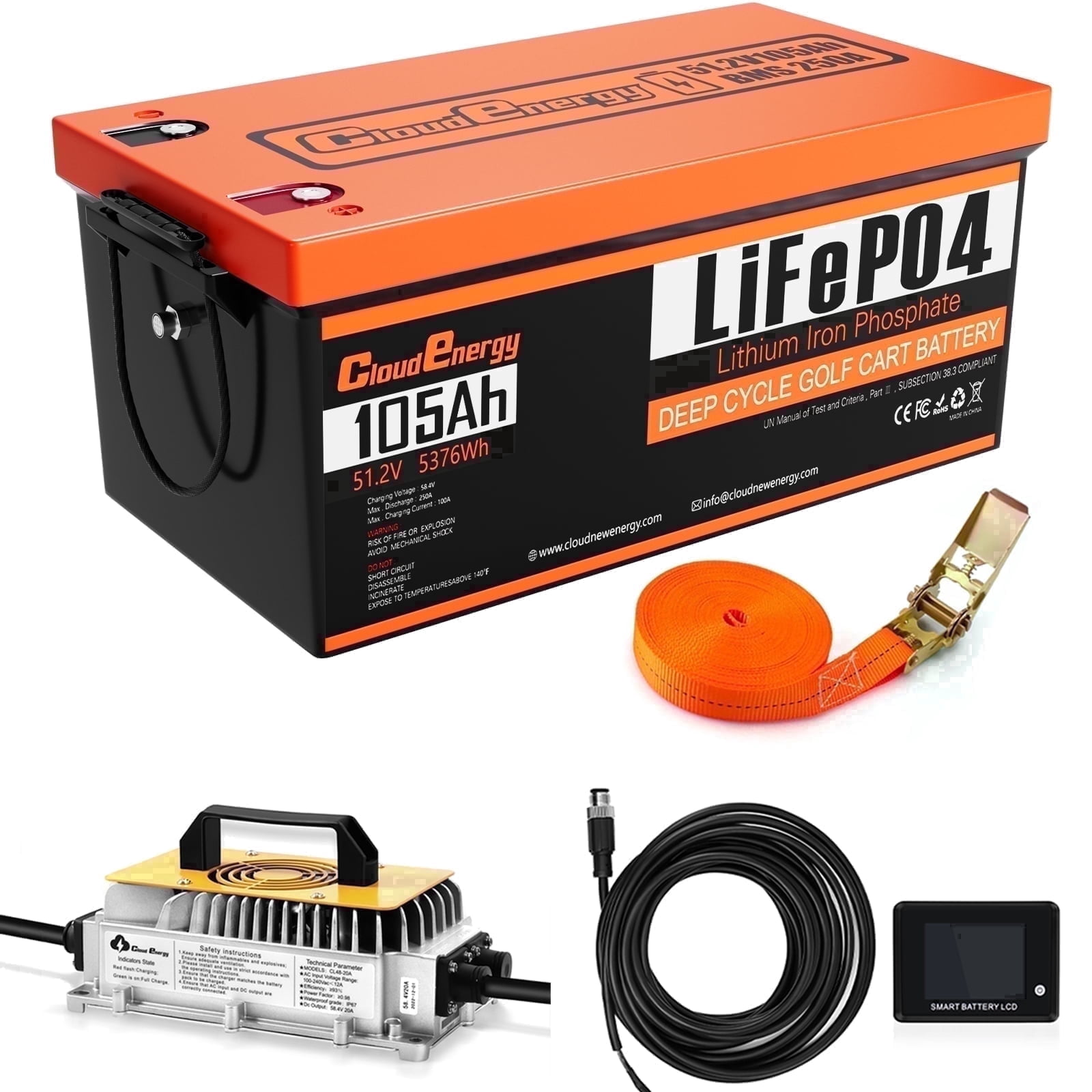
- Does the 48 V golf cart battery work with my cart?
- It is a 51.2 V nominal pack aimed at 48 V carts, and it includes a charger and Bluetooth monitoring on the smart version. Check your cart's motor and controller voltage rating and the physical tray dimensions before fitting. Some carts need a controller setting change for lithium profiles.
- Can I use the 12 V 100 Ah battery in series or parallel?
- Yes, the 12 V 100 Ah unit supports series and parallel configurations for higher voltage or capacity, within the limits Cloudenergy states for the model. Keep batteries of the same age and state of charge together, and use a balancer when wiring in series. Confirm the exact series limit for your batch before building a bank.
- What warranty does Cloudenergy offer?
- Cloudenergy typically covers its LiFePO4 batteries with a multi-year limited warranty, longer on the golf cart packs than on the 12 V units. Terms cover manufacturing defects and BMS faults, not damage from incorrect charging or water ingress. Keep the order record, since claims are handled through the seller.
- How do I charge and store a Cloudenergy battery?
- Use a lithium-profile charger matched to the pack voltage; the golf cart pack ships with its own charger. For storage, leave the battery at partial charge rather than full or empty, and keep it above freezing when charging. The BMS will disconnect the cells before deep discharge damages them.
- Are there Cloudenergy discount codes?
- Deal.ai checks what Cloudenergy products actually cost at every store, so a real markdown shows on this page as a deal as soon as it starts, and each product's page has its price history to tell a sale from its usual price.