- What makes the Dyness 300W power station different from other small power stations?
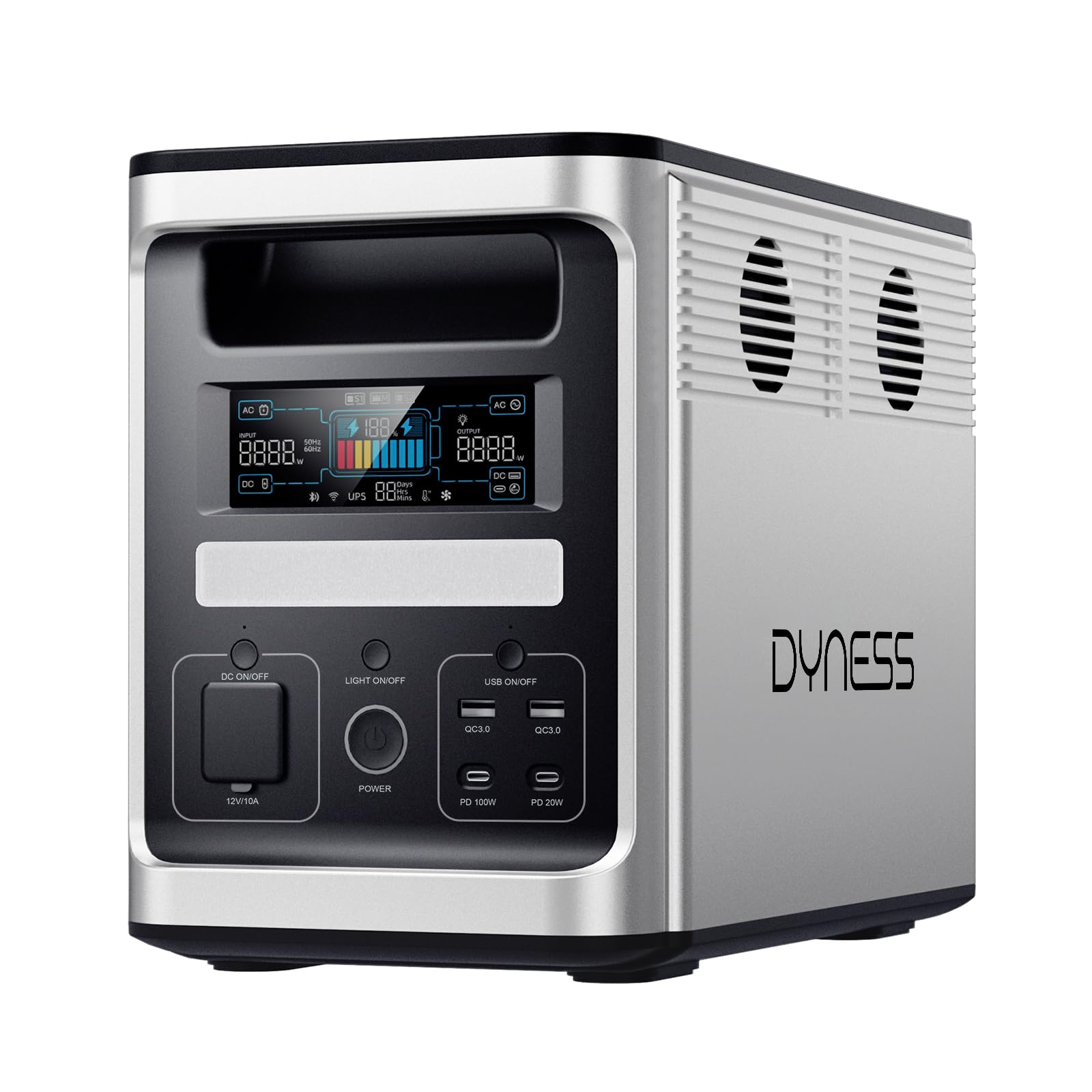
- It uses a lithium iron phosphate battery rather than the more common lithium-ion NMC cells. LFP tolerates more charge cycles and holds up better under heat, which matters for a unit kept charged for emergencies. The trade-off is weight and size for the same capacity.
- What can the Dyness 300W actually run?
- The 300W inverter suits phones, laptops, lights, a router, a fan and a small TV. Anything with a heating element or a compressor, such as a kettle, hair dryer or full-size fridge, draws far more than 300W and will trip the unit. Check each device's rated watts before you plug it in.
- How do you recharge the Dyness 256Wh power station?
- It charges from a wall outlet, from a car's 12V socket, and from a solar panel through its DC input. Wall charging is the fastest route; solar depends on panel wattage and sunlight. Recharging from empty takes a few hours on AC.
- Does the Dyness portable power station have a warranty?
- Dyness backs its battery products with a limited warranty, and portable power stations typically carry a shorter term than its home storage units. Confirm the term and what it covers with the seller before ordering, since support runs through the seller or Dyness directly.
- Can the Dyness 300W be used as a UPS or pass-through power source?
- It can keep a router or laptop running through a short outage, but it is not a whole-home backup and its 300W ceiling limits what it can carry. For continuous pass-through use, check the unit's own documentation, as behavior varies by model.
- Are there Dyness discount codes?
- Deal.ai checks what Dyness products actually cost at every store, so a real markdown shows on this page as a deal as soon as it starts, and each product's page has its price history to tell a sale from its usual price.