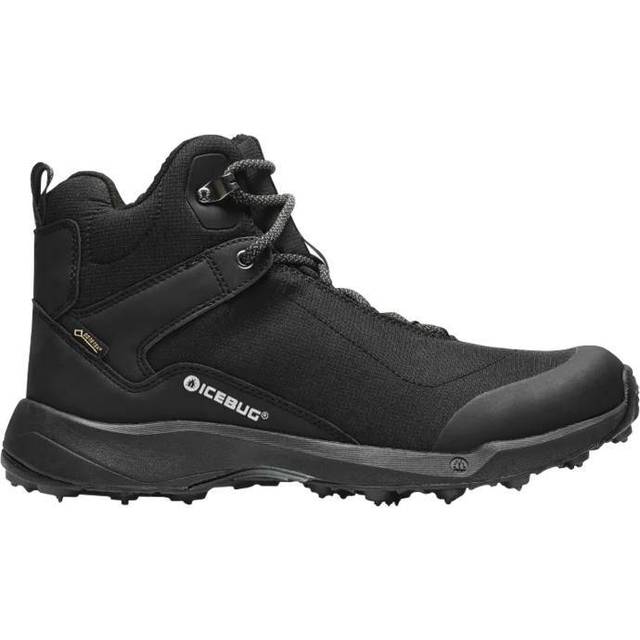
- What makes Icebug shoes different from ordinary winter boots?
- Most Icebug models have fixed steel studs or carbide tips molded into the outsole, so grip is built in rather than added with straps or overshoes. The BUGrip line uses dynamic studs that retract slightly on hard pavement and bite on ice. The trade-off is that studs wear down with heavy pavement use and can scratch indoor floors.
- When does Icebug release new models and clear out old ones?
- Icebug follows a Nordic seasonal cycle: winter boots and studded shoes arrive in autumn, and lighter trail and walking models come in spring. End-of-season transitions are the usual time for older models to be phased out. Check the price history on each listing to see how a model's price has moved over past seasons.
- Which Icebug models are best for running on ice versus everyday walking?
- The BUGrip running shoes, such as the Oribi and DTS variants, are built for winter road and trail running with a flexible studded sole. For daily walking and commuting, the Michelin outsole models and the insulated boots offer more cushioning and warmth. Runners usually want the lighter studded models; walkers benefit from the extra insulation.
- Does Icebug offer a warranty?
- Icebug covers manufacturing defects under its own warranty policy, handled through the retailer where you bought the shoes. Normal wear on the studs, which are a consumable part, is generally not covered. Keep your receipt, since claims usually go through the store first.
- Can Icebug shoes be returned if the fit is wrong?
- Return terms are set by the individual store, not by Icebug, so check the retailer's policy before ordering. Sizing runs close to standard European sizes, but winter boots often need room for thicker socks. Try studded shoes indoors on a hard floor first, since studs can mark surfaces.
- Are there Icebug discount codes?
- Deal.ai checks what Icebug products actually cost at every store, so a real markdown shows on this page as a deal as soon as it starts, and each product's page has its price history to tell a sale from its usual price.