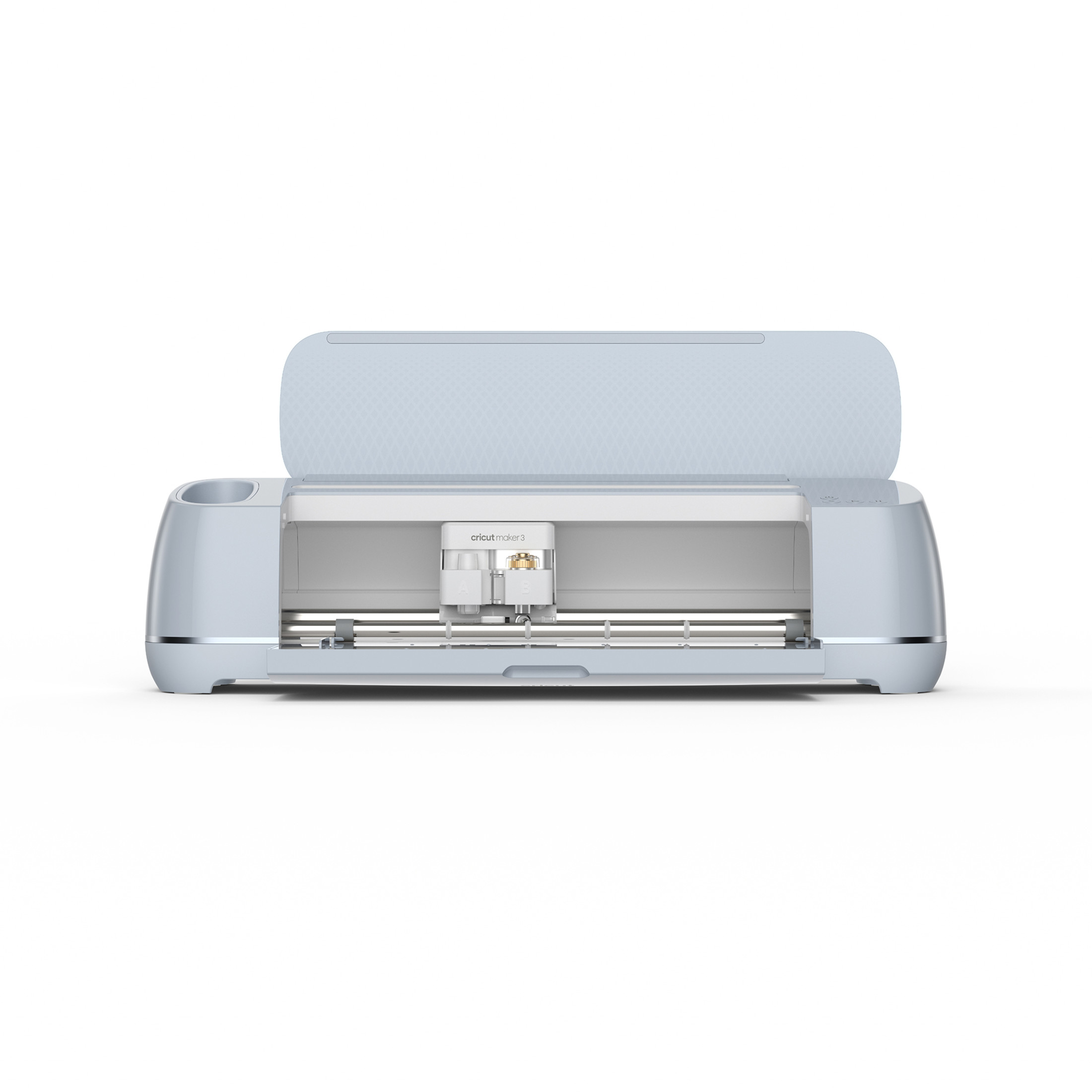
- Is the Maker 3 worth the extra over the original Maker?
- Yes if you cut long projects or want mat-free Smart Materials. The Maker 3 is up to 2X faster and cuts up to 12 feet in one pass. If you mostly cut small paper and fabric pieces, the original Maker does the same job for less.
- Which is better for cutting fabric?
- Both handle fabric with the Rotary Blade. The Maker 3 adds speed and longer cuts, which helps on big fabric projects. The original Maker is fine for small pieces.
- Which lasts longer?
- Both are built for repeated home use and use replaceable blades. The Maker 3 is the newer model, so parts and tool support should last longer. Blade life depends on what you cut.
- Can the Maker 3 cut thicker materials?
- Yes. With the Knife Blade it cuts materials up to 2.4 mm thick, such as matboard and leather. The original Maker also handles thick material but with less force and speed.
- Do I need a mat with the Maker 3?
- Only for non-Smart Materials. Smart Materials feed through without a mat, which saves time on long cuts. Standard vinyl and paper still need a mat.
- Which is better for beginners?
- Both work with the free Design Space app and need no design experience. The Maker 3 is easier for long projects because it skips the mat. The original Maker is cheaper to start with.
- What comes in the Maker 3 box?
- The machine, a Premium Fine-Point Blade with housing, a welcome card, a USB cable, a power adapter and a free trial subscription to Cricut Access for new subscribers. Materials and extra tools are not included.
- Does the Maker 3 cut metal?
- Yes. Cricut lists metal among its compatible materials, and the machine works with 13 tools for engraving and debossing. The original Maker's listed materials stop at paper, vinyl, fabric, leather and matboard.
- What do owners say about the Maker 3?
- Shoppers describe it as fast, powerful and versatile, easy to set up and fun across many projects, with sturdy hardware. Some criticism covers a squeaking noise while cutting and engraving quality that can decline after the first attempt.