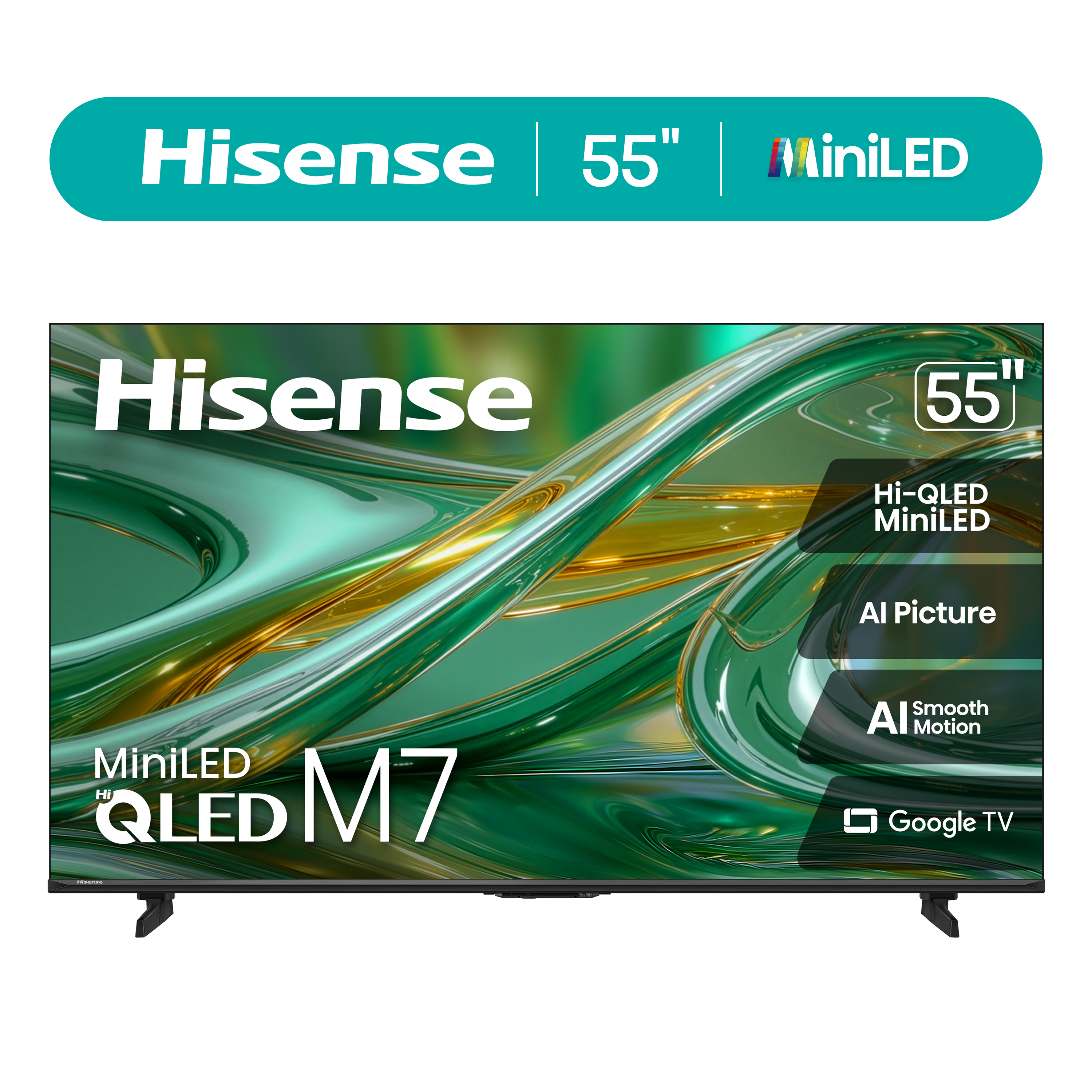
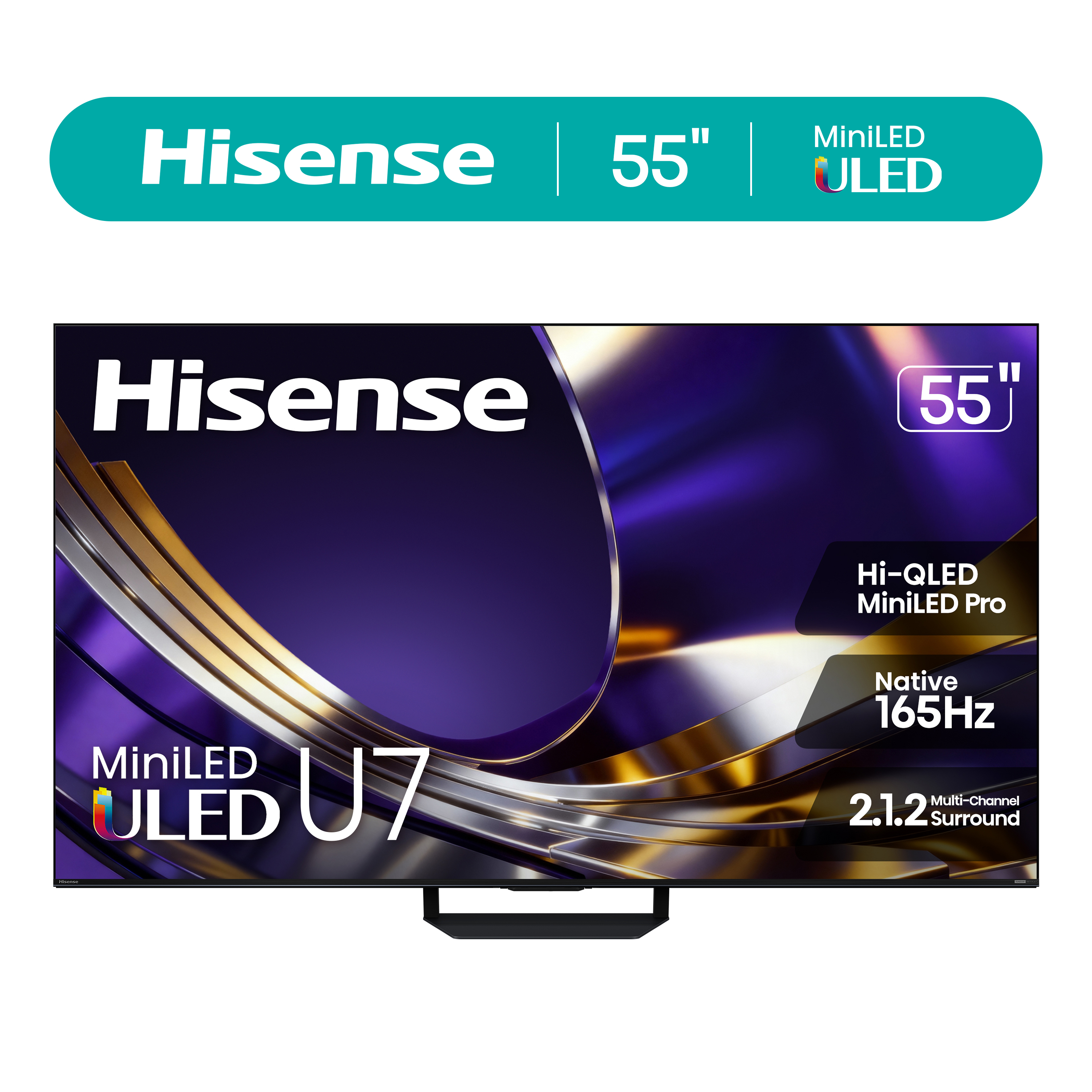
- Which is better for PS5 or Xbox gaming?
- The U7. It has a native 165Hz panel, VRR from 48 to 165Hz, Game Booster 330 and four HDMI 2.1 ports. The M7 is 60Hz with no VRR listed.
- Is the U7 worth the extra money over the M7?
- Yes if you watch HDR movies, sports or game. 3000 nits against 1000 and 3000 dimming zones against an unstated count is a visible jump. For casual daytime viewing the M7 is enough.
- Which has better sound without a soundbar?
- The U7. Its 50W 2.1.2 system with a subwoofer is tuned by Devialet. The M7 runs 10W x 2 plus a 20W subwoofer with Dolby Atmos, which is decent but smaller.
- Do both run Google TV?
- Yes. Both use Google TV with voice control. The U7 adds Gemini AI for content discovery; the M7 uses Google Assistant.
- Which lasts longer?
- Neither maker publishes a lifespan figure, so there is no honest answer. The U7's higher rating count and 4.8 score are the only reliability signal here.
- Which is better in a bright room?
- The U7, at up to 3000 nits it holds up against window light and glare. The M7's 1000 nits is fine for a normal room but washes out more in direct sun.
- How do the two compare on color accuracy?
- The U7 carries Pantone Validated color and its Hi-View AI Engine Pro tunes color, contrast and clarity in real time. The M7 is a QLED set with AI 4K upscaling but no color certification stated.
- Do both support Dolby Vision?
- Yes. The M7 lists Dolby Vision, Dolby Vision IQ and Dolby Vision Gaming. The U7 lists Dolby Vision and Dolby Vision IQ, and adds HLG on top of HDR10 and HDR10+.
- Which is better for a dark room?
- The U7, because up to 3000 dimming zones control black levels far more tightly than the M7's unstated Mini Array count. Turn its brightness down at night, since 3000 nits is harsh in the dark.
- Does either screen handle reflections?
- The U7 does. It has an anti-reflection, glare-free dual-layer screen treatment. The M7's listing says nothing about reflection handling.