
Korg i3 61-Key Music Workstation Keyboard vs Roland FP-10
Buy the Roland FP-10 if you want to learn or play piano: 88 hammer-action keys, SuperNATURAL sound and a sustain pedal included. Buy the Korg i3 if you want to build arrangements and play many sounds, and can add speakers or headphones. The FP-10 has been listed at $379.00 and $499.99, while the i3's price was not given here, so compare current store prices on this page before deciding.
Ask our shopping agent
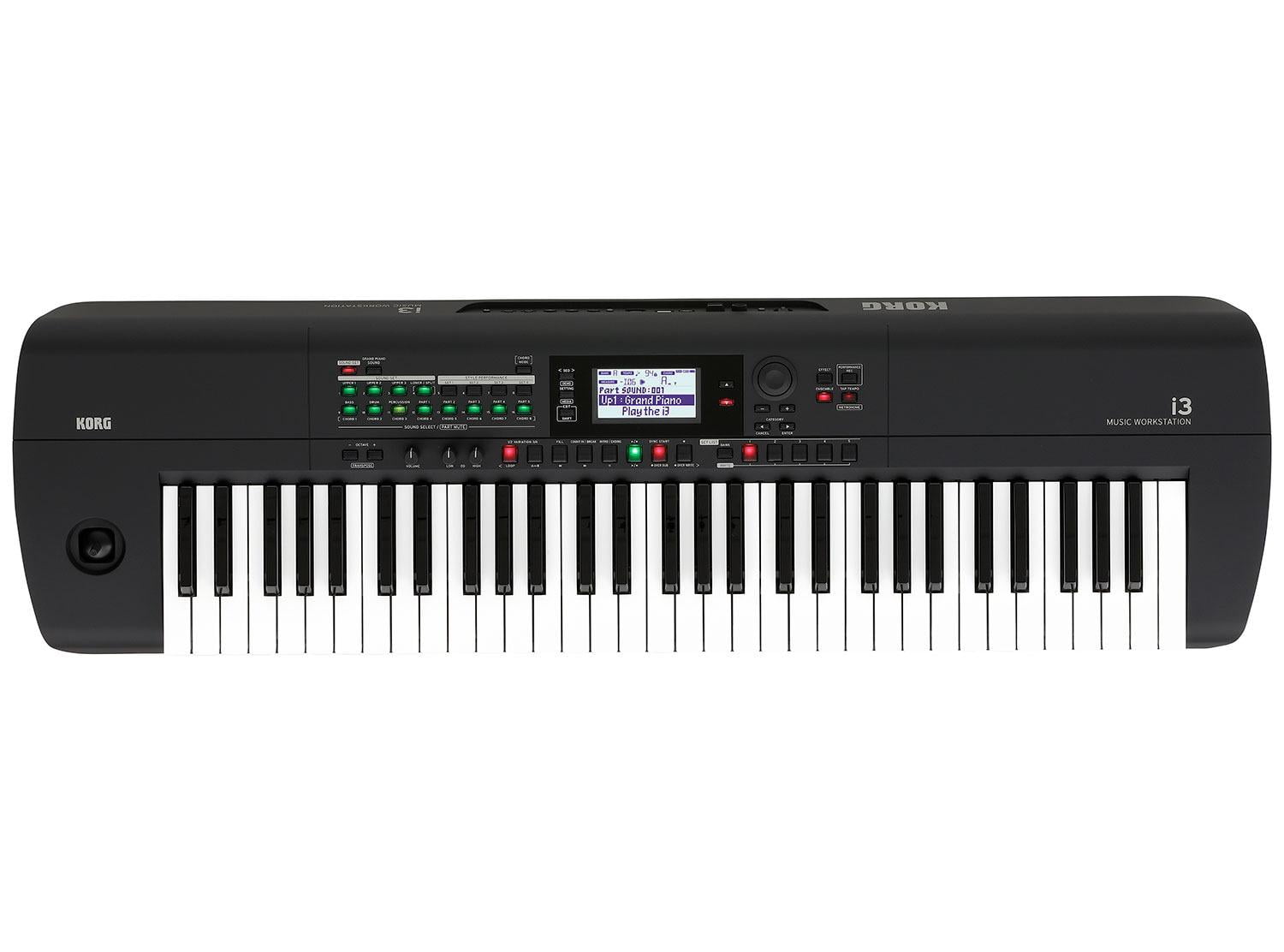
Korg i3 61-Key Music Workstation Keyboard
Choose the Korg i3 if you want a workstation and arranger with 200 presets, an LCD screen, MIDI I/O and battery power for playing away from an outlet.
- Full arranger and workstation features for building songs
- 200 presets plus an LCD screen for navigating them
- Battery power makes it portable
- Light at 12.76 lb
- MIDI I/O and two USB ports for connecting gear
- No built-in speakers, so you need headphones or an amp
- 61 keys limit classical piano repertoire
- No pedal included
What separates them
| Korg i3 61-Key Music Workstation Keyboard | Roland FP-10 | |
|---|---|---|
| Number of keys | 61 full-size, velocity-sensing keys (5 octaves) | 88 full-size keys (full piano range) |
| Key action | Weighted keys, velocity-sensing | PHA-4 Standard hammer action with escapement, Ivory Feel |
| Sound engine and polyphony | Workstation sound engine, 200 presets | SuperNATURAL engine, 96-voice polyphony, 15 tones |
| Built-in speakers | None | None |
| Included pedal | 0 pedals | 1 sustain pedal included |
| Power | AC adaptor or battery | AC adaptor |
| Connectivity | 2 USB ports, MIDI in/out (6 I/O), LCD screen | Basic connections, no arranger or MIDI I/O listed |
Price history
- Korg i3 61-Key Music Workstation Keyboard: lowest $799.99 on Oct 28.
- Roland FP-10: lowest $379.00 on Oct 28.
Specs compared
| Spec | Korg i3 61-Key Music Workstation Keyboard | Roland FP-10 |
|---|---|---|
| Number of keys | 61 | 88 |
| Number of pedals | 0 | 1 (included) |
| Brand | Korg | — |
| Electronic piano type | Stage Pianos | — |
| Musical keyboard features | Weighted Keys | — |
| Integrated spkr | N | — |
| Skill level | Beginner | — |
| Accessories | AC Adaptor | — |
| Color | Black | — |
| Power type | Battery | — |
| Has lcd screen |
What reviewers say
Korg i3 61-Key Music Workstation Keyboard
Owner feedback on the i3 is mixed but leans positive for beginners. People like the arranger features and portability for the price, while experienced players find the sounds and key action basic.
- Easy entry into arranger playing
- Light and battery-friendly
- Good value for a first workstation
- Key action feels light and plasticky
- Sounds are dated next to newer boards
- No speakers means extra gear to buy
Roland FP-10
Owners and reviewers consistently rate the FP-10 as the best-feeling keyboard in its price class, with the PHA-4 action singled out as the reason to choose it over lighter rivals. Complaints center on the limited sounds and the low polyphony rather than the keys or piano tone.
Questions and answers
- Which is better for a beginner learning piano?
- The Roland FP-10. Its 88 hammer-action keys and included sustain pedal let you build real piano technique from day one. The Korg i3's 61 synth-style keys and arranger features suit songwriting more than piano lessons.
- Does either have built-in speakers?
- No. Both need headphones, an amp or powered speakers to make sound. Budget for that on top of the keyboard price.
- Which is better for making beats and arrangements?
- The Korg i3. It has 200 presets, an LCD screen, MIDI I/O and arranger features. The FP-10 is a piano first, with 15 tones and no arranger.
- Is the FP-10 worth the extra over the i3?
- Compare the current prices on this page first. If you want piano feel and a pedal, the FP-10 is the one to pay for. If you want sounds and arranging, the i3 gives more of that.
- Which is easier to carry around?
- The Korg i3 at 12.76 lb, and it can run on batteries. The FP-10 weighs about 27 lb and needs mains power.
- Can I practice piano on the Korg i3's 61 keys?
- Only up to a point. Much classical repertoire needs the full 88 keys, and the i3's keys are not a hammer action.
More comparisons
- Roland FP-30X vs Roland FP-10
- Yamaha P-45 88-Key Digital Piano vs Roland FP-10
- Yamaha PSR-E383 61-Key Touch-Sensitive Portable Keyboard vs Roland FP-10
- Roland FP-30X vs Korg i3 61-Key Music Workstation Keyboard
- Yamaha PSR-E383 61-Key Touch-Sensitive Portable Keyboard vs Korg i3 61-Key Music Workstation Keyboard