StoreDeal.ai store
Shop
  • Deals
  • Deal checker
  • Black Friday
  • Buying guides
  • Brands
  • Stores
Travel
  • Flight deals
  • Hotel deals
Company
  • Research
  • Press
  • Use in AI assistants
  • Contact
  • deal.ai apps
Black Friday 2026
  • Walmart
  • Best Buy
  • Target
  • TVs
  • Laptops
  • Headphones
  • Apple
  • Gaming
  • Vacuums
  • Kitchen
  • Toys
  • Smartwatches
  • Tablets
  • Furniture
  • Mattresses
© Deal.ai Inc.·2222 Ponce de Leon Blvd, Miami, FL 33134·support@deal.ai
TermsPrivacy
Deal.ai › Compare

MSI GeForce RTX 5070 Ti 16G Shadow 3X OC vs Sapphire Pulse RX 9070 16GB

Buy the MSI RTX 5070 Ti for ray tracing, DLSS upscaling and frame generation, and content creation. Buy the Sapphire RX 9070 for raster gaming value and a simpler two-8-pin power setup. The MSI is the stronger all-round card; the Sapphire holds its own in plain raster and runs on a lower 220 W board power. Owners of the MSI praise the triple-fan cooling and quiet operation; Pulse buyers like the compact size and stable drivers.

  • Choose the MSI RTX 5070 Ti if you want the best ray tracing, DLSS and AI-assisted features, or you edit video and render 3D.
  • Choose the Sapphire Pulse RX 9070 if you mostly play raster games at 1440p and 4K and want a card that runs on two standard 8-pin cables.

Prices

  • MSI GeForce RTX 5070 Ti 16G Shadow 3X OC: $1,207.18 at FireOwls Corporation (last seen Nov 26)
  • Sapphire Pulse RX 9070 16GB: $779.99 at Newegg (checked today)
  • Difference: the Sapphire Pulse RX 9070 16GB is $427.19 cheaper than the MSI GeForce RTX 5070 Ti 16G Shadow 3X OC at the latest prices (Nov 26 and Nov 27)
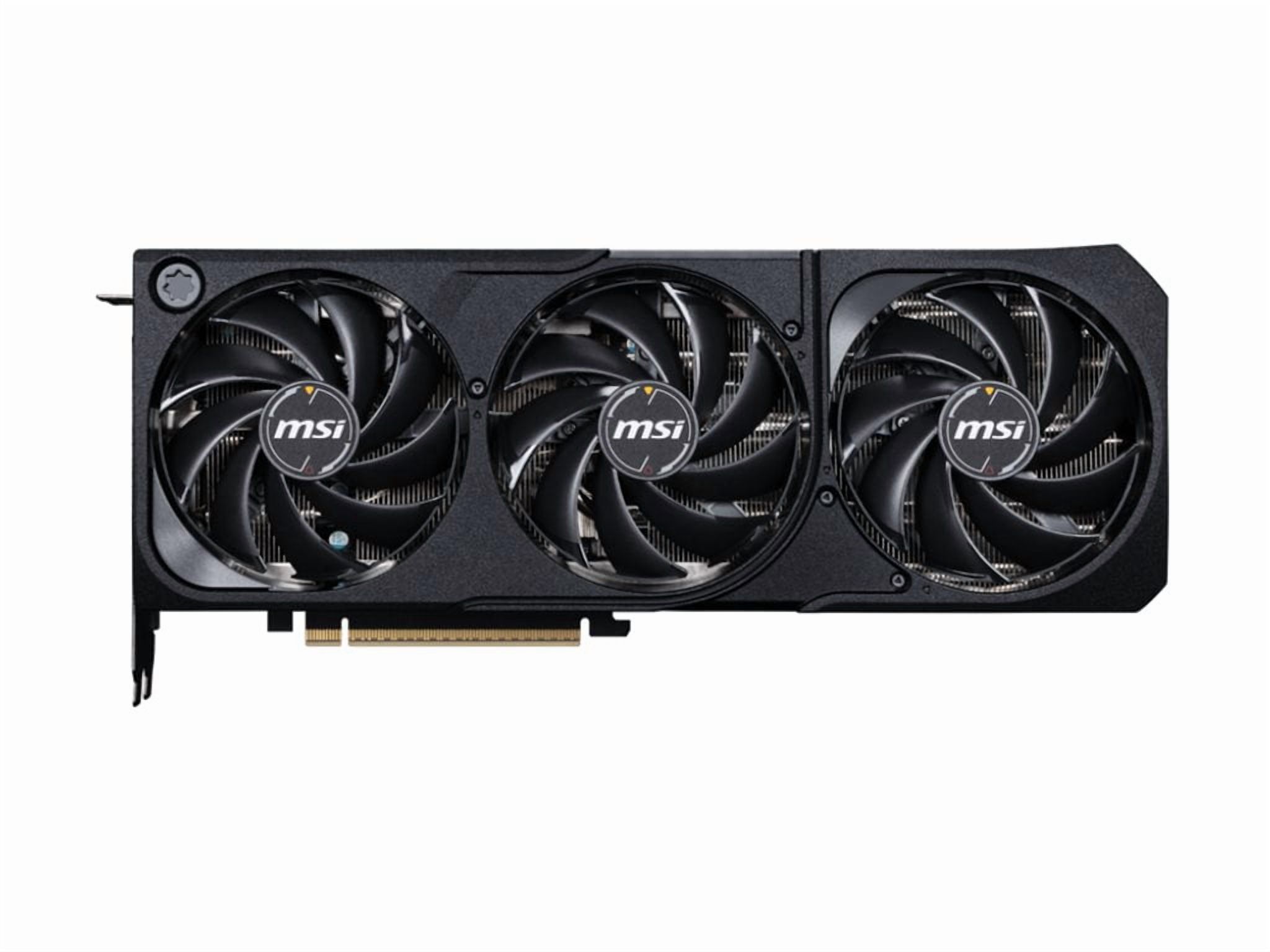
MSI
MSI GeForce RTX 5070 Ti 16G SHADOW 3X OC Graphics card

MSI GeForce RTX 5070 Ti 16G Shadow 3X OC

MSI GeForce RTX 5070 Ti 16G SHADOW 3X OC Graphics card

4.5(33 ratings)
$1,207.18at FireOwls CorporationChecked 19 h ago
See all prices and details
Visit FireOwls Corporation
Pros
  • DLSS 4 and frame generation lead in supported games
  • Best-in-class ray tracing for the tier
  • 16 GB GDDR7 with high bandwidth
  • Triple-fan cooler keeps clocks up and noise down
  • Strong for video editing, 3D rendering and AI workloads
Cons
  • Needs a 16-pin power cable and a larger PSU
  • Longer card may not fit small cases
  • Costs more than the AMD rival
  • Raster gains over the previous generation are modest
Sapphire
Sapphire Pulse AMD Radeon RX 9070 16GB

Sapphire Pulse RX 9070 16GB

Sapphire Pulse AMD Radeon RX 9070 16GB

$779.99at NeweggChecked 2 h ago
See all prices and details
Visit Newegg

Store links may earn us a commission. Price via Klarna.

Pros
  • Solid 1440p and 4K raster performance
  • Two 8-pin connectors suit older PSUs
  • Lower 220 W board power
  • FSR 4 upscaling is a real step up
  • Two HDMI 2.1b ports help multi-display setups
Cons
  • Ray tracing trails the RTX 5070 Ti
  • FSR 4 support is narrower than DLSS
  • GDDR6 instead of GDDR7
  • Weaker for CUDA-based creative apps

What separates them

MSI GeForce RTX 5070 Ti 16G Shadow 3X OCSapphire Pulse RX 9070 16GB
GPU architectureNVIDIA Blackwell with dedicated RT and tensor coresAMD RDNA 4 with second-gen ray accelerators
Ray tracingStronger RT throughput and DLSS Ray ReconstructionImproved but still behind NVIDIA in heavy RT titles
UpscalingDLSS 4 with multi-frame generationFSR 4 with machine-learning upscaling
Memory16 GB GDDR7 on a 256-bit bus16 GB GDDR6 on a 256-bit bus, 645 GB/s
Power connectorSingle 16-pin (12V-2x6)Two 8-pin PCIe
Board powerHigher draw, needs a beefier PSU220 W TDP, easier on the PSU
Display outputs3x DisplayPort 2.1a, 1x HDMI 2.1b2x DisplayPort 2.1a, 2x HDMI 2.1b
Cooling and sizeTriple-fan SHADOW 3X, about 11.9 in longDual-fan Pulse, shorter ATX card

Price history

$1,169.99$779.99
Nov 9Nov 27
  • MSI GeForce RTX 5070 Ti 16G Shadow 3X OC: lowest $999.00 on Nov 25 at Jawa.gg; $1,169.99 on Nov 26.
  • Sapphire Pulse RX 9070 16GB: lowest $779.99 on Nov 25 at Newegg; $779.99 on Nov 27.

Prices at every store

MSI GeForce RTX 5070 Ti 16G Shadow 3X OC

  • FireOwls CorporationNew

    In stockReturn policy

    $1,207.18Checked 19 h ago
    Visit FireOwls Corporation
  • Alpena Computer RepairNew

    In stock

    $1,295.00Checked Nov 25
    Visit Alpena Computer Repair
  • Altex Computers & ElectronicsNew

    In stockReturn policy

    $1,449.99Checked 19 h ago
    Visit Altex Computers & Electronics
  • SHI InternationalNew

    In stock

    $1,608.00Checked Nov 25
    Visit SHI International

Also available at

  • Zoro.comCheck price at Zoro.com
  • WalmartCheck price at Walmart
  • Star PromotionCheck price at Star Promotion
All 15 stores and price history →

Sapphire Pulse RX 9070 16GB

  • NeweggNew

    In stock

    $779.99Free shippingChecked 2 h ago
    Visit Newegg
  • Best BuyNew

    In stock

    $826.99Free shippingChecked 2 h ago
    Visit Best Buy
  • eBayNew

    In stockSold by memoryc_deals

    $1,312.75Free shippingChecked 2 h ago
    Visit eBay
  • AmazonNew

    Availability unknown

    As an Amazon Associate, Deal.ai earns from qualifying purchases.

    $1,242.99Free shippingChecked 2 h ago
    Visit Amazon

Store links may earn us a commission. Some prices via Klarna.

All 6 stores and price history →

Specs compared

SpecMSI GeForce RTX 5070 Ti 16G Shadow 3X OCSapphire Pulse RX 9070 16GB
Memory TypeGDDR7GDDR6
Memory Size16 GB16 GB
ManufacturerMSIAMD
Video Memory TypeGDDR7GDDR6
Form FactorFull-Height/Half-Length (FH/HL), Full-Height/Fu…ATX
Clock Speed2.4 gigahertz (Base Clock Frequency)2070 MHz (Game Clock)
Boost Clock Speed2482 MHz2520 MHz
Thermal Design Power (TDP)300 W220W
Supports OverclockingYesYes
GPU Video Memory TypeGDDR7GDDR6
GPU Memory Clock Speed28 Gbps20 Gbps Effective
GPU Memory Interface256-bit256-Bit
Show all 40 specsShow fewer specs
SpecMSI GeForce RTX 5070 Ti 16G Shadow 3X OCSapphire Pulse RX 9070 16GB
Expansion Slot TypePCI Express 5.0PCI Express 5.0 x16
PCIe SlotsPCI Express 5.0PCI Express 5.0 x16
Discrete GraphicsYesYes
Integrated GraphicsNoNo
GPU TypeDedicatedDedicated
Output Resolution7680 x 43204K
Ray Tracing SupportYesYes
VR ReadyYesYes
Max Monitors Supported44
color

What reviewers say

MSI GeForce RTX 5070 Ti 16G Shadow 3X OC

  • 4.5 / 533 ratings

Owners rate it highly, praising the quiet triple-fan cooler, the factory overclock and the 16 GB of GDDR7 for 1440p and 4K play. Complaints are mostly about its size and the 16-pin power requirement.

What people mention
  • CoolingPraisedOwners say the three fans keep temperatures and noise low during long sessions.
  • PerformancePraisedBuyers report smooth 1440p and playable 4K frame rates with DLSS enabled.
  • SizeCriticisedSome say the card is longer and thicker than expected and tight in mid-tower cases.
  • PowerMixedThe single 16-pin connector is tidy, but owners note it demands a modern PSU or the included adapter.

Sapphire Pulse RX 9070 16GB

Owners of Sapphire Pulse cards generally praise the quiet cooler and solid build, and the RX 9070 is well received as a strong 1440p card with useful 16 GB of memory. Criticism centers on ray tracing and upscaling versus Nvidia, and on the lack of a factory overclock.

What people mention
  • Cooler noisePraisedOwners say the Pulse fans stay quiet even during long gaming sessions.
  • Ray tracingCriticisedReviewers note ray-traced performance falls short of Nvidia's competing cards.
  • UpscalingCriticisedFSR is seen as less sharp and stable than DLSS at the same settings.
  • MemoryPraisedThe 16 GB buffer is called enough for 1440p and most 4K gaming.

Questions and answers

Which is better for 4K gaming?
Both handle 4K, but the MSI RTX 5070 Ti pulls ahead in ray-traced games and with DLSS frame generation. The Sapphire RX 9070 is close in plain raster and cheaper to run.
Which has better ray tracing?
The MSI. NVIDIA's RT cores and DLSS Ray Reconstruction give it a clear edge in demanding RT titles. The RX 9070 improves on past AMD cards but still trails.
Do I need a new power supply for either?
The Sapphire uses two 8-pin cables at 220 W, so most 650 W units are fine. The MSI uses a single 16-pin connector and draws more, so check your PSU has the cable and enough headroom.
Is the MSI worth stepping up to over the Sapphire?
Yes if you use ray tracing, DLSS or creative apps. If you mostly play raster games, the Sapphire covers the same 16 GB and 256-bit bus for less.
Which is better for video editing and 3D rendering?
The MSI. CUDA and OptiX support in most editors and renderers favors NVIDIA, and the GDDR7 memory helps with large scenes.
Which card is quieter?
The MSI's triple-fan SHADOW 3X cooler runs quieter under load in owner reports. The Sapphire Pulse is compact but its dual fans spin up more in long sessions.

Ask our shopping agent

It checks today's price at every store, compares the alternatives and answers in about a minute.

Enter to send, Shift+Enter for a new line

More comparisons

  • MSI GeForce RTX 5070 Ti 16G SHADOW 3X OC Graphics card vs RX 9070
  • MSI GeForce RTX 5070 Ti Gaming Trio OC HDMI 3xDP 16GB vs MSI GeForce RTX 5070 Ti 16G SHADOW 3X OC Graphics card
  • RX 9070 vs Sapphire Pulse AMD Radeon RX 9070 16GB
Multicolor
—
sizeOne Size—
ConnectionsHDMI—
Factory OverclockedYes—
Nvidia SLINo—
CoolingActive—
Low ProfileNo—
DirectX12.0—
PCIe Version5.0—
OpenGL4.6—
No. of Fans3—
Nvidia GeForceGeForce RTX 5070—
Memory Bus256-Bit—
AMD CrossfireNo—
No. of HDMI (pcs)1—
TypeNvidia GeForce—
NVLinkNo—
Power Connector1x16-pin—
LHR (Lite Hash Rate)No—