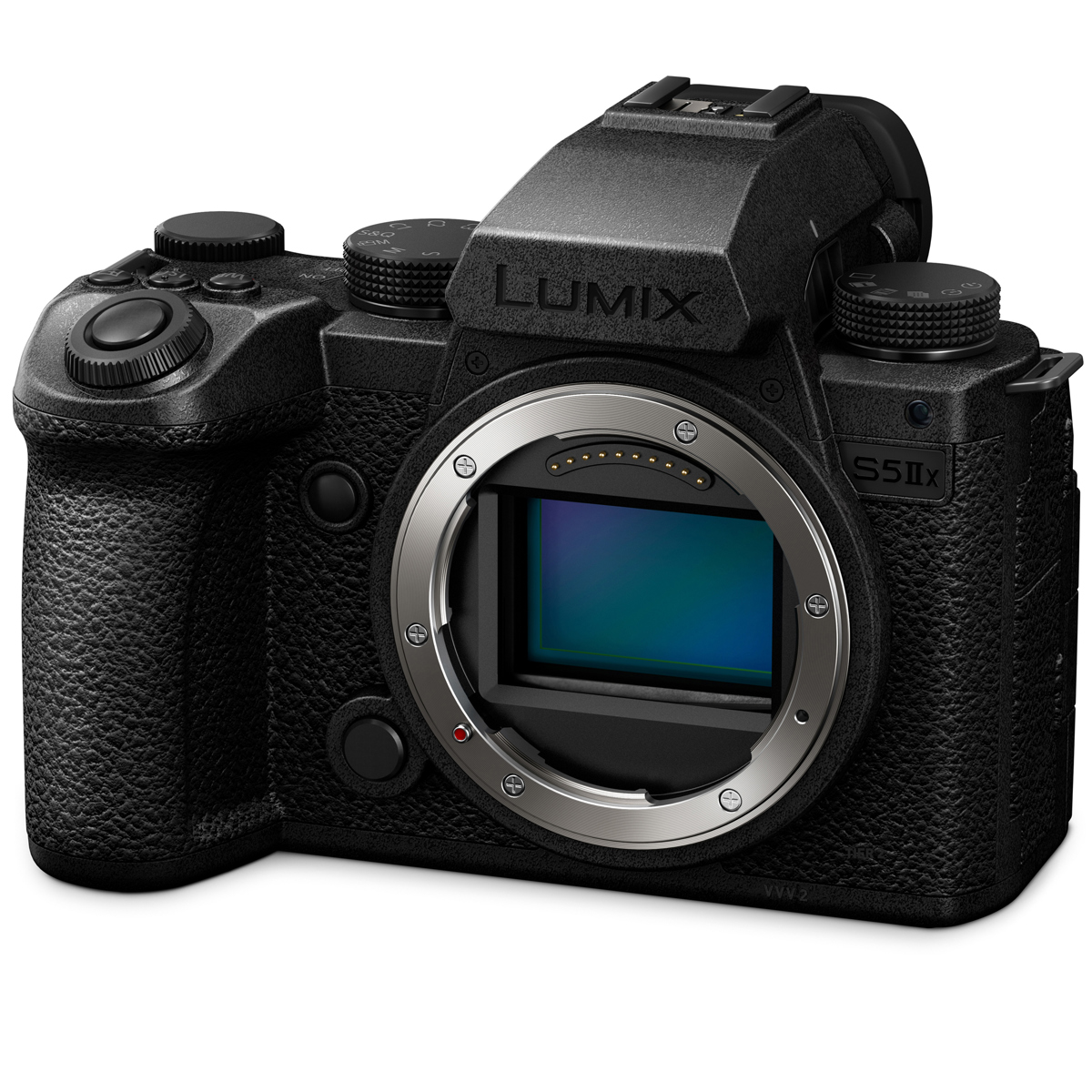
- Which is better for low-light video?
- The Lumix S5IIX. Its full-frame sensor gathers more light and its in-body stabilization lets you shoot at slower shutter speeds handheld. The Sony's APS-C sensor needs more light or a faster lens.
- Is the Sony ZV-E10 II good enough for professional work?
- It handles client social video and YouTube well with 4K/60p 10-bit and proxy recording. It lacks ProRes, RAW output and in-body stabilization, so high-end commercial work favors the S5IIX.
- Which is better for vlogging?
- The Sony. It weighs about 377 g, has a flip-out screen that rotates to vertical, a built-in directional mic with windscreen and up to 195 minutes of recording per battery.
- Do either include a lens?
- No. Both are body-only listings, so budget for an L-mount lens for the Panasonic or an E-mount lens for the Sony.
- Which has better autofocus?
- They are close. The Sony's 759-point phase detection with Real Time Eye AF for humans, animals and birds is strong for tracking. The Panasonic's phase detection AF is a big step up from older Lumix models and holds its own.
- Is the Lumix S5IIX worth stepping up to?
- Yes if you need full-frame image quality, stabilization and internal ProRes. If you mostly shoot handheld social video, the Sony covers it with less weight.
- Which is better for live streaming?
- The Lumix S5IIX. It does wireless and wired IP streaming and its heat dispersion supports long sessions. The Sony's specs list no IP streaming.
- Does either have a built-in flash?
- The Sony ships with a detachable flash. The Lumix S5IIX has no flash.
- Which has the better viewfinder and screen for bright outdoor shooting?
- The Sony lists an LCD/OLED viewfinder and a touchscreen that flips out. The Lumix S5IIX has a 3 in screen with fixed orientation. Neither spec sheet details viewfinder resolution, so try both in hand before deciding.
- How do the two compare on color and creative controls?
- The Lumix S5IIX records 14+ stop V-Log/V-Gamut for grading. The Sony has Creative Looks and a Cinematic Vlog setting with S-Cinetone and adjustable Moods for finished-looking video straight from the camera.