- Which has better noise cancelling?
- The Liberty 4 Pro. It uses 7 sensors and adapts every 0.3 seconds, and Soundcore claims 3× stronger reduction for planes and trains. The AirPods 4 have solid ANC but are tuned for everyday city noise.
- Which lasts longer on a charge?
- The Liberty 4 Pro, at up to 10 hours per charge and 40 hours with the case. The AirPods 4 are rated around 5 hours with ANC on and 30 hours with the case.
- Which is better for running and workouts?
- The Liberty 4 Pro seals with silicone tips and is rated water-resistant for sports use. The AirPods 4 are IP54 and open-fit, so they resist sweat but sit looser in the ear.
- Do the AirPods 4 work with Android phones?
- They pair over Bluetooth and play audio, but Siri, spatial audio, automatic switching and audio sharing need Apple devices. The Liberty 4 Pro work the same way on Android and iPhone through the Soundcore app.
- Which has better call quality?
- The AirPods 4 lean on Voice Isolation and the H2 chip to cut background noise on calls. The Liberty 4 Pro use noise-cancelling microphones. Both are clear indoors; the AirPods 4 have the edge in windy or crowded places.
- Are the AirPods 4 worth stepping up to?
- They are worth it if you use Apple devices and want Siri, spatial audio and automatic switching. If you mainly want battery life and strong ANC, the Liberty 4 Pro gives you more of both.
- How do the two compare on sound quality?
- The Liberty 4 Pro use a 10.5mm bass driver, a titanium-coated tweeter and a digital crossover for a fuller low end. The AirPods 4 rely on the H2 chip and Adaptive EQ, which tunes output to your ear. Neither clearly beats the other; it comes down to whether you want more bass or Apple's tuning.
- What comes in the box?
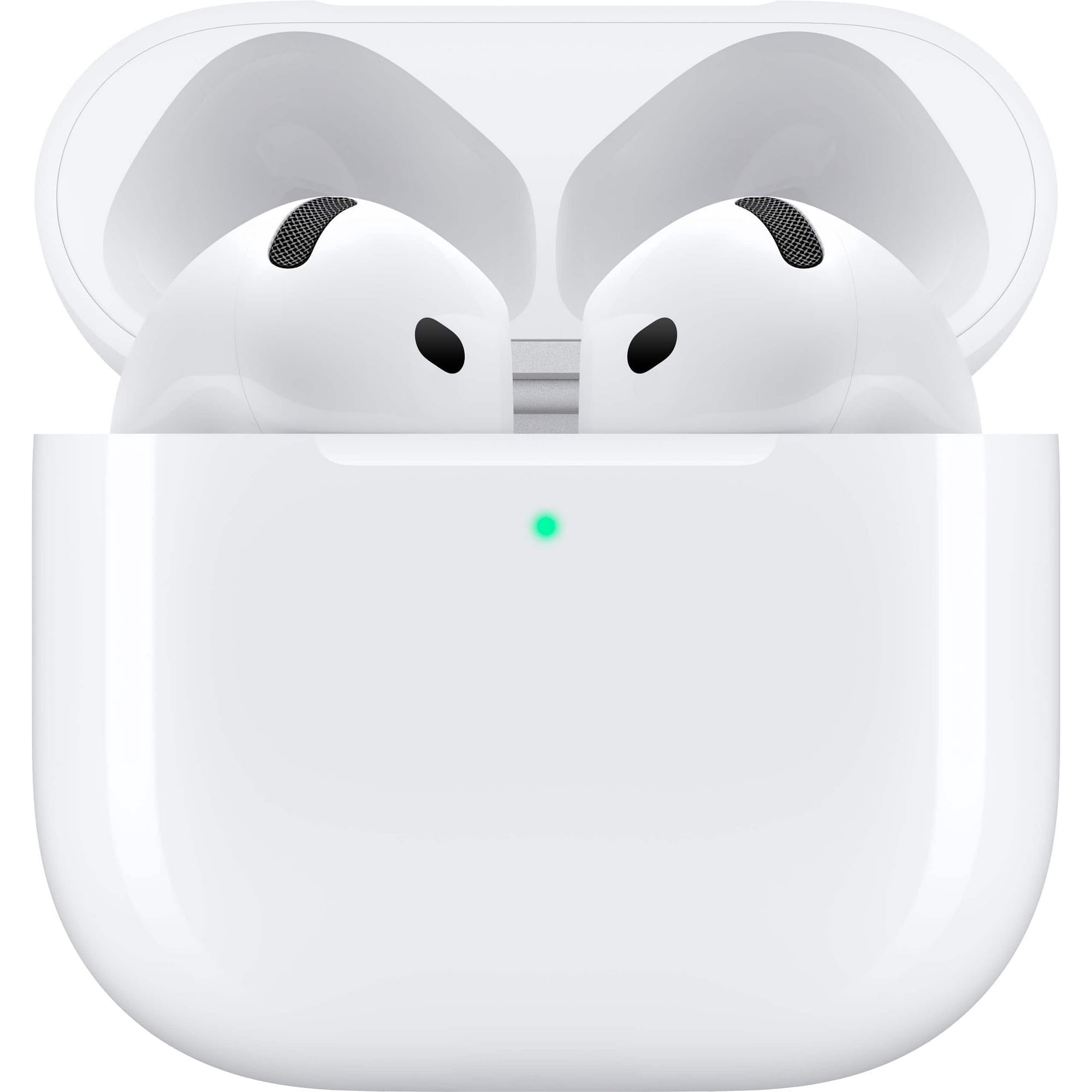
- The Liberty 4 Pro ship with a charging case that has a touch bar and display. The AirPods 4 ship with a USB-C charging case.
- How does the charging case compare?
- The Liberty 4 Pro case carries a touch bar and display for changing noise-cancelling levels with a swipe. The AirPods 4 case is more than 10 percent smaller than the previous one and charges over USB-C.