StoreDeal.ai store
Shop
  • Deals
  • Deal checker
  • Black Friday
  • Buying guides
  • Brands
  • Stores
Travel
  • Flight deals
  • Hotel deals
Company
  • Research
  • Press
  • Use in AI assistants
  • Contact
  • deal.ai apps
Black Friday 2026
  • Walmart
  • Best Buy
  • Target
  • TVs
  • Laptops
  • Headphones
  • Apple
  • Gaming
  • Vacuums
  • Kitchen
  • Toys
  • Smartwatches
  • Tablets
  • Furniture
  • Mattresses
© Deal.ai Inc.·2222 Ponce de Leon Blvd, Miami, FL 33134·support@deal.ai
TermsPrivacy
Deal.ai › Compare

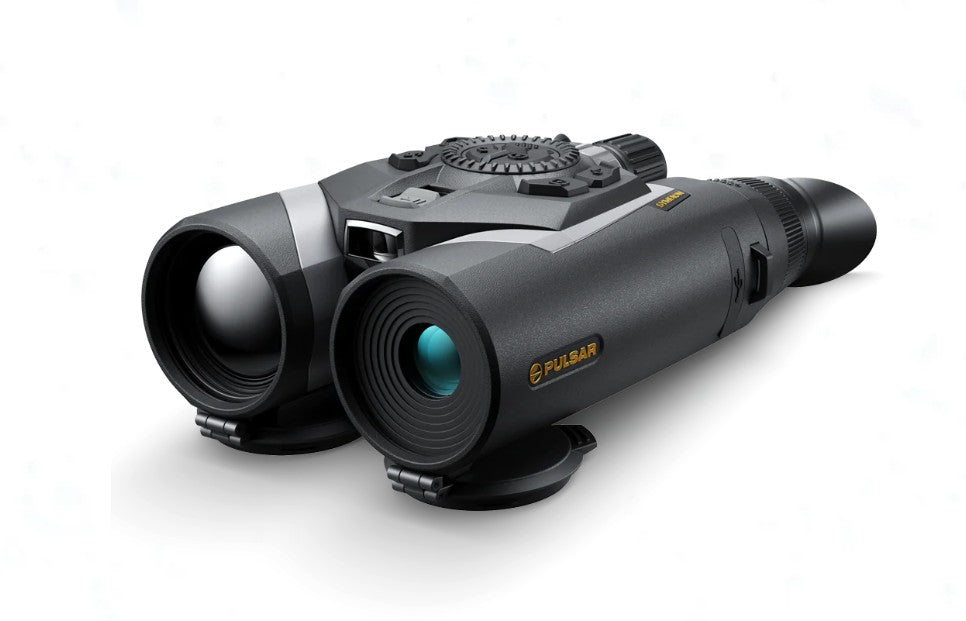
Thermal Master DV2 Thermal Binoculars vs Pulsar Symbion LRF DXT50

The Pulsar Symbion LRF DXT50 is the stronger instrument on every technical measure: a 1280×1024 thermal sensor, a 4K digital channel, a laser rangefinder and a 2,500-yard detection range. The Thermal Master DV2 is a simpler, lighter binocular built around a 256×192 sensor with 512×384 super resolution, a 5-inch touchscreen and 6 hours of runtime. Owners of the DV2 call it clear and compact for close-range night wildlife, but several say birds at distance push it to its limits. Buy the Pulsar for long-range work and identification; buy the DV2 for casual close-range spotting and a big, easy screen.

  • Choose the Thermal Master DV2 if you want a light, simple thermal binocular for close-range night wildlife and value a large touchscreen and long battery runtime.
  • Choose the Pulsar Symbion LRF DXT50 if you need long-range detection, a high-resolution thermal image, a digital day channel and a built-in rangefinder in one unit.

Prices

  • Thermal Master DV2 Thermal Binoculars: $499.00 at Amazon (last seen Nov 10)
  • Pulsar Symbion LRF DXT50: $7,999.97 at MidwayUSA (last seen Nov 13)
  • Difference: the Thermal Master DV2 Thermal Binoculars is $7,500.97 cheaper than the Pulsar Symbion LRF DXT50 at the latest prices (Nov 10 and Nov 13)
Thermal Master
Thermal Master DV2 Thermal Night Vision Binoculars

Thermal Master DV2 Thermal Binoculars

Thermal Master DV2 Thermal Night Vision Binoculars

4.6(61 ratings)
$499.00at AmazonChecked Nov 10
See all prices and details
Visit Amazon

Store links may earn us a commission. As an Amazon Associate, Deal.ai earns from qualifying purchases.

Pros
  • True two-eyepiece binocular body that is compact to carry
  • ≤15 mK NETD shows faint heat signatures clearly
  • Large 5-inch touchscreen works with gloves and wet hands
  • About 6 hours of runtime from a 5000mAh battery over USB-C
  • Owners praise clear images in complete darkness and smooth real-time viewing
Cons
  • Low thermal resolution for the class; birds at distance push its limits
  • No rangefinder and no digital day channel
  • AI features leave some owners unsure what they are for
  • Charger feels cheap and the box has Chinese writing on the front
  • Only one battery included despite cut-outs for two
Pulsar
Pulsar Symbion LRF DXT50

Pulsar Symbion LRF DXT50

5(3 ratings)
$7,999.97at MidwayUSAChecked Nov 13
See all prices and details
Visit MidwayUSA
Pros
  • 1280×1024 thermal sensor resolves fine heat detail at long range
  • 4K digital channel for daytime and low-light identification
  • Integrated rangefinder measures to about 1,600 yards
  • Image stabilization, AMOLED display and picture-in-picture
  • IP67 magnesium alloy body with Wi-Fi, recording and 64GB storage
Cons
  • Many controls take time to learn before dark use is smooth
  • Large 50mm objective adds bulk and weight
  • Eyecup protectors get in the way for some owners
  • Higher NETD than the DV2, so faint heat contrast is weaker

What separates them

Thermal Master DV2 Thermal BinocularsPulsar Symbion LRF DXT50
Thermal sensor resolution256×192 at 12µm, upscaled to 512×384 super resolution1280×1024 at 12µm native
Thermal detection rangeUp to 1,094 yards2,500 yards and beyond
Day/night digital channelThermal only4K 3840×2160 digital channel alongside thermal
Laser rangefinderNoneBuilt-in, measures to about 1,600 yards
Thermal sensitivity (NETD)≤15 mK, better contrast on faint heat<40 mK
Display5-inch 1280×720 touchscreen, glove and wet-hand use1920×1080 AMOLED, no touchscreen
Battery and runtime5000mAh, about 6 hours, USB-C chargingRechargeable AP5 pack, two included, dual-battery system
Build and weather sealingCompact body, operating range -4°F to 122°F, no IP rating listedMagnesium alloy housing, IP67 waterproof

Price history

  • Thermal Master DV2 Thermal Binoculars: lowest $499.00 on Nov 10 at Amazon.
  • Pulsar Symbion LRF DXT50: lowest $7,999.97 on Nov 13 at MidwayUSA.

Prices at every store

Thermal Master DV2 Thermal Binoculars

  • Thermal MasterNew

    In stockShips from Hong Kong SAR China · duties may applyReturn policy

    $449.10Checked Nov 8
    Visit Thermal Master
  • Newegg.comNew

    In stockSold by Benxu-Tech

    $648.00Free shippingChecked Nov 10
    Visit Newegg.com
  • AmazonNew

    Availability unknown

    As an Amazon Associate, Deal.ai earns from qualifying purchases.

    $499.00Free shippingChecked Nov 10
    Visit Amazon

Store links may earn us a commission.

All 3 stores and price history →

Pulsar Symbion LRF DXT50

  • MidwayUSANew

    In stock

    $7,999.97Free shippingChecked Nov 13
    Visit MidwayUSA
  • ScheelsNew

    In stock

    $7,999.97Free shippingChecked Nov 13
    Visit Scheels
  • Natchez Shooting & OutdoorNew

    In stock

    $7,999.97Free shippingChecked Nov 13
    Visit Natchez Shooting & Outdoor
  • eBayNew

    Availability unknownSold by euroopticltd

    $7,999.97Checked Nov 13
    Visit eBay

Store links may earn us a commission.

All 11 stores and price history →

Specs compared

SpecThermal Master DV2 Thermal BinocularsPulsar Symbion LRF DXT50
Thermal sensor resolution256 × 192 @12μm—
Super resolution512 × 384—
NETD≤15 mK—
Detection range1094 yards—
Screen5-inch 1280 × 720 HD touchscreen—
Frame rate50Hz—
Digital zoom8x—
Battery life6h, 5000mAh—
Storage32G—
Charging portUSB Type-C—
Field of view17.5°×13.1°—
Operating temperature-4°F~122°F (-20°C~50°C)—
Show all 18 specsShow fewer specs
SpecThermal Master DV2 Thermal BinocularsPulsar Symbion LRF DXT50
Sensors—1280 x 1024 12µm (thermal), 3840 x 2160 (digita…
Objective Lends Diameter—50mm
Magnification—2-14x (thermal), 6.5-26 (digital)
Thermal Detection Range—2,500 yards+
Rangefinder Max Range—1,600 yards
Battery—Rechargeable AP5 (2 included)

What reviewers say

Thermal Master DV2 Thermal Binoculars

  • 4.6 / 561 ratings

Owners rate it highly for clear heat signatures in complete darkness and smooth real-time viewing. It draws praise for nocturnal mammals and arboreal wildlife, but several say it struggles with birds at distance, especially in trees at dusk.

What people mention
  • Image clarityPraisedOwners call the heat signatures clear and accurate in complete darkness.
  • Bird performanceCriticisedBirds at distance push the sensor's limits, and finding them in trees at dusk is difficult.
  • Build and accessoriesMixedThe device feels impressive out of the box with a custom bag, but the charger feels cheap and only one battery ships despite two cut-outs.
  • Ease of usePraisedThe touchscreen works with gloves and wet hands, and live viewing is smooth.

Pulsar Symbion LRF DXT50

Owners rate the Symbion's thermal, digital and night performance as a major step up, with image stabilization and rugged build called out as strengths. Most criticism centers on the learning curve and fiddly eyecup protectors.

What people mention
  • Image qualityPraisedOwners call the thermal and digital channels a game-changing step up in detail.
  • Image stabilizationPraisedReviewers count stabilization as a real plus for long handheld observation.
  • ControlsCriticisedUsers say the many controls take a while to learn before dark use becomes easy.
  • Eyecup protectorsCriticisedSome owners find the eyecup protectors get in the way in the field.

Questions and answers

Which is better for birdwatching?
The Pulsar, by a wide margin. Its 1280×1024 sensor and 2–14x thermal zoom resolve birds at distance, while DV2 owners report that distant birds push the camera's limits.
Which has the longer detection range?
The Pulsar. It detects heat past 2,500 yards; the DV2 is rated to 1,094 yards.
Is the Pulsar worth stepping up to?
Yes if you need long-range detection, a rangefinder or daytime identification. The DV2 covers close-range night spotting with a simpler, lighter body and a touchscreen.
Which is easier to use in the dark?
The DV2, with its large touchscreen and few controls. Pulsar owners say the many controls take a while to learn before dark use feels intuitive.
Does either have a laser rangefinder?
Only the Pulsar. It measures to about 1,600 yards; the DV2 has none.
Which lasts longer on a charge?
The DV2 states about 6 hours from its 5000mAh battery. The Pulsar uses a dual-battery AP5 system with two packs included, so you can swap and keep going.

Ask our shopping agent

It checks today's price at every store, compares the alternatives and answers in about a minute.

Enter to send, Shift+Enter for a new line

More comparisons

  • Thermal Master DV2 Thermal Night Vision Binoculars vs AGM ObservIR 25-256 4.5-18x LRF Thermal Binoculars
  • Thermal Master DV2 Thermal Night Vision Binoculars vs Nocpix QUEST H35R Thermal Binocular
  • Thermal Master DV2 Thermal Night Vision Binoculars vs TS004
  • Thermal Master DV2 Thermal Night Vision Binoculars vs Nocpix Quest S50R RF Thermal Bino
  • Pulsar Symbion LRF DXT50 vs TS004
  • AGM ObservIR 25-256 4.5-18x LRF Thermal Binoculars vs Pulsar Symbion LRF DXT50
  • Nocpix Quest S50R RF Thermal Bino vs Pulsar Symbion LRF DXT50

Buying guides that pick them

  • Best thermal imaging binoculars