StoreDeal.ai store
Shop
  • Deals
  • Deal checker
  • Black Friday
  • Buying guides
  • Brands
  • Stores
Travel
  • Flight deals
  • Hotel deals
Company
  • Research
  • Press
  • Use in AI assistants
  • Contact
  • deal.ai apps
Black Friday 2026
  • Walmart
  • Best Buy
  • Target
  • TVs
  • Laptops
  • Headphones
  • Apple
  • Gaming
  • Vacuums
  • Kitchen
  • Toys
  • Smartwatches
  • Tablets
  • Furniture
  • Mattresses
© Deal.ai Inc.·2222 Ponce de Leon Blvd, Miami, FL 33134·support@deal.ai
TermsPrivacy
Deal.ai › Compare

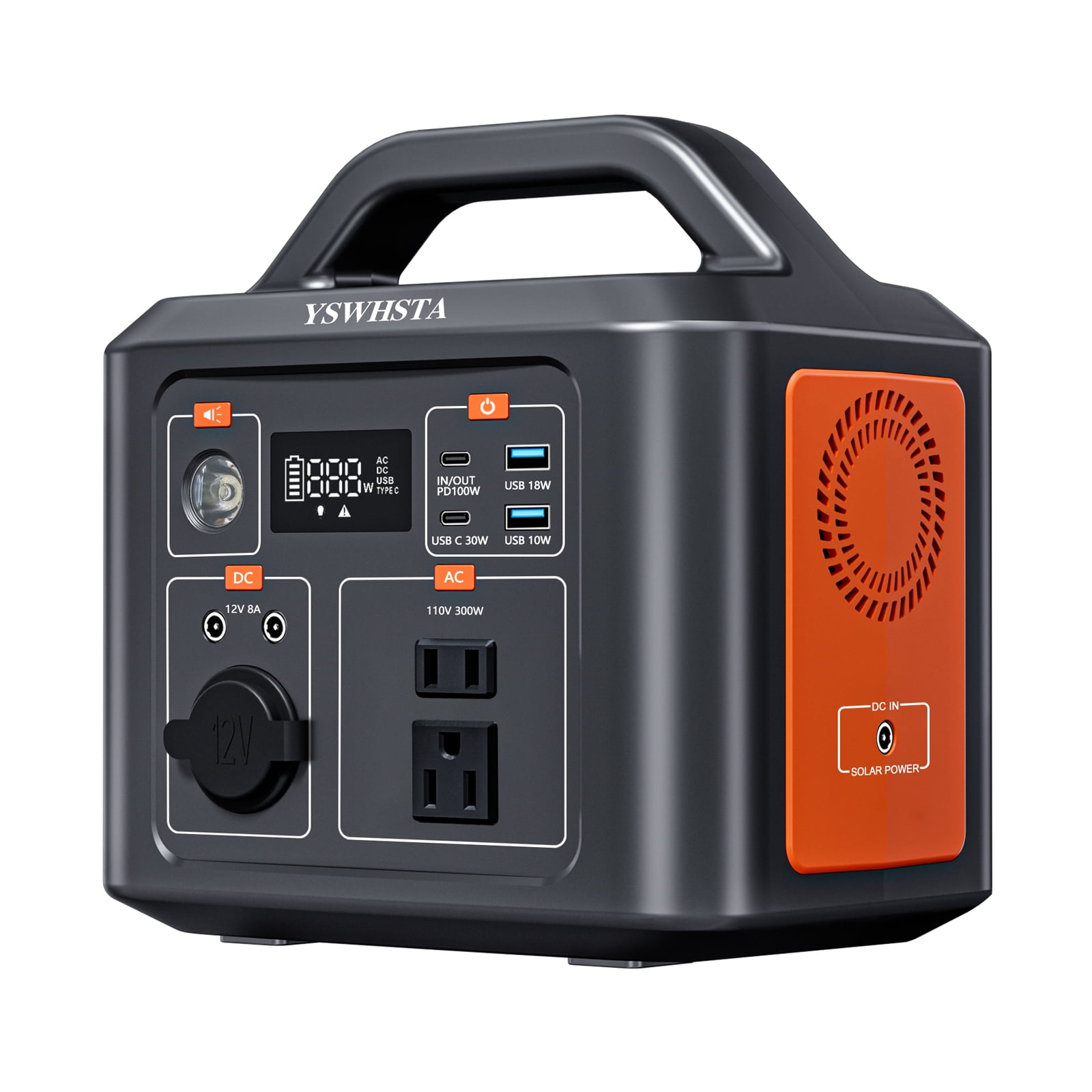
YSWHSTA P303 Portable Power Station vs TP300LFP Portable Power Station

The TP300LFP is the stronger pick for most shoppers. It recharges from AC in about an hour, accepts up to 200W of solar, and adds a 20ms UPS switchover for keeping a router or desktop alive during outages. The YSWHSTA P303 is lighter at 6.6lb and has more ports, including three 12V DC outlets and two USB-C ports, but its 300W AC input and roughly 5-hour wall charge make it slower to top up. Both use LiFePO4 with 4,000+ cycles, and both are rated 300W continuous with 600W peak, so build quality and safety are close. Owners of small stations like these praise the quiet, fume-free operation; the main complaints are the limited 300W ceiling and fans that ramp up under load.

  • Choose the YSWHSTA P303 if you want the lighter unit with more output ports, including three 12V DC outlets and dual USB-C, for camping and small-device charging.
  • Choose the TP300LFP if fast recharge and UPS backup matter to you, since it refills in about an hour from AC and switches over in 20ms during an outage.

Prices

  • YSWHSTA P303 Portable Power Station: $121.49 at Walmart (checked today)
  • TP300LFP Portable Power Station: $137.00 at Pion Power E-Commerce Store (checked today)
  • Difference: the YSWHSTA P303 Portable Power Station is $15.51 cheaper than the TP300LFP Portable Power Station today
YSWHSTA
YSWHSTA 288Wh LiFePO4 Battery, 300W Electric Solar Generator

YSWHSTA P303 Portable Power Station

YSWHSTA 288Wh LiFePO4 Battery, 300W Electric Solar Generator

4.4(53 ratings)
$121.49at WalmartChecked 49 min ago
See all prices and details
Visit Walmart
Pros
  • Light at 6.6lb and small at 8.3 x 8.3 x 6.2in
  • Nine outputs, including three 12V DC and two USB-C
  • LiFePO4 with 4,000+ cycles
  • Quiet, fume-free operation indoors
Cons
  • Slow wall recharge, about 5 hours
  • Solar input capped around 100W
  • No UPS mode listed
  • No UL or FCC certification stated
T
TP300LFP 300W Portable Power Station

TP300LFP Portable Power Station

TP300LFP 300W Portable Power Station

5(1 rating)
$137.00at Pion Power E-Commerce StoreChecked 49 min ago
See all prices and details
Visit Pion Power E-Commerce Store
Pros
  • Full AC recharge in about an hour
  • Up to 200W solar input, about 2 hours to full
  • 20ms UPS switchover for backup
  • UL and FCC certified with protection circuitry
Cons
  • Heavier at 8.6lb
  • Fewer USB-C ports than the P303
  • 300W ceiling limits bigger appliances

What separates them

YSWHSTA P303 Portable Power StationTP300LFP Portable Power Station
Battery capacity288Wh LiFePO4320Wh LiFePO4 (296Wh option also sold)
AC recharge timeAbout 5 hours on the wall chargerAbout 1 hour at 300W AC input
Solar input4A input, roughly 100W classUp to 200W, about 2 hours to full
UPS switchoverNot specified20ms automatic switchover
Weight6.6lb8.6lb
Output ports2 AC, 3 DC 12V, 2 USB-C, 2 USB-AAC, DC and USB ports, 1 USB-C 100W
CertificationsNot stated in the listingUL and FCC certified
AC output300W rated, 600W peak300W rated, 600W peak

Prices at every store

YSWHSTA P303 Portable Power Station

  • WalmartNew

    In stockSold by Power stationReturns: Sold by a Walmart Marketplace seller; returns go to the seller under the seller's returns policy.

    $121.49Free shippingChecked 49 min ago
    Visit Walmart
Prices and history →

TP300LFP Portable Power Station

  • Pion Power E-Commerce StoreNew

    In stockShips from Canada · duties may applyReturn policy

    $137.00Checked 49 min ago
    Visit Pion Power E-Commerce Store
Prices and history →

Specs compared

SpecYSWHSTA P303 Portable Power StationTP300LFP Portable Power Station
Battery capacity288Wh320Wh LiFePO4 Battery
Battery chemistryLiFePO4—
Power rating0.3 kW—
Maximum power0.6 kW—
Voltage110 V—
Item length8.3in—
Item height8.3in—
Item width6.2in—
Item weight6.6lb—
MaterialABS—
ColorOrange—
Wattage300W—
Show all 23 specsShow fewer specs
SpecYSWHSTA P303 Portable Power StationTP300LFP Portable Power Station
Rated AC Output—300W Rated
Peak AC Output—600W Peak
AC Recharge Time—0-100% in 1 Hour (AC)
Solar Recharge Time—2 Hours (Solar)
Solar Input—200W Solar Input
AC Input—300W AC Input
Weight—3.9kg (8.6lb)
Dimensions—271 × 182 × 185mm
Battery Cycles—4,000+ Battery Cycles
UPS Switchover

What reviewers say

YSWHSTA P303 Portable Power Station

  • 4.4 / 553 ratings

Ratings average 4.4 out of 5 from 53 buyers, who mostly value the LiFePO4 battery, the quiet operation and the spread of ports. Complaints center on the modest 300W AC limit and slow solar recharge.

What people mention
  • BatteryPraisedOwners like the LiFePO4 cell and its long cycle life compared with older lithium-ion packs.
  • Output powerCriticisedBuyers note the 300W AC limit means it cannot run heaters, kettles or other high-draw devices.
  • NoisePraisedUsers report it runs quietly with no fumes, so it is fine indoors.
  • Solar chargingMixedOff-grid charging works, but buyers say it is slow unless paired with a larger panel.

Questions and answers

Which is better for camping?
The P303 suits camping better because it is about 2lb lighter and has more 12V DC and USB ports for lights, pumps and phones. The TP300LFP is the better base-camp unit if you can pair it with a 200W solar panel.
Which recharges faster?
The TP300LFP. It goes from empty to full in about an hour on AC and about two hours on solar. The P303 takes roughly five hours on its wall charger.
Can either run a CPAP machine overnight?
A CPAP without a heated humidifier draws roughly 30 to 60W, so either unit can cover a night on its 288 to 320Wh. With the humidifier on, expect only a few hours, and check the machine's startup surge against the 600W peak.
Which lasts longer?
Both use LiFePO4 rated for 4,000+ cycles, so lifespan is close. The TP300LFP adds UL and FCC certification and protection circuitry, which is the safer bet for indoor backup use.
Is the TP300LFP worth stepping up to?
Yes if you want fast AC recharge, 200W solar input or UPS backup for a router or desktop. If you mainly charge small devices on trips and care about weight, the P303 is the more practical carry.
Can either run a mini-fridge?
A small mini-fridge draws about 60 to 80W running, but its compressor surge can exceed 600W. Check the fridge's startup watts; both units are rated 300W continuous, so larger fridges are out of reach.

Ask our shopping agent

It checks today's price at every store, compares the alternatives and answers in about a minute.

Enter to send, Shift+Enter for a new line

More comparisons

  • YSWHSTA 288Wh LiFePO4 Battery, 300W Electric Solar Generator vs Dynesspower PPS300 300W Portable Power Station
  • YSWHSTA 288Wh LiFePO4 Battery, 300W Electric Solar Generator vs VTOMAN Jump100 88.8Wh Portable Power Station
  • YSWHSTA 288Wh LiFePO4 Battery, 300W Electric Solar Generator vs Flashfish E103 300W Portable Power Station
  • YSWHSTA 288Wh LiFePO4 Battery, 300W Electric Solar Generator vs EcoFlow RIVER 2
  • YSWHSTA 288Wh LiFePO4 Battery, 300W Electric Solar Generator vs BLUETTI Elite 30 V2 Portable Power Station
  • YSWHSTA 288Wh LiFePO4 Battery, 300W Electric Solar Generator vs UDPOWER C200 Portable Power Station
  • YSWHSTA 288Wh LiFePO4 Battery, 300W Electric Solar Generator vs VTOMAN Jump 100 Portable Power Station
  • YSWHSTA 288Wh LiFePO4 Battery, 300W Electric Solar Generator vs AFERIY Nano100 PB010 Portable Power Station 145W Output 100W PD 99.2Wh

Buying guides that pick them

  • Best LiFePO4 portable power stations under $220
  • Best 500Wh LiFePO4 portable power stations under $200
  • Best LiFePO4 portable power stations
—
20ms UPS
USB-C PD Output—1 × 100W Power Delivery