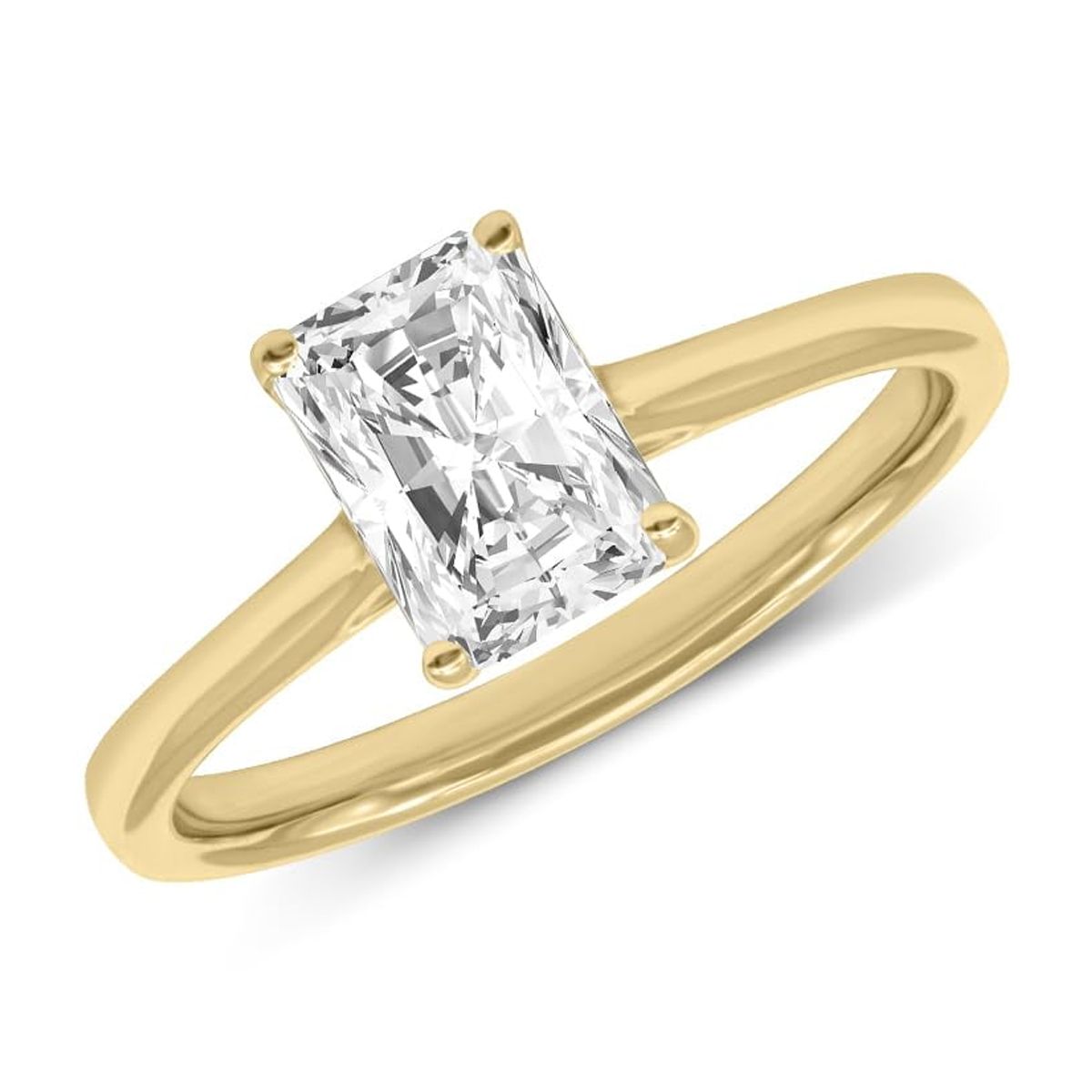
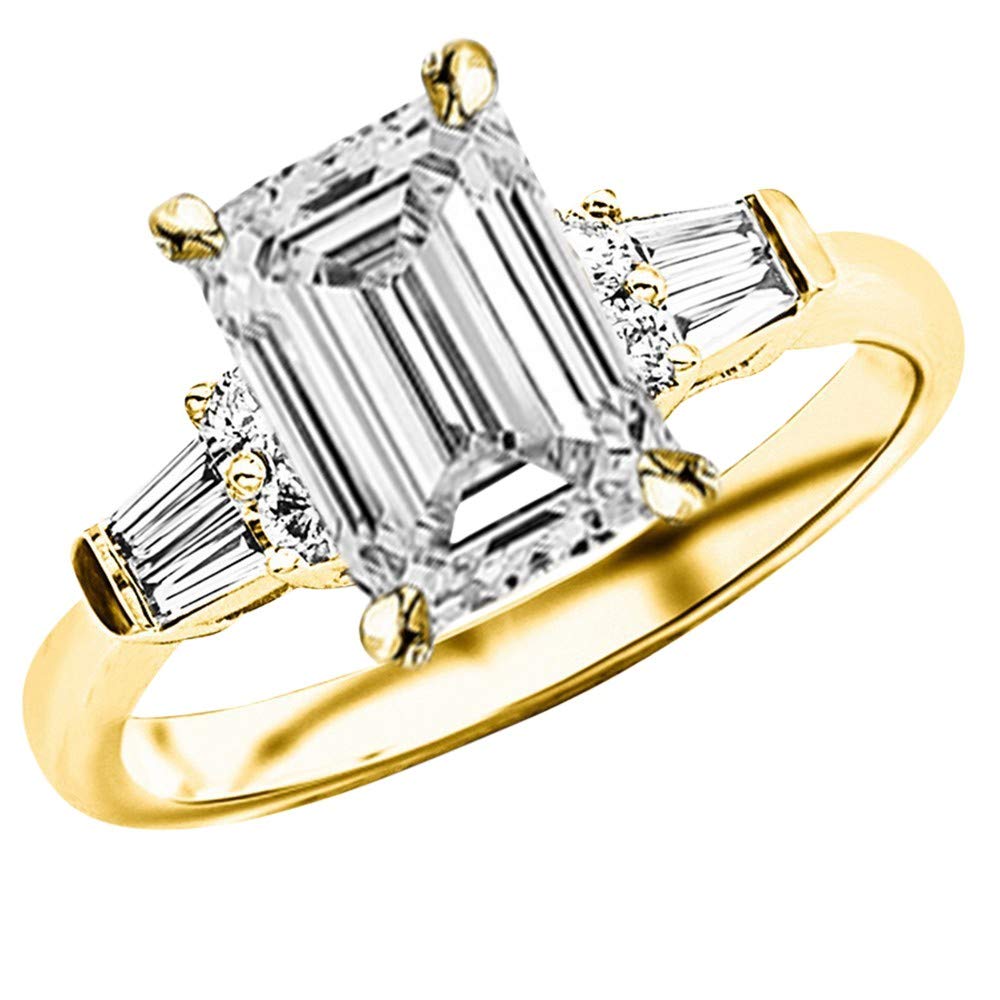
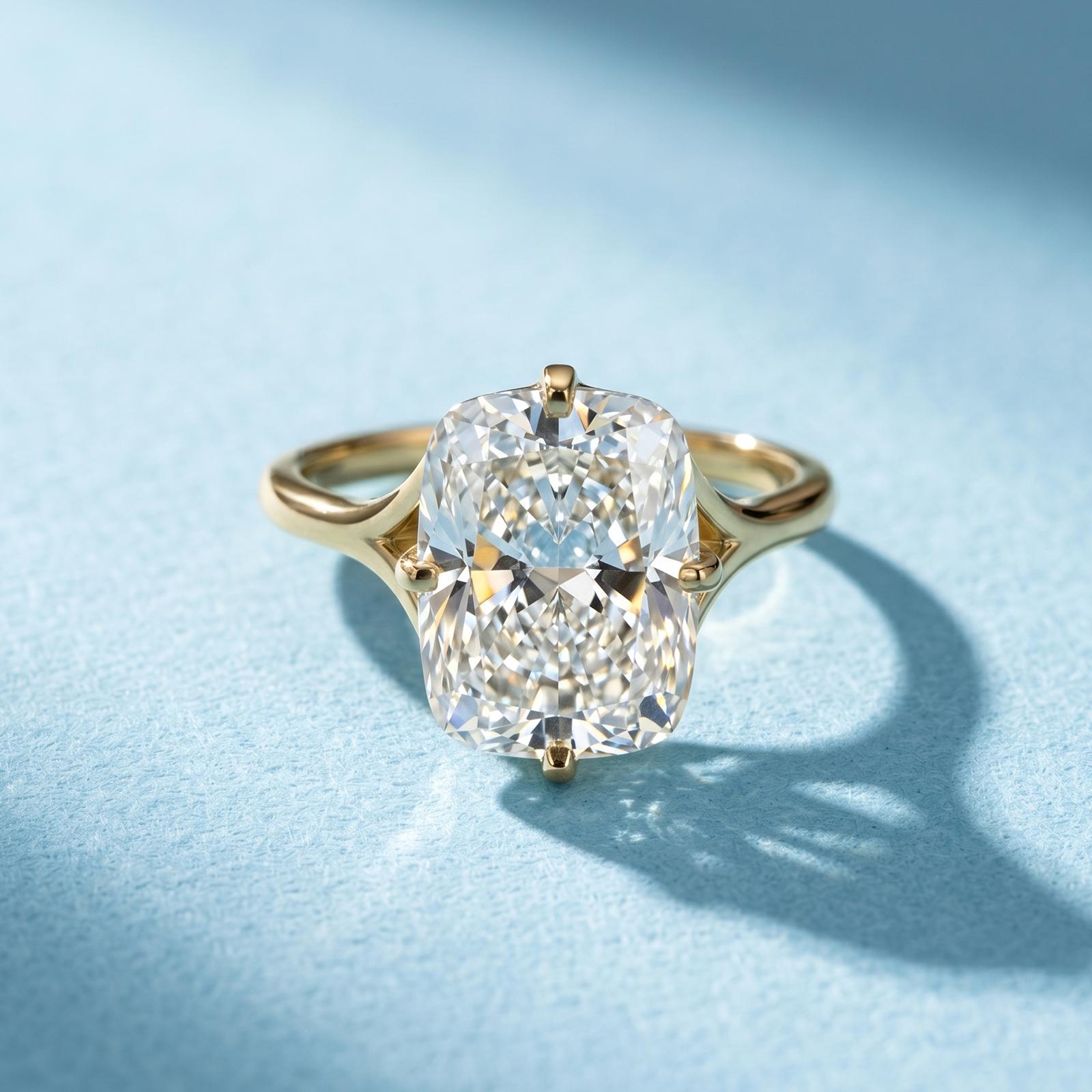
- Is a lab grown diamond a real diamond?
- Yes. It has the same carbon crystal structure as a mined diamond and tests as one. The difference is origin: it was grown in a lab rather than mined, and it is graded by IGI on the same color and clarity scales.
- What do E color and VVS1 clarity mean?
- E is near-colorless, just below the top D grade, so the stone looks white to the eye. VVS1 means very, very slightly included, with inclusions so small they are hard to see even under magnification.
- What is a hidden halo?
- It is a ring of small round diamonds set around the base of the center stone, below the girdle. You see it from the side and in profile, while the top view stays a clean solitaire.
- How does this compare with a natural diamond ring?
- A lab grown stone of this size and grade generally costs far less than a comparable natural one, so you get a bigger, higher-clarity center stone. Natural diamonds hold resale value better; lab grown ones do not.
- Will the oval stone show a bow-tie?
- Oval cuts often show a darker bow-tie-shaped shadow across the middle in some light. It varies stone to stone, so ask to see the actual diamond or its video before buying.
- What comes with the ring?
- The ring and an IGI certificate for the center diamond are included. Confirm the exact certificate and any gift packaging with the seller before ordering.
- Where is the 2.16 Carats Lab Grown Oval Cut Solitaire Hidden Halo Diamond Engagement Ring Yellow Gold cheapest?
- At Benz & Co Diamonds, for $1,900.00, as of our latest check.
- What do buyers say about the 2.16 Carats Lab Grown Oval Cut Solitaire Hidden Halo Diamond Engagement Ring Yellow Gold?
- Rated 5 out of 5 from 1 ratings.
- Where can I buy the 2.16 Carats Lab Grown Oval Cut Solitaire Hidden Halo Diamond Engagement Ring Yellow Gold?
- 2 stores we checked sell it, including Benz & Co Diamonds, Rings Earth.