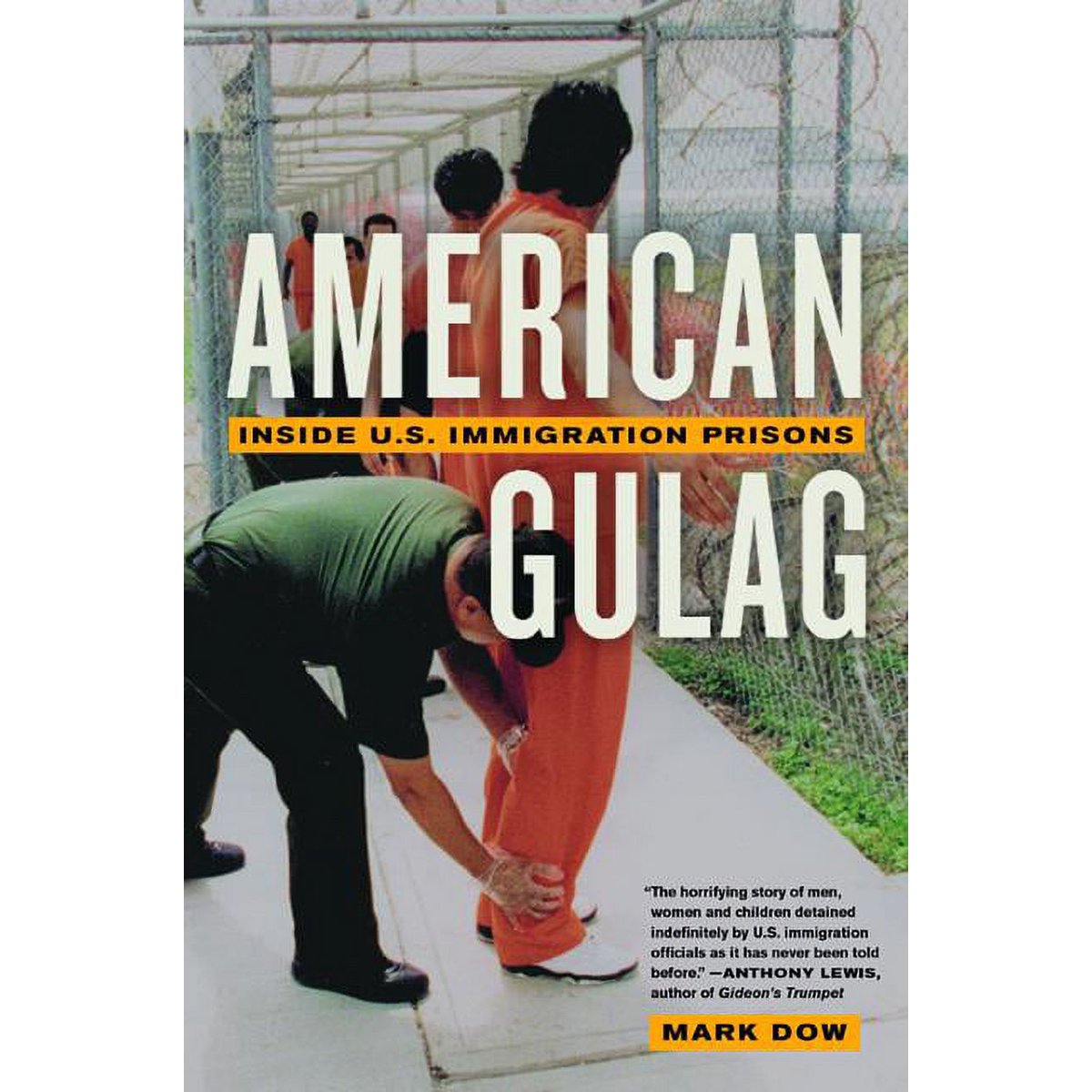
American Gulag : Inside U.S. Immigration Prisons (Edition 1) (Paperback)
Best price now
$40.26at WalmartChecked Nov 10
Prices are checked against each store and labelled with when.

Prices are checked against each store and labelled with when.
It checks today's price at every store, compares the alternatives and answers in about a minute.
Mark Dow's investigative book examines the U.S. immigration detention system run by the INS, drawing on interviews with detainees, guards and federal whistleblowers. It profiles facilities such as Krome North in Miami and the Corrections Corporation of America's Houston Processing Center, and follows individual detainees including Ugandan defector Emmy Kutesa. Dow sets the reporting against a short history of U.S. immigration law and the changes after September 11, 2001. It suits readers who want on-the-ground reporting on detention policy rather than a legal treatise or a memoir.
In stockSold by RAREWAVES-USAReturns: Sold by a Walmart Marketplace seller; returns go to the seller under the seller's returns policy.
American Gulag is a work of investigative journalism by Mark Dow about the immigration detention system run by the U.S. Immigration and Naturalization Service (INS). It draws on on-the-ground reporting and on accounts from prisoners, jailers, and federal officials who came forward. The book describes documented cases of illegal beatings, psychological torment, prolonged detention, racism, and inhumane conditions.
The book takes readers inside facilities including the Krome North Service Processing Center in Miami, the Corrections Corporation of America's Houston Processing Center, and county jails that hold INS prisoners under contract. It includes in-depth profiles of detainees, among them Emmy Kutesa, a defector from the Ugandan army who was tortured, escaped to the United States, was imprisoned in Queens, and went on a hunger strike in protest.
Dow also gives a brief history of U.S. immigration laws and practices, including the effects of September 11 and present-day policies. He presents current immigration detention as part of a larger context of INS secrecy and excessive authority, not as a response to terrorism.