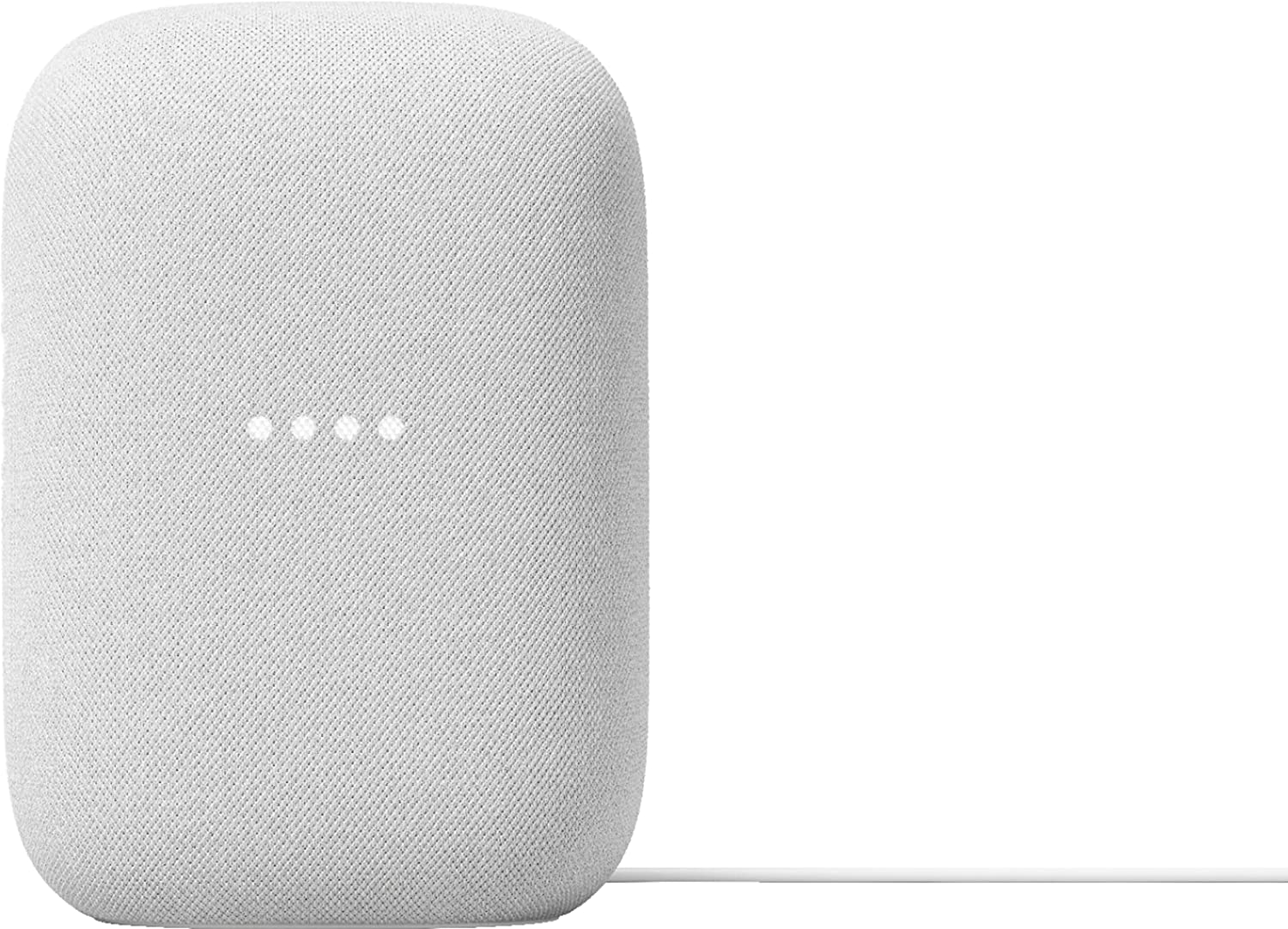
Apple HomePod (2nd Gen)
Best price now
$335.00at B&H Photo-Video-AudioChecked 1 h ago
Compared across 13 stores. Prices are checked against each store and labelled with when.

Compared across 13 stores. Prices are checked against each store and labelled with when.
It checks today's price at every store, compares the alternatives and answers in about a minute.
The second-generation HomePod is Apple's full-size smart speaker, built around a high-excursion woofer and a ring of five beamforming tweeters driven by Apple silicon. Room sensing uses a microphone to measure reflections and retune the sound, and Spatial Audio tracks are mixed to feel wider than the cabinet. It doubles as a smart home hub and a Siri speaker, so it makes most sense for people already in Apple's ecosystem. Against the HomePod mini it delivers far more bass and headroom; against Sonos and Amazon speakers it trades app flexibility and input options for tighter iPhone integration.
In stock
In stock
In stock
In stock
In stock
In stock
In stock
In stock
In stock
In stock
In stock
Availability unknown
As an Amazon Associate, Deal.ai earns from qualifying purchases.
Out of stock
Store links may earn us a commission.
Lowest price we've seen: $335.00 on Nov 16 at B&H Photo-Video-Audio. Tracked across 11 stores since Nov 16.
Owners and reviewers rate the second-gen HomePod as one of the best-sounding compact smart speakers, with strong bass and a wide soundstage for its size. Most criticism centers on Siri's limits and the Apple-only setup rather than the audio.
The HomePod (2nd Gen) is a wireless speaker with a high-excursion woofer and an array of five beamforming tweeters around its base. It also works as a smart home hub. Apple-engineered audio technology and software deliver high-fidelity sound.
The woofer's motor drives the diaphragm 20 mm, and a bass-EQ mic tunes low frequencies in real time. The five beamforming tweeters optimize high frequencies and beam direct sound, such as primary vocals, into the middle of the room while reflecting ambient sound off the walls. With Spatial Audio tracks, the speaker surrounds you in music.
Apple silicon runs computational audio models in real time, using feedback from the system sensor to preserve dynamic range and maximize acoustic performance. Room sensing uses the mics to listen for sound reflections and tune the sound to where the speaker is placed. Place two HomePods in the same room and you'll be asked if you want to pair them into a stereo pair.