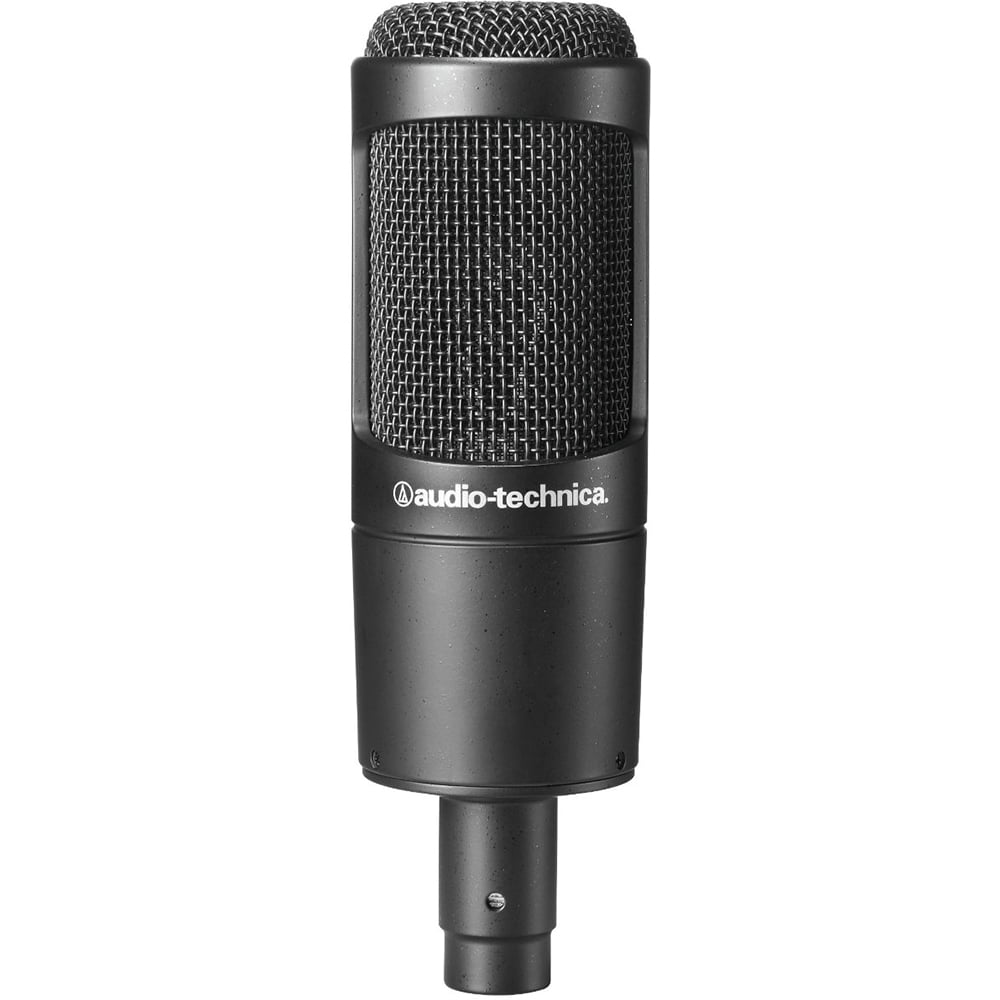
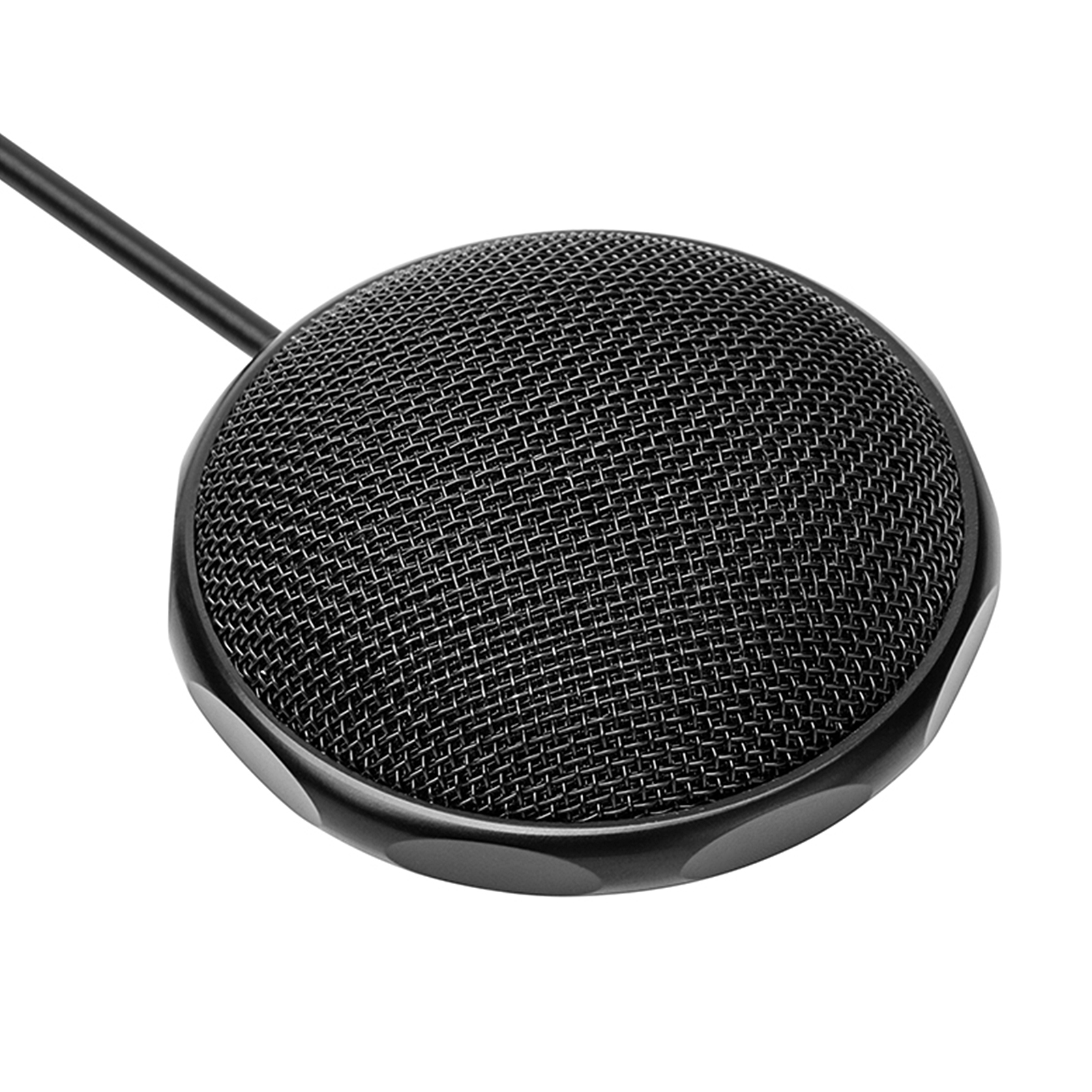
The Audio-Technica AT4040 is a side-address condenser microphone with a large diaphragm and a cardioid polar pattern. It is made for capturing vocals and instruments such as pianos, guitars and strings.
Its element is an externally-polarized (DC bias) condenser. Two switches set the response: flat or an 80 Hz low-frequency roll-off at 12 dB/octave, plus a 10 dB pad. The frequency response is 20 to 20,000 Hz, and the microphone runs on 48V DC phantom power at 4.2 mA typical.
The cardioid pattern limits off-axis signals, which reduces ambient and residual noise in a recording. The 80 Hz high-pass setting also reduces sensitivity to popping in close vocal use and lowers pickup of low-frequency ambient noise such as traffic, air handling and mechanically-coupled vibration. Output is through an integral 3-pin XLRM-type connector.
- Element
- Externally-polarized (DC bias) condenser
- Polar Pattern
- Cardioid
- Frequency Response
- 20 - 20,000 Hz
- Low Frequency Roll Off
- 80 Hz, 12 dB/octave
- Open Circuit Sensitivity
- -32 dB (25.1 mV) re 1V at 1 Pa
- Dynamic Range
- 133 dB, 1 kHz at Max SPL
- Signal-to-Noise Ratio
- 82 dB, 1 kHz at 1 Pa
- Phantom Power
- 48V DC, 4.2 mA typical
- Switches
- Flat, roll-off; 10 dB pad (nominal)
- Output Connector
- Integral 3-pin XLRM-type
- Weight
- 360 g
- Dimensions
- 6.69 in (170.0 mm) long, 2.10 in (53.4 mm) maximum body diameter