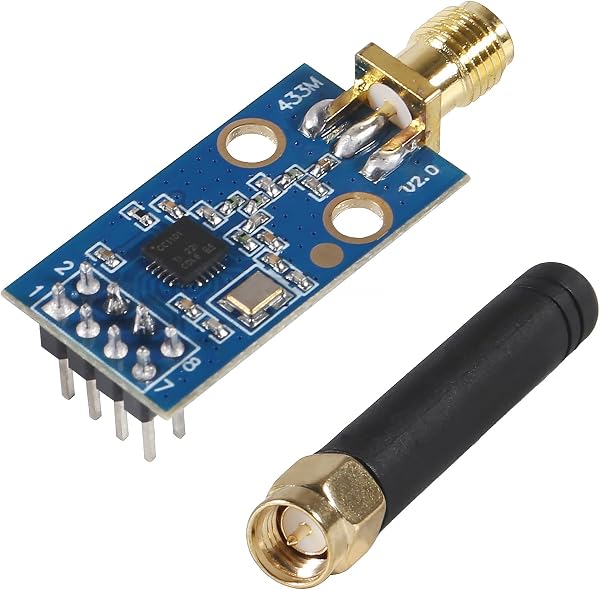
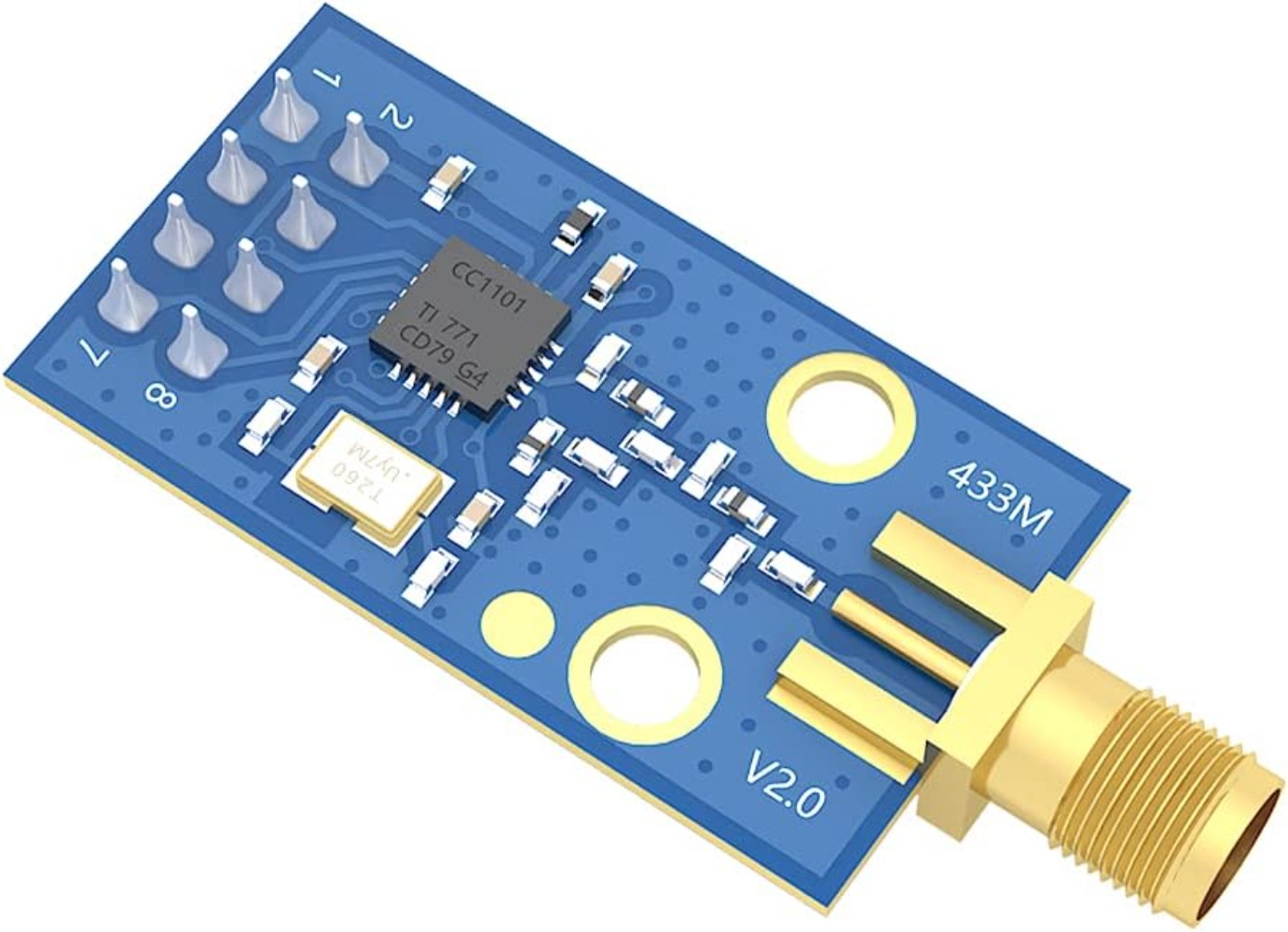
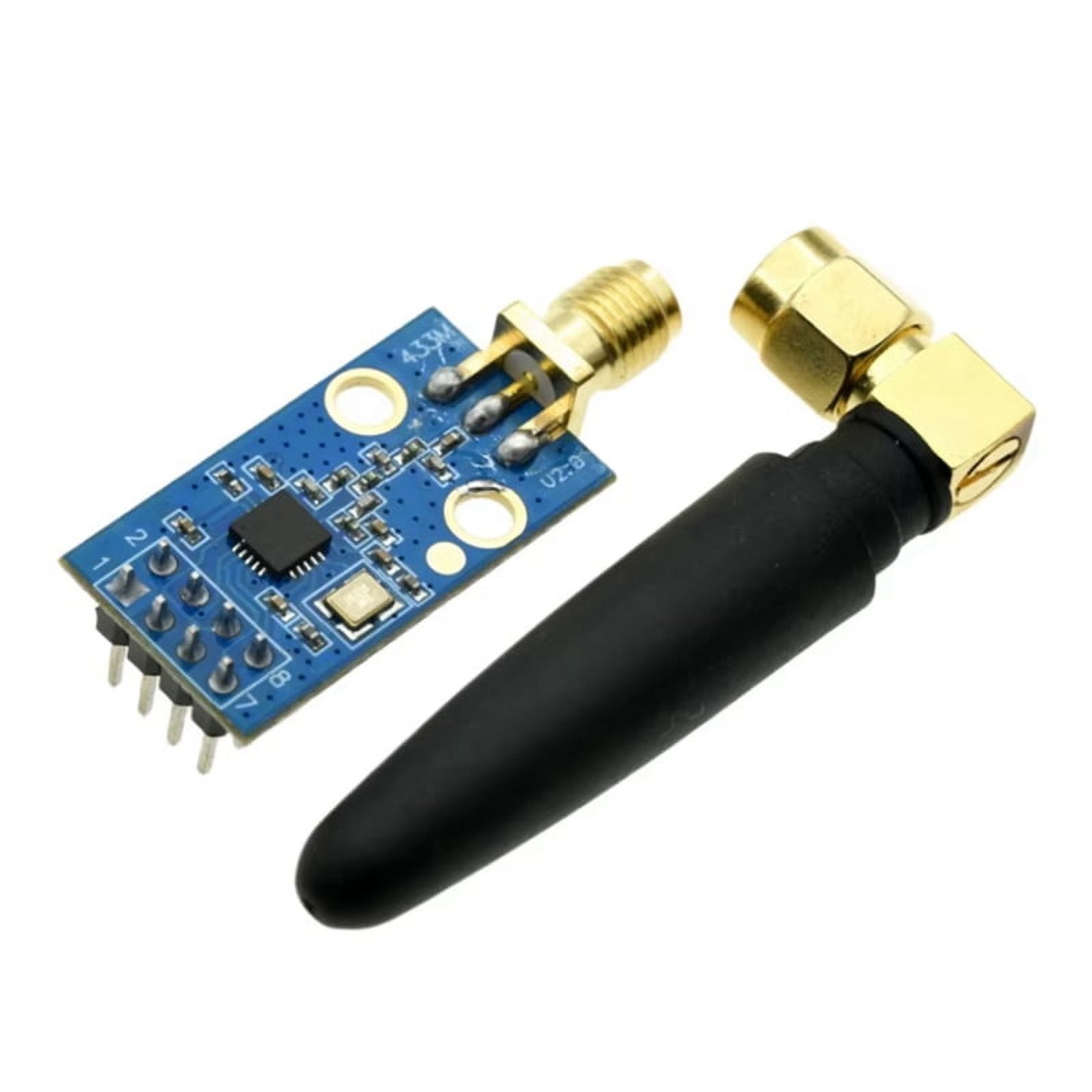
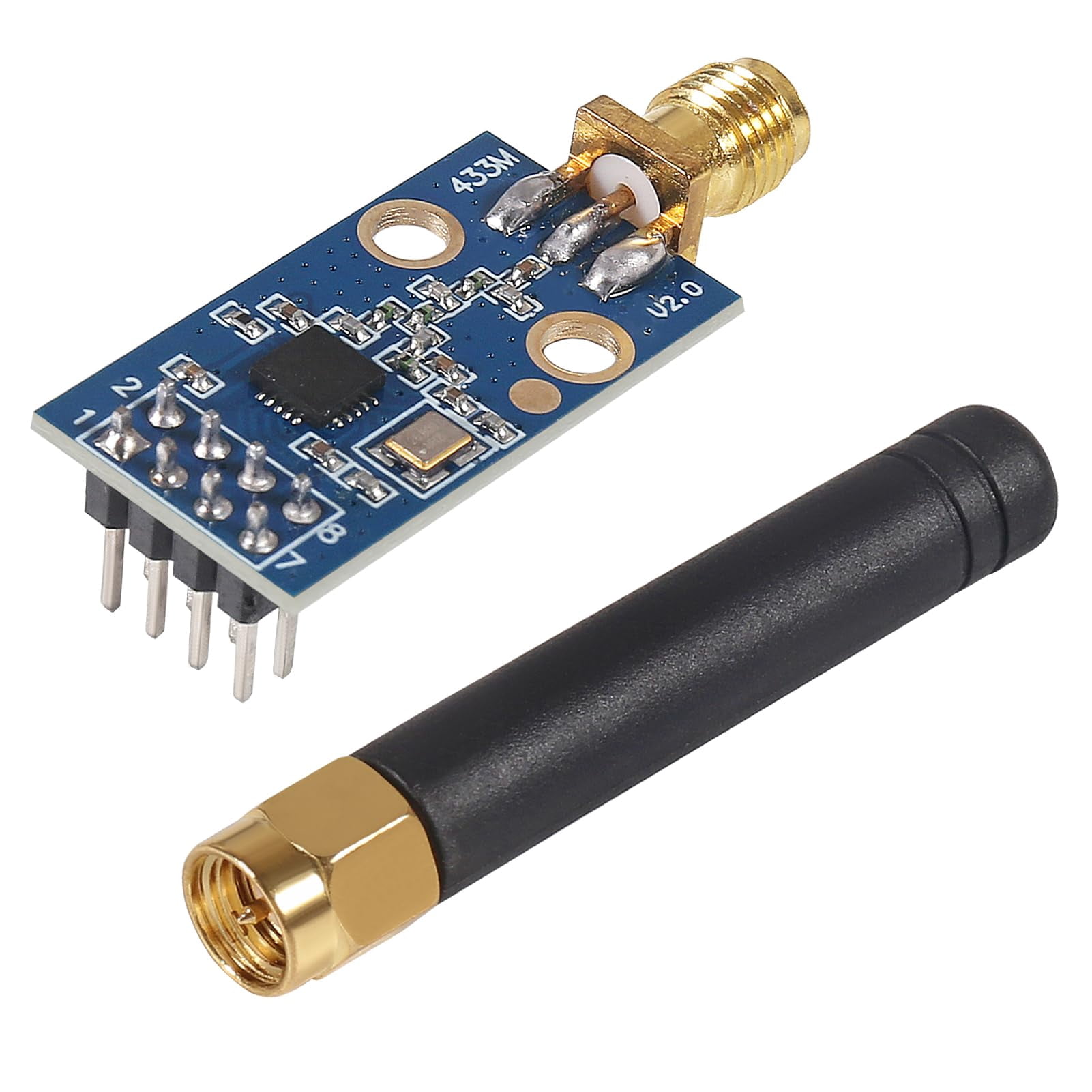
The diymore CC1101 is a small sub-GHz radio transceiver board built around TI's CC1101 chip, tuned for 433 MHz and adjustable across roughly 387–464 MHz. It runs on 1.8–3.6V, which suits coin cells and 3.3V microcontrollers, and it adds hardware CRC, RSSI, wake-on-radio and programmable output up to +10 dBm. That puts it above bare ASK/OOK 433 MHz transmitter-receiver pairs, which are cheaper but one-way and have no error checking. It suits makers building sensors, remotes and home-automation links who can work with SPI wiring and antenna tuning; it is not a plug-and-play module.
In stockReturn policy
Owners of CC1101 boards generally rate them as a solid step up from simple 433 MHz ASK modules, with reliable two-way links once configured. Complaints center on setup effort and antenna sensitivity rather than the radio itself.
The CC1101 is a 433 MHz RF wireless transceiver module with an antenna. It operates at a default frequency of 433 MHz and can be tuned from 387 to 464 MHz. It is a low-power radio module for microcontroller-based projects.
The module supports 2-FSK, GFSK and MSK modulation and data rates from 1.2 kbps to 500 kbps. Output power is programmable up to +10 dBm. Built-in features include hardware CRC error detection, RSSI signal strength detection, wake-on-radio standby and a fast frequency synthesizer for frequency hopping.
It communicates over SPI and is compatible with Arduino (3.3V logic recommended), STM32, ESP8266, ESP32 and Raspberry Pi. Logic levels should match the module's 1.8–3.6 V operating voltage, with a level shifter if necessary. With +10 dBm output power and clear line of sight, transmission can reach several hundred meters; indoor range may be shorter.
It checks today's price at every store, compares the alternatives and answers in about a minute.