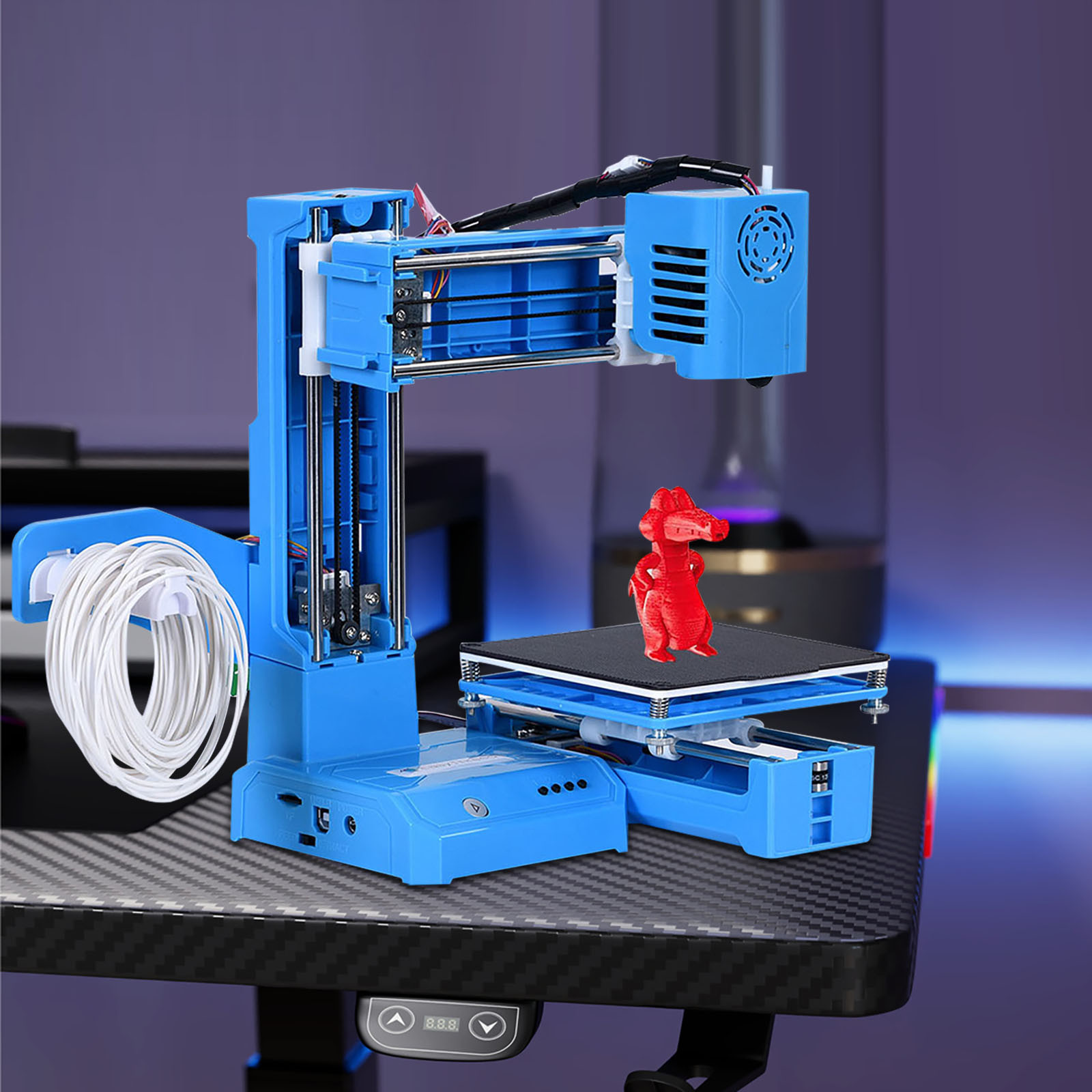
The Creality Ender-3 S1 is a desktop FDM 3D printer. About 96% of the body comes pre-installed, and assembly takes 6 steps. It has preset interfaces for laser engraving and LED lamps. It prints PLA, TPU, PETG and ABS filaments.
It uses the "Sprite" direct dual-gear extruder. Two chrome steel gears engage at a 1:3.5 ratio and push with up to 80N of force. The CR Touch system levels the bed automatically at 16 points. The PC-coated spring steel print sheet bends so printed models can be removed easily.
The Z axis has dual screws and dual motors for smoother, more synchronized movement. A 32-bit silent mainboard keeps noise low. A filament sensor detects run-out or breakage. The printer records its print data and can resume printing after a power loss or filament break.
- Technology
- FDM
- Build volume
- 220 x 220 x 270 mm
- Printer size
- 487 x 453 x 622 mm
- Net weight
- 9.1 kg
- Precision
- ±0.1 mm
- Layer thickness
- 0.05-0.35 mm
- Max print speed
- 150 mm/s
- Nozzle
- 1 nozzle, 0.4 mm diameter
- Max nozzle temp
- 260°C
- Max bed temp
- 100°C
- Extruder
- "Sprite" direct extruder, 1:3.5 gear ratio
- Filament
- 1.75 mm; PLA, TPU, PETG, ABS
- Print platform
- PC spring steel sheet