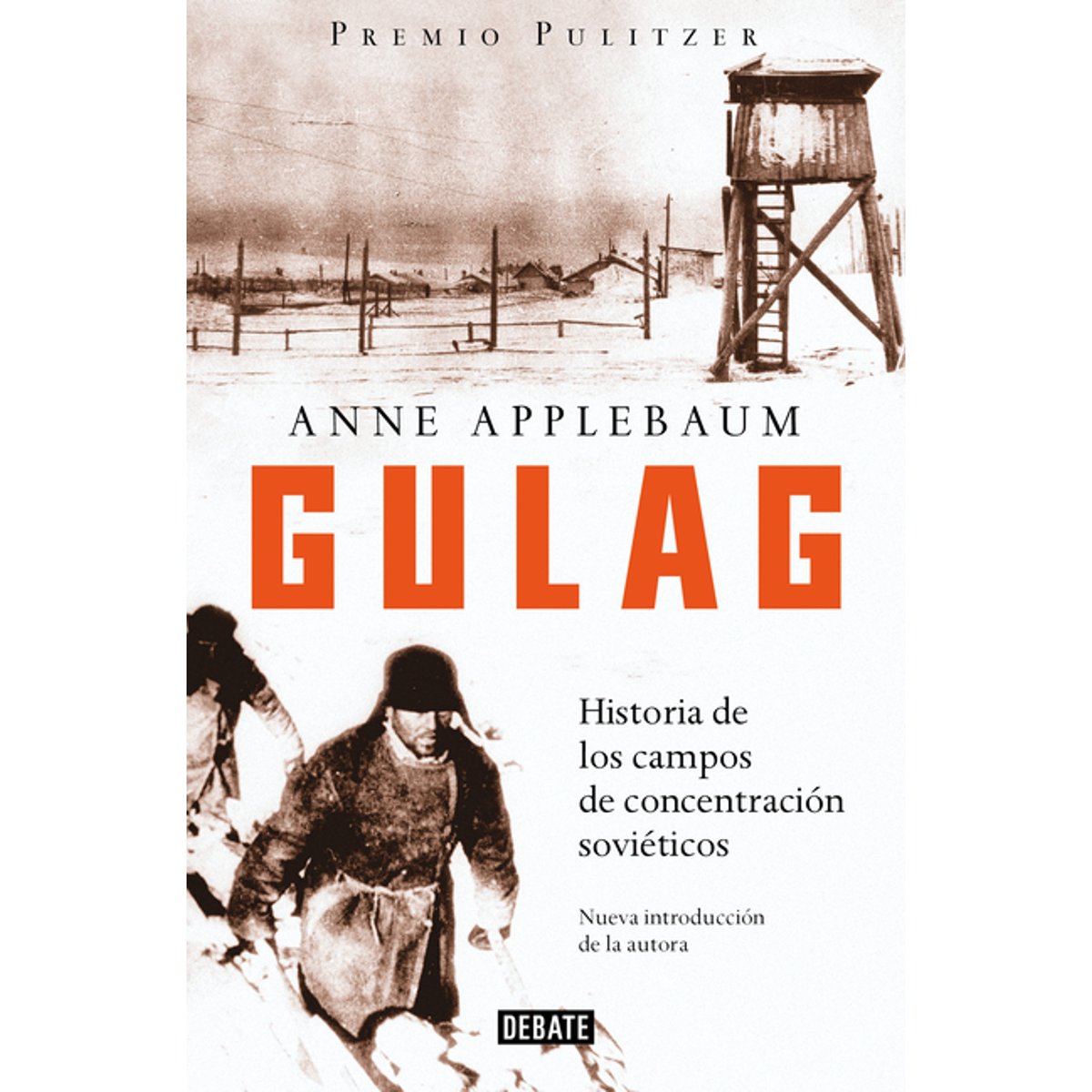
Gulag: Historia de Los Campos de Concentración Soviéticos / Gulag: A History of the Soviet Camps
Best price now
$24.74at WalmartChecked Nov 10
Prices are checked against each store and labelled with when.

Prices are checked against each store and labelled with when.
It checks today's price at every store, compares the alternatives and answers in about a minute.
Anne Applebaum's history of the Soviet forced-labor camp system, from its origins under Lenin and Stalin through the White Sea Canal and the Kolyma mines to its dismantling under Gorbachev. It draws on memoirs published after the USSR fell, interviews and archives long kept closed, and it argues the camps served two purposes at once: isolating the Party's enemies and supplying slave labor for vast projects. A detailed, sober account rather than a personal memoir, it suits readers who want the mechanics of daily camp life, women's and children's experience, escapes and revolts. It remains the standard single-volume history in English, and this Spanish edition adds a new introduction by the author.
In stockSold by newbookdealsReturns: Sold by a Walmart Marketplace seller; returns go to the seller under the seller's returns policy.
Reviewers and historians treat it as the leading general history of the Gulag, praised for its research and readability. Critics call it grim and lengthy, and some historians say its analytical claims outrun the evidence in places.
Gulag is a history of the Soviet concentration camp system by Anne Applebaum. It covers the system from its origins in the Russian Revolution to its collapse in the era of glasnost. The book draws on memoirs and studies published in Russia and the West since the fall of the Soviet Union, on archives that stayed hidden for decades, and on the author's own historical research. This edition has a new introduction by the author.
The book first lays out the chronology of the camps and the logic behind their creation, expansion and upkeep. The Gulag was first set up in 1918. In 1929 Stalin decided to expand it, to use forced labor to speed up industrialization and to exploit the resources of the far north. By the end of the 1930s there were labor camps in all twelve of the Soviet Union's time zones. The system kept growing through the war years and peaked in the early 1950s. From 1929 until Stalin's death in 1953, about 18 million people passed through it, and an estimated 4.5 million never returned.
The book argues that the Gulag existed both to isolate those the Communist Party saw as enemies and to supply a mass of workers paid in food for huge projects such as the White Sea Canal and the Kolyma mines. It also describes daily life in the camps: self-mutilation to avoid forced labor, marriages between prisoners, the lives of women and children, revolts and escape attempts. It closes with how Gorbachev, whose own family was affected by the repression, ended the system.