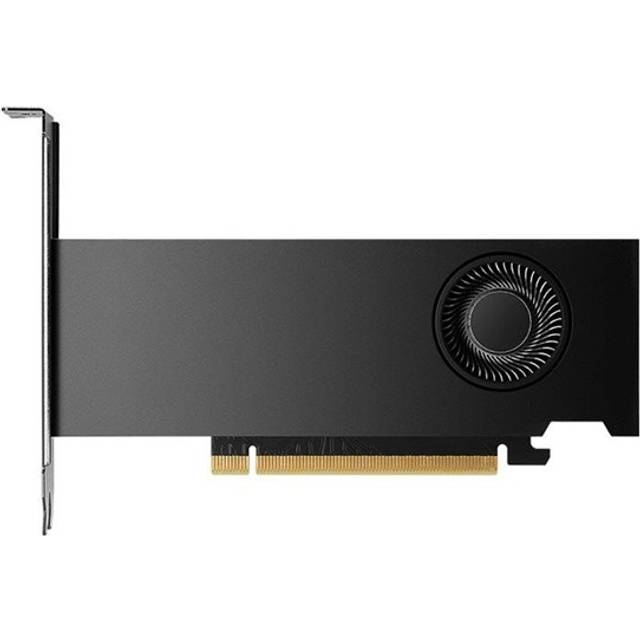
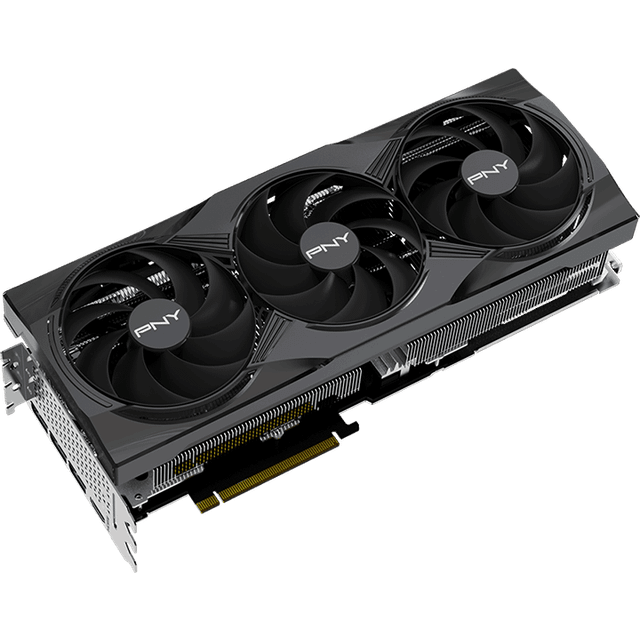
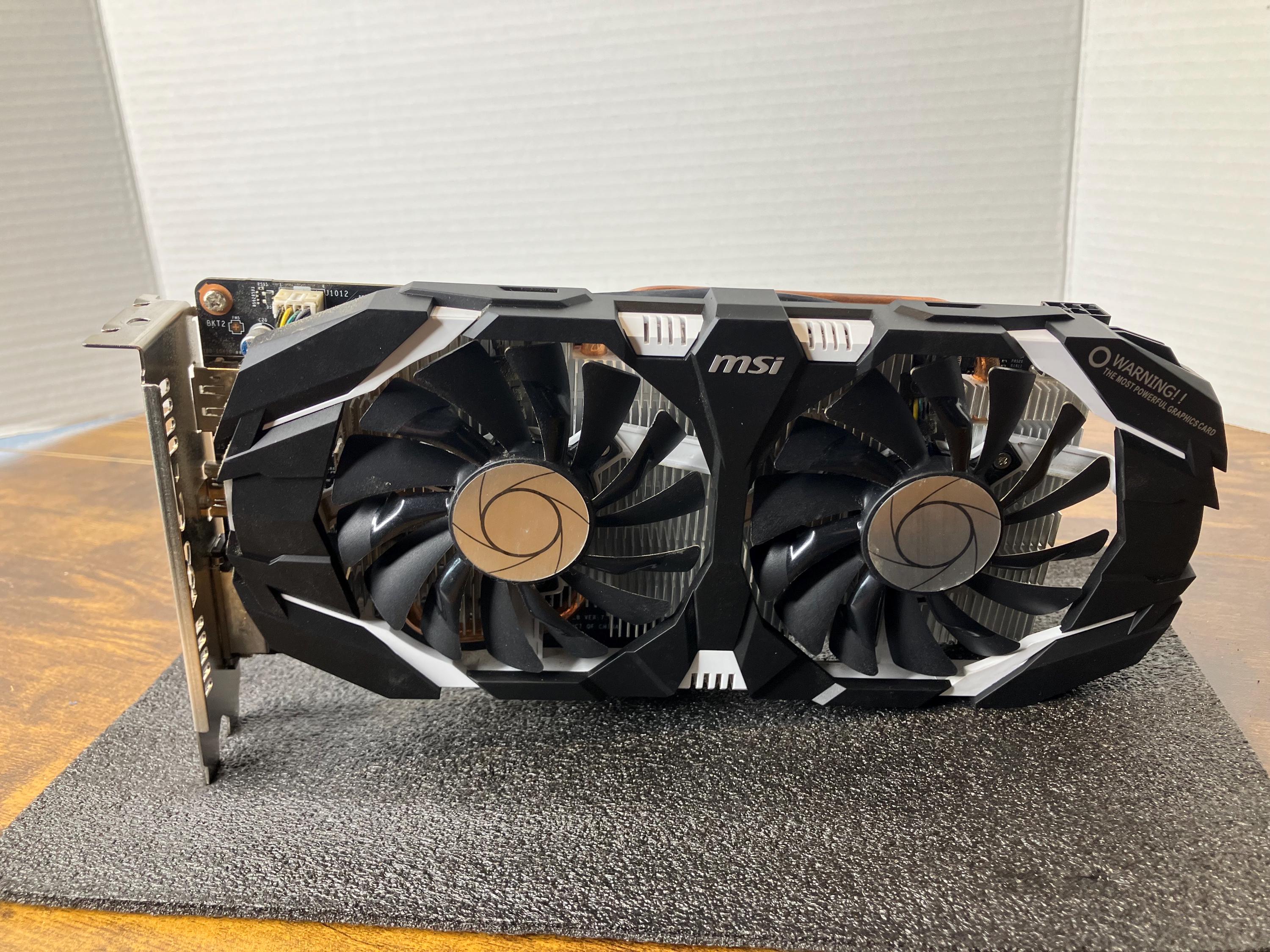
The PNY NVIDIA T1000 8GB is a low-profile, single-slot professional graphics card built on the NVIDIA Turing GPU architecture. It has 896 CUDA cores and 8 GB of GDDR6 memory. It is designed for compact workstations and uses 50 W.
It has four mini-DisplayPort 1.4a connectors with latching. One card can drive up to four 5K displays or two 8K displays. Up to four cards can be combined in one system for display walls, for up to 16 displays in total. It supports HDR color and refresh rates up to 120 Hz on 4K displays with 30-bit color.
Dedicated encode and decode engines handle H.264 and HEVC video independently of the 3D graphics and compute pipeline. The card supports the latest OpenGL, DirectX, Vulkan and NVIDIA CUDA standards and is certified with over 100 professional software applications. NVIDIA RTX Desktop Manager software helps manage windows across multiple applications and desktops. The NVIDIA Enterprise Management toolkit lets IT teams monitor and manage deployed boards remotely and roll out drivers to many workstations.
- Graphics processor
- NVIDIA T1000 (Turing architecture)
- CUDA cores
- 896
- Memory
- 8 GB GDDR6
- Memory bus
- 128-bit
- Bandwidth
- 160 GB/s (max)
- Performance
- 2.50 TFLOPS
- Power
- 50 W
- Interface
- PCI Express 3.0 x16
- Form factor
- Low-profile, single slot
- Ports
- 4 x mini-DisplayPort 1.4a
- Max displays
- 4 per card
- Max resolution
- 7680 x 4320 pixels
- Video engines
- H.264 and HEVC encode and decode
- Graphics APIs
- OpenGL, DirectX, Vulkan, NVIDIA CUDA