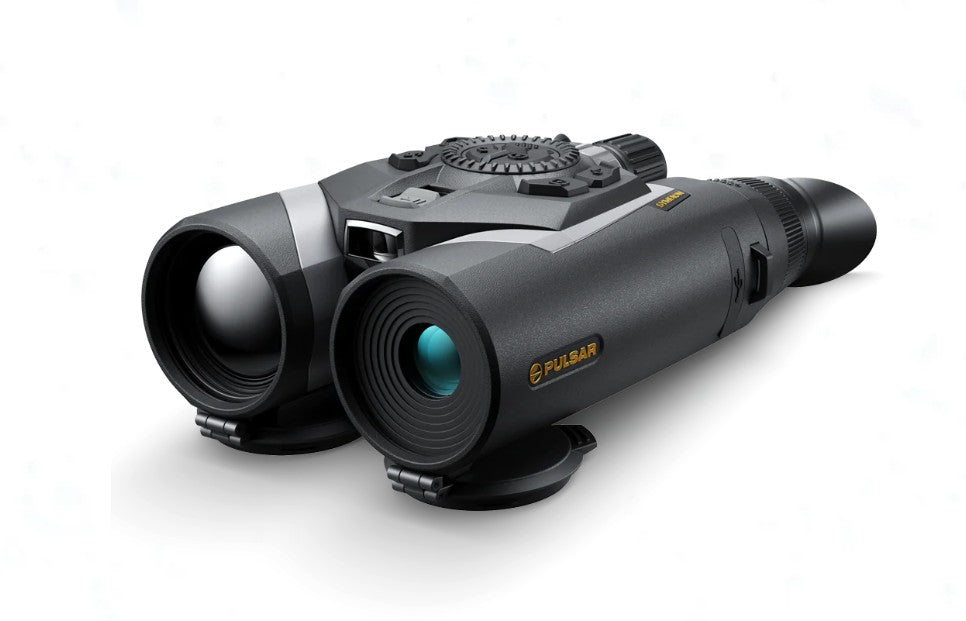
- What is the difference between thermal, digital and combined modes?
- Thermal mode shows heat signatures only, digital mode shows a normal HD image, and combined mode overlays the two. Combined view helps you spot a heat source and identify what it is in the same frame.
- How far can the rangefinder measure?
- Pulsar rates the integrated laser rangefinder to about 1,640 yards. Actual range depends on target reflectivity and weather.
- Can it record video and photos?
- Yes. It records photos and video with audio to internal memory and can stream over Wi-Fi to a phone or tablet.
- Is it waterproof?
- It carries an IP67 rating, meaning it is sealed against dust and survives temporary immersion. It is built for wet field use, not diving.
- How does it compare with a thermal monocular?
- It gives you two eyepieces, a digital channel and a rangefinder in one unit, which a monocular does not. The trade-off is more size and weight.
- What magnification does it offer?
- It provides 2–16x magnification with a 50mm F/1.0 lens. Higher zoom narrows the field of view.
- Where is the Pulsar Symbion DXT50 2-16x LRF Thermal Binocular cheapest?
- At Down Range Thermal, for $7,999.00, as of our latest check.
- What do buyers say about the Pulsar Symbion DXT50 2-16x LRF Thermal Binocular?
- Rated 5 out of 5 from 1 ratings.
- Where can I buy the Pulsar Symbion DXT50 2-16x LRF Thermal Binocular?
- 20 stores we checked sell it, including nightvisionoutfitters.com, Optics4Birding, Thermal Bros, Feral Texas Outdoors, Outdoor Legacy.