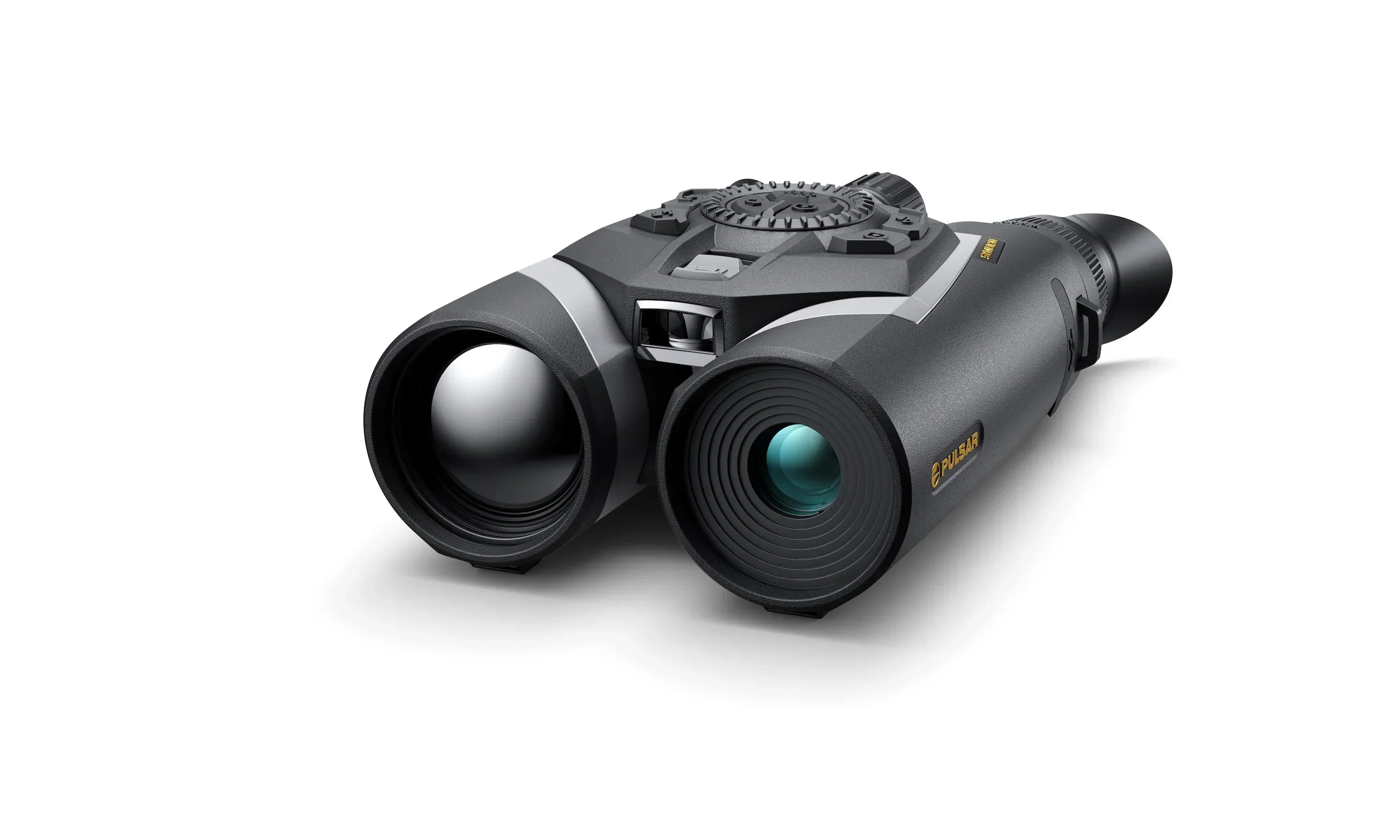
- What is the difference between the thermal and digital channels?
- The thermal channel reads heat signatures and works in total darkness, fog and smoke. The digital channel is a conventional camera sensor for daytime, twilight and IR-assisted night viewing. The DXT50 runs both, so you switch modes instead of carrying two devices.
- How far can it detect and range?
- Pulsar rates thermal detection past 2,500 yards on a suitable target. The laser rangefinder measures out to about 1,600 yards. Real detection distance depends on target size, weather and terrain.
- How long do the batteries last?
- It runs on the rechargeable AP5 pack, and two are included so you can swap one out. Runtime depends on which channels and features you use, so carry both packs on long outings.
- Is it good for daytime use too?
- Yes. The digital sensor gives full-color daytime viewing, and the thermal channel still works in daylight for spotting heat sources. It is not a replacement for a high-end daylight binocular in optical clarity.
- Who is it aimed at?
- Hunters and long-range observers who want thermal detection, night vision and ranging in one unit. Casual users will find it oversized and overcomplicated for the money.
- Where is the Pulsar Symbion LRF DXT50 Thermal Binoculars cheapest?
- At Amazon, for $5,999.97, 25% under what the other stores charge, as of our latest check.
- What do buyers say about the Pulsar Symbion LRF DXT50 Thermal Binoculars?
- Rated 5 out of 5 from 3 ratings. Buyers like: Amazing binoculars with many buttons and features; Bruce answers questions promptly and accurately; Best service out there. Common complaints: Learning curve to sort out all the buttons and features.
- Where can I buy the Pulsar Symbion LRF DXT50 Thermal Binoculars?
- 14 stores we checked sell it, including Night Vision Universe, Amazon, Scheels, Natchez Shooting & Outdoor, Camera Land NY.