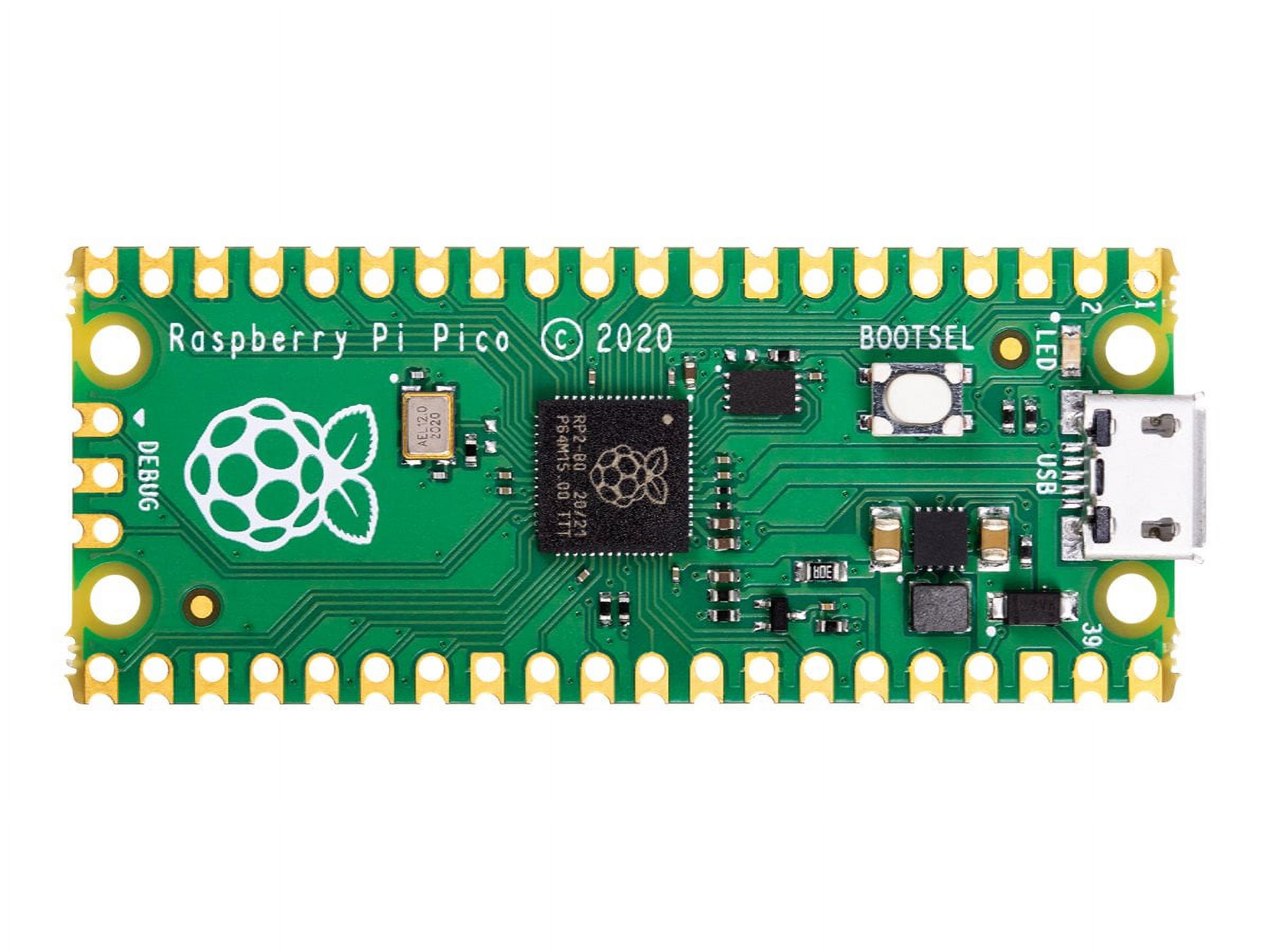
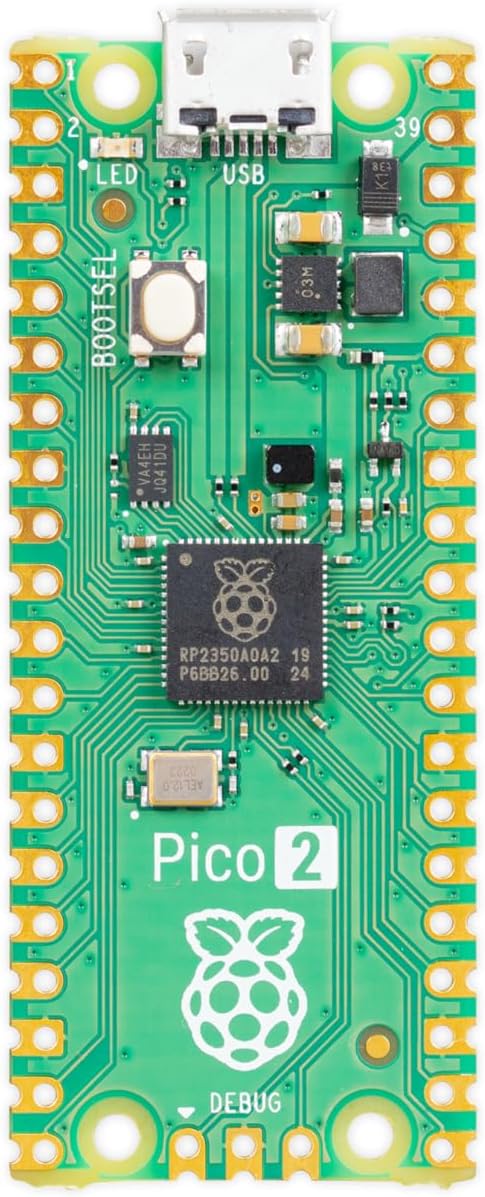
The Raspberry Pi Pico is a small microcontroller board built on Raspberry Pi's own RP2040 chip. It pairs a dual-core Arm Cortex-M0+ running up to 133 MHz with 264KB of SRAM and 2MB of flash, and it programs by drag-and-drop over USB. Its 40 castellated pads fit a breadboard and can be soldered flat onto a carrier board, and a power converter protects it from the wrong supply voltage. It suits beginners learning embedded programming and makers who want a cheap, well-documented board; against Arduino-class boards it offers two cores and more memory, but it has no wireless and no built-in Wi-Fi like the Pico W.
In stockReturn policy
Buyers rate the Pico very highly, praising its capability for the size and its ease of setup. Most mention how quickly they got a first program running and how well it works on a breadboard.
The Raspberry Pi Pico is a microcontroller board built around the RP2040 chip, which was designed by Raspberry Pi in the United Kingdom. It has a single green LED, a boot select button and a power supply converter. The board is small and minimal, and it has flexible digital interfaces.
The board measures 0.825" x 2" and can be attached to a breadboard or perfboard. It has 40 pads, 20 on each side. Headers can be soldered in place for permanent installation, and the castellated module can be soldered directly to carrier boards.
The RP2040 has 8 programmable I/O (PIO) state machines for custom peripheral support. They can handle timing-specific protocols, such as those used by NeoPixels, without using CPU time. To program the board, hold the BOOT SEL button while powering it on. Then drag and drop firmware files onto it over USB.