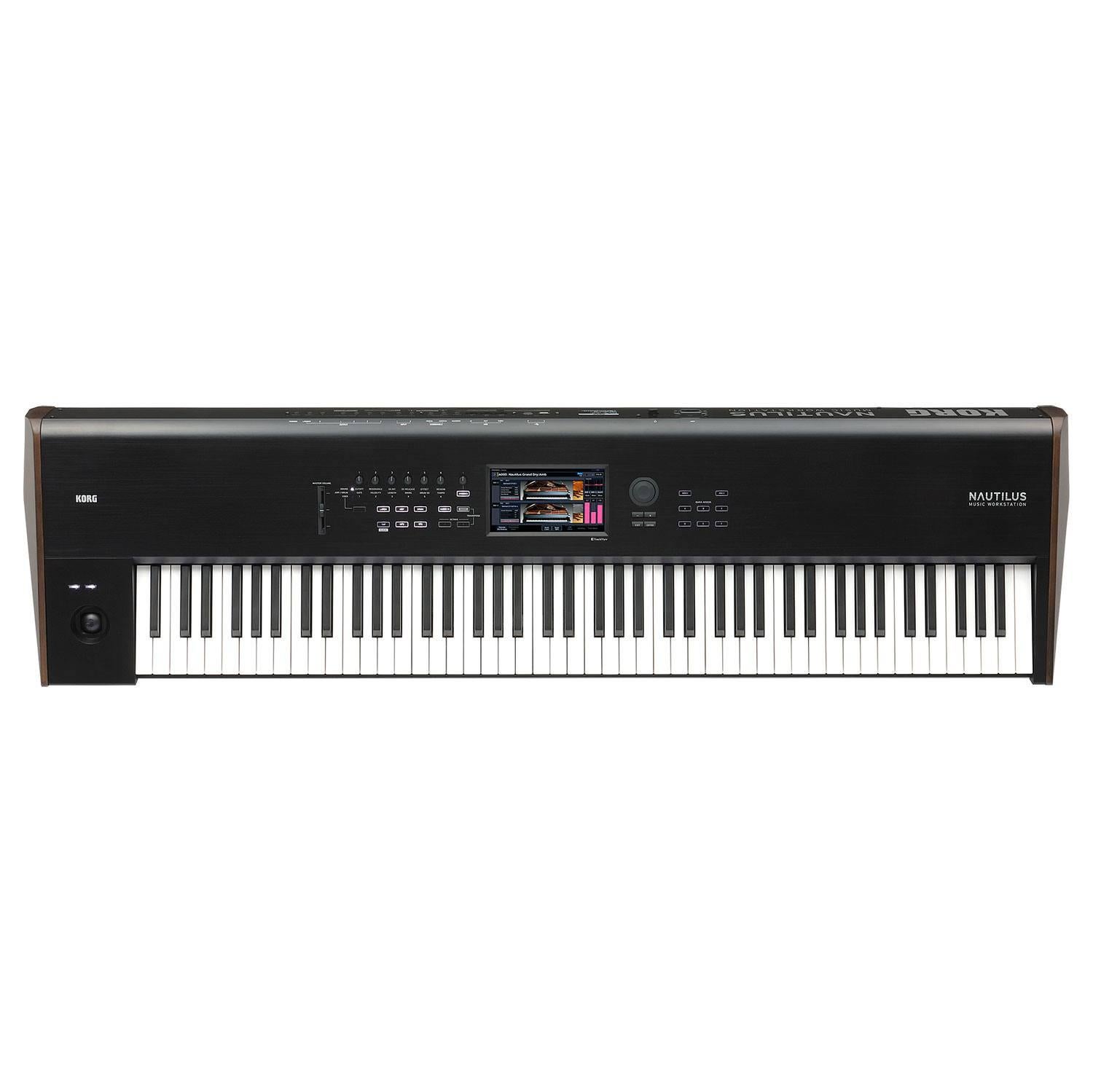
- Is the Juno-D6 good for live gigs?
- Yes. It is designed as a performance keyboard, with quick sound switching, layering and splitting for set-by-set use. Its light build makes it easy to carry to shows.
- How does it compare with the Juno-DS61?
- The D6 is the newer generation, with an updated sound engine and interface. The DS61 remains a capable budget option, but the D6 is the more current choice for new buyers.
- Does it have weighted keys?
- No. The 61 keys are synth-action, not weighted or hammer-action. Pianists who need a heavy feel should look at a stage piano instead.
- Can I split and layer sounds?
- Yes. The Juno-D6 supports splits and layers, so you can play bass with the left hand and piano or synth with the right, or stack two sounds across the keyboard.
- Is it a workstation or a synth?
- It is a performance synthesizer, not a full workstation. It has a broad preset library and basic editing, but it lacks the deep sequencing and sampling of Roland's flagship workstations.
- What is in the box?
- The keyboard ships with a power supply and a basic starter package. A sustain pedal and stand are usually sold separately, so check before your first gig.
- Where is the Roland Juno-D6 61-Key Performance Synthesizer Keyboard cheapest?
- At US ORDERS, for $704.37, as of our latest check.