- Is this the same as glass wool insulation?
- No. It is closed-cell polyethylene foam with a reflective face, not mineral wool. It reflects radiant heat but adds much less thermal resistance than a glass wool batt of the same thickness.
- What R-value does it add?
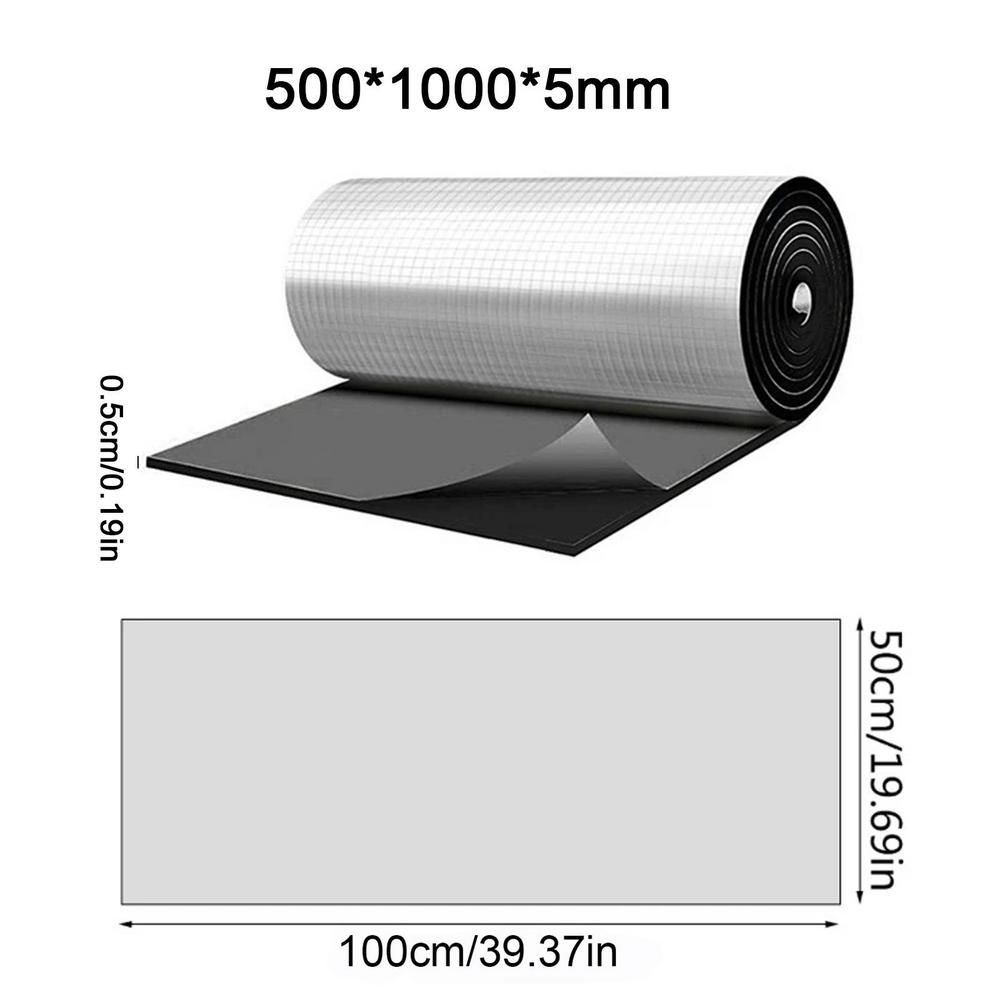
- The foam is about 3 mm thick, so its conductive R-value is small. Treat it as a radiant barrier and vapor-retarding layer, not as a stand-alone wall insulation.
- Where should I install it?
- It is made for walls. Common uses are garage walls, basement walls and interior partitions. The reflective face works best with an air gap facing the open space.
- How much area does one roll cover?
- One roll is 48 in wide and 10 ft long, about 40 sq ft. Measure your wall area and add a little for cuts and overlaps.
- Can I put it over existing fiberglass?
- Yes, it is often used as a reflective facing over or behind existing batts. Keep the shiny side toward the air space and tape the seams for a continuous barrier.
- Does it need a vapor barrier?
- The polyethylene foam resists moisture, but seams and edges must be sealed with foil tape to act as a barrier. Check local code for wall assemblies.
- Where is the Sealtech Reflective Insulation cheapest?
- At The Home Depot, for $52.94, as of our latest check.
- Where can I buy the Sealtech Reflective Insulation?
- 2 stores we checked sell it, including Tractor Supply Co, The Home Depot.