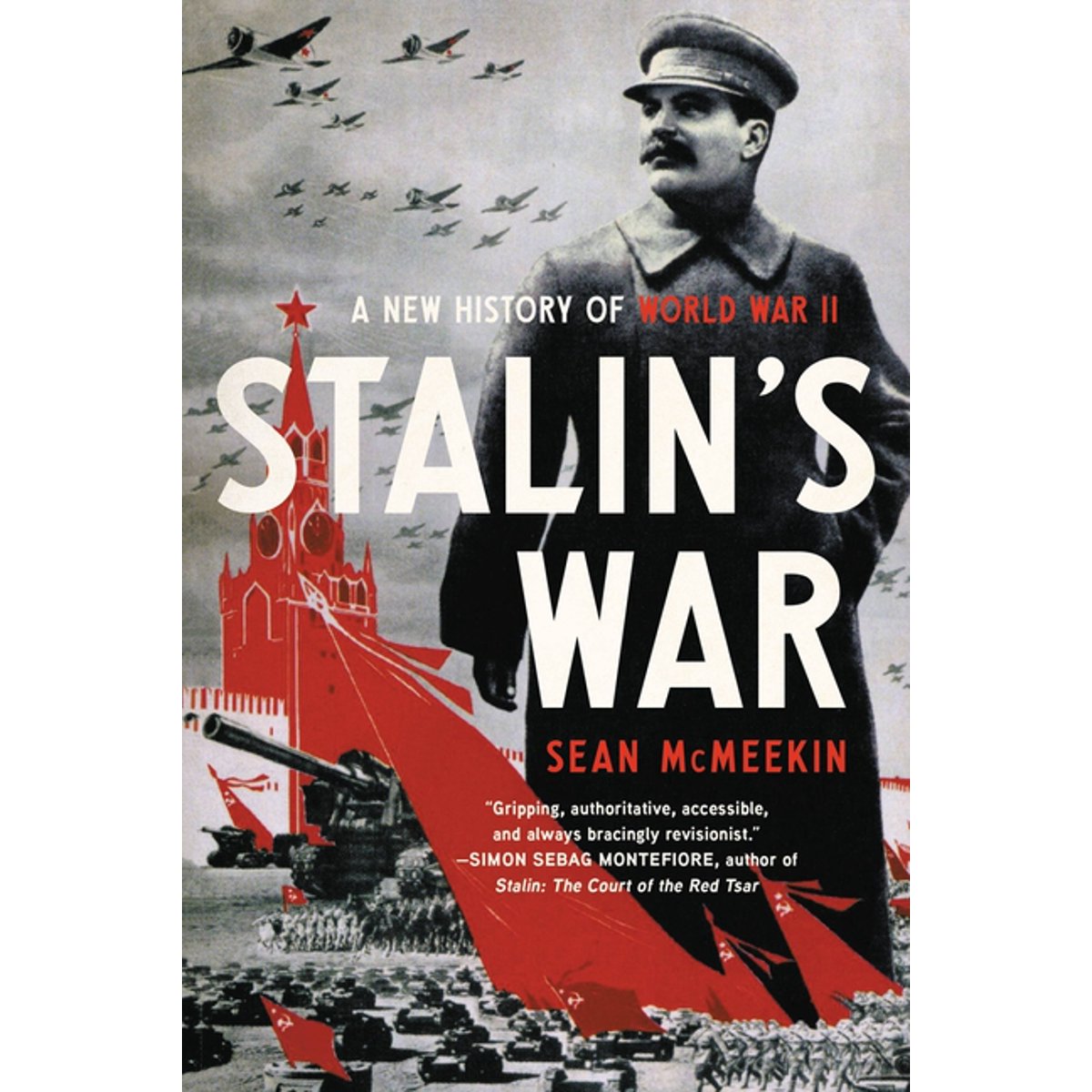
Stalin's War: A New History of World War II is a history of the Second World War by Sean McMeekin, a prize-winning historian. It argues that Stalin's Soviet Union was the driving force of the war.
The book challenges the common view of the war as a struggle between good and evil, with Hitler propelling events and the Allied powers saving the day. McMeekin contends that Hitler's genocidal ambition unleashed the war, but that the conflicts that followed were shaped by Stalin's maneuvering. He argues that Stalin aimed to set Germany against its capitalist adversaries in Europe, and Japan against the "Anglo-Saxon" powers in Asia.
The book also examines the U.S. and British strategy of supporting Stalin and his armies at all costs. McMeekin argues that this strategy allowed the Soviets to conquer most of Eurasia, from Berlin to Beijing, for Communism. He presents the history as a reassessment of the roots of the current world order.
- Author
- Sean McMeekin
- Subject
- World War II military history
- Genre
- History