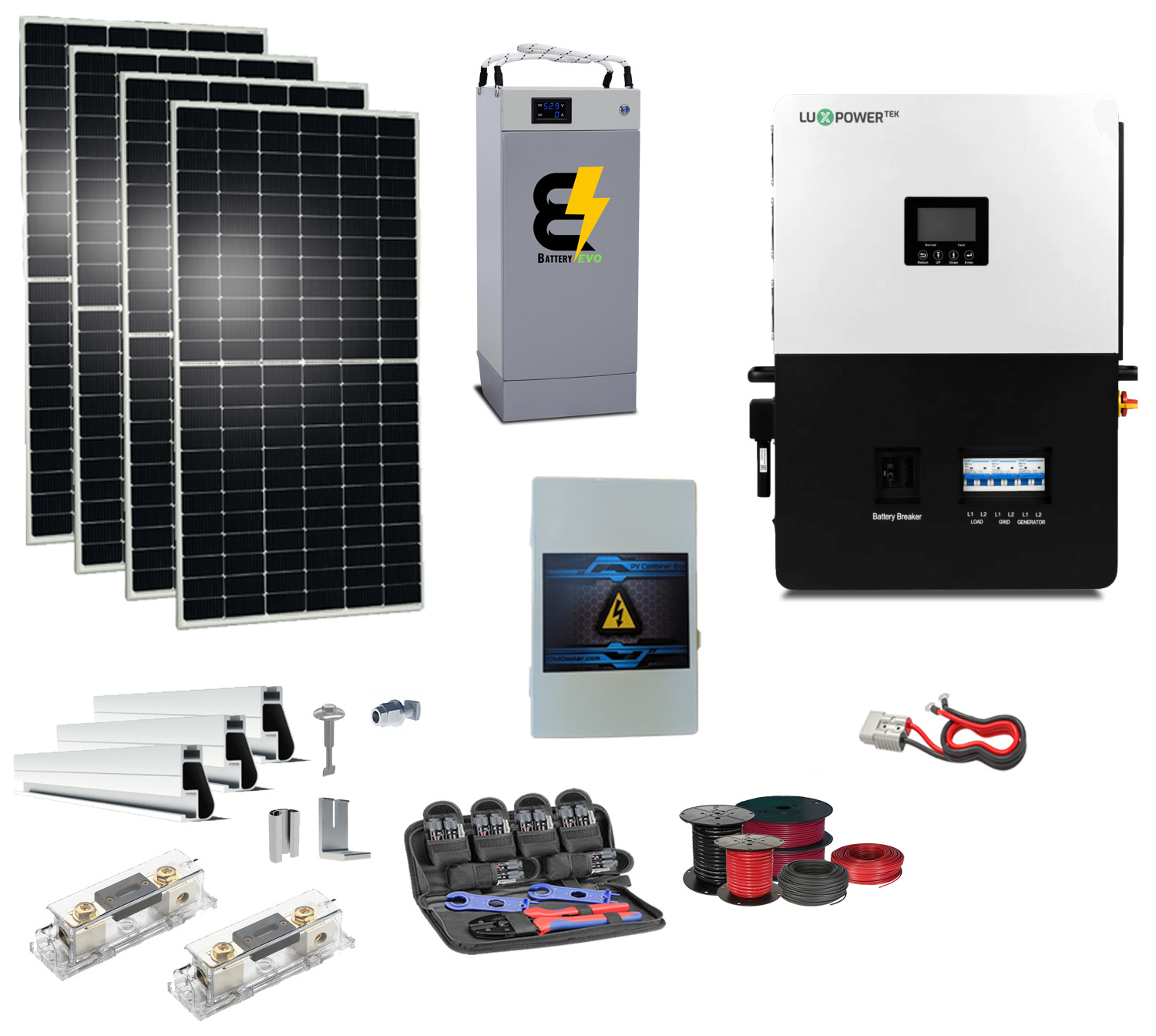
Sungold Power | Off-Grid Solar Kit | 12 X 550 Watt Solar Panels | 25.6KWH Lithium Battery | 10KW Solar Inverter 48VDC | 120V/240V | SGR-10K25S / SGR-10K25T
There's a point where you stop planning the day around the battery. This kit is it: 25.6kWh of storage behind a 10,000W split-phase inverter with 20,000W of surge, and 6,600W of solar to keep it full. It's built for a whole house, whether that's a homestead, a farm, or a property running a well pump, HVAC and shop equipment off the same system. A refrigerator runs for six days on storage alone, and a good day of sun replaces the entire bank.
Two battery options, and the difference is temperature. Both hold 25.6kWh in the same enclosed cabinet. The SGR-10K25S uses standard cells, which stop accepting a charge below freezing. The SGR-10K25T uses self-heating cells that warm themselves and keep charging down to 14°F. If the cabinet lives anywhere that gets cold, that's the whole decision.
Which setup are you?
Three common load profiles, with how long this kit carries each one from a full battery and no sun. Storage is identical in both configurations, so these figures apply to either. At this size the essential row is measured in days, and even the heavy row gets you through an evening.
Setup
Continuous draw
Runs for
Essential. Refrigerator, LED lighting, Starlink or router, phone and laptop charging, a TV.
~500W
~43 hours
Household. All of the above plus a chest freezer, ceiling fans, a home office, a well pump cycling, microwave and power tool bursts.
~1,500W
~14 hours
Heavy. All of the above plus central AC or shop equipment running continuously.
~3,500W
~6 hours
Choose standard or self-heating
Same inverter, same twelve panels, same 25.6kWh, same enclosed cabinet. The only difference is whether the cells can heat themselves, and that comes down to one question: how cold does the room the cabinet sits in actually get?
Configuration
What changes
Take this if
SGR-10K25S. 5 x SG48100P standard
Standard LiFePO4 cells, rated past 7,000 cycles. Like all standard lithium, they stop accepting a charge below freezing. That's the chemistry, not a fault, and the BMS protects the cells by refusing the charge.