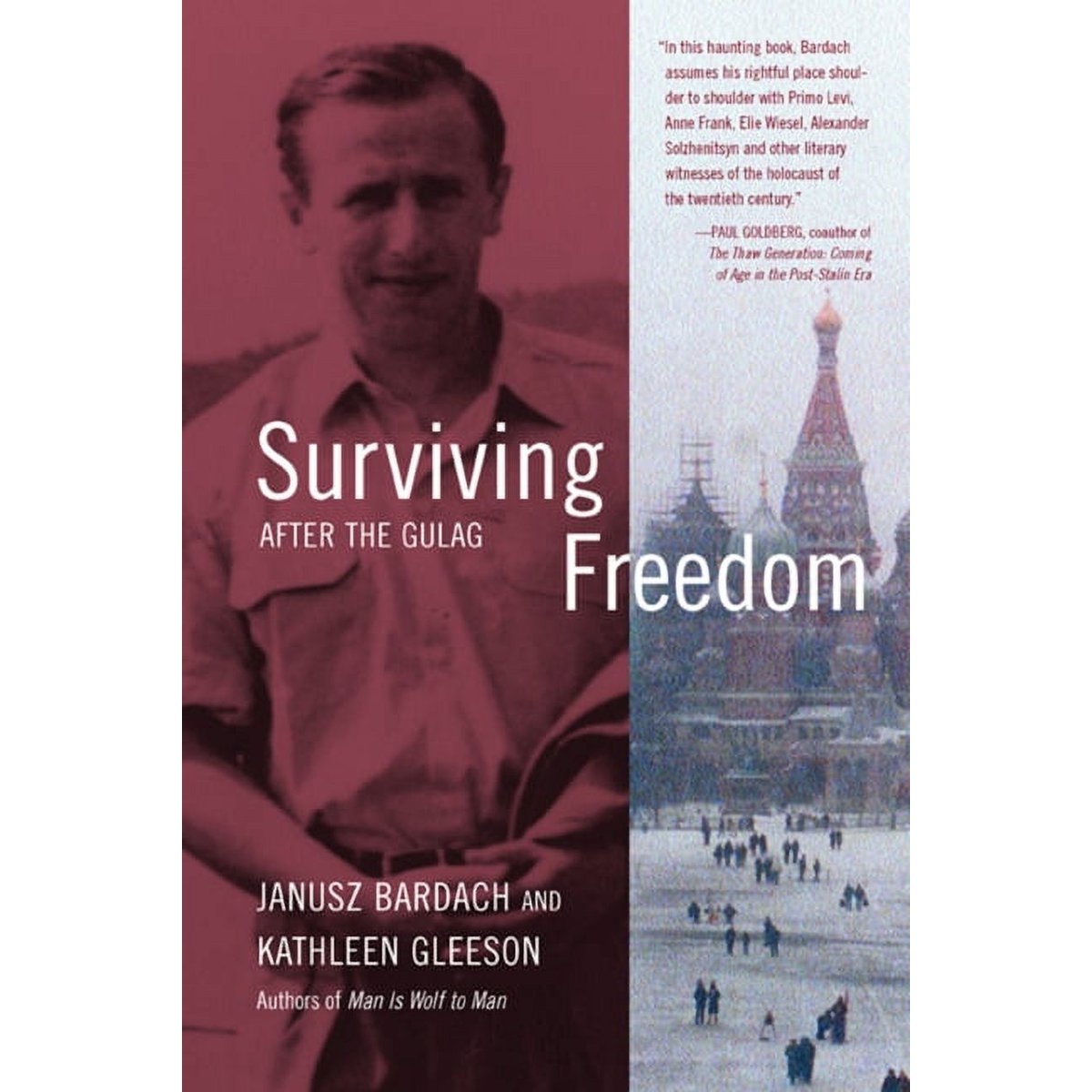
Surviving Freedom: After the Gulag is a memoir by Janusz Bardach and the sequel to Man Is Wolf to Man. In 1941, Bardach was a 22-year-old Red Army soldier on the Belarussian front. He was arrested, court-martialed and sentenced to ten years of hard labor for a crime he did not commit. The first book recounted his time in the Kolyma labor camps in northeastern Siberia.
This book picks up in March 1946, when he is released. It follows his thousand-mile journey from the Siberian gold mines to Moscow in the turmoil after the war. It covers his reunion with his brother, a high-ranking diplomat in the Polish embassy in Moscow, and his experiences as a medical student in the Stalinist Soviet Union.
The account also follows his return to his hometown, where he learns of the deaths of his wife, parents and sister. It explores loss, post-traumatic stress and existential loneliness. It also portrays postwar Stalinist Moscow from the view of someone who was both an insider and an outsider.
- Author
- Janusz Bardach
- Genre
- Memoir
- Series
- Sequel to Man Is Wolf to Man
- Period covered
- From March 1946, after his release from the Kolyma labor camps
- Settings
- Siberia, Moscow and the author's hometown