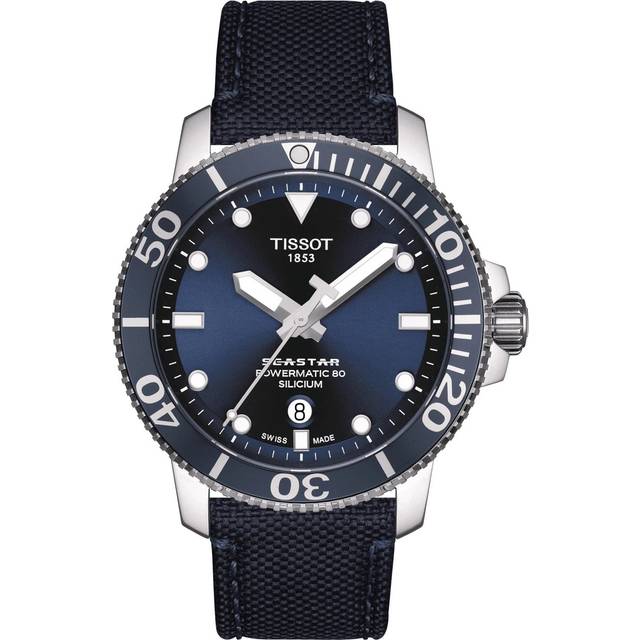
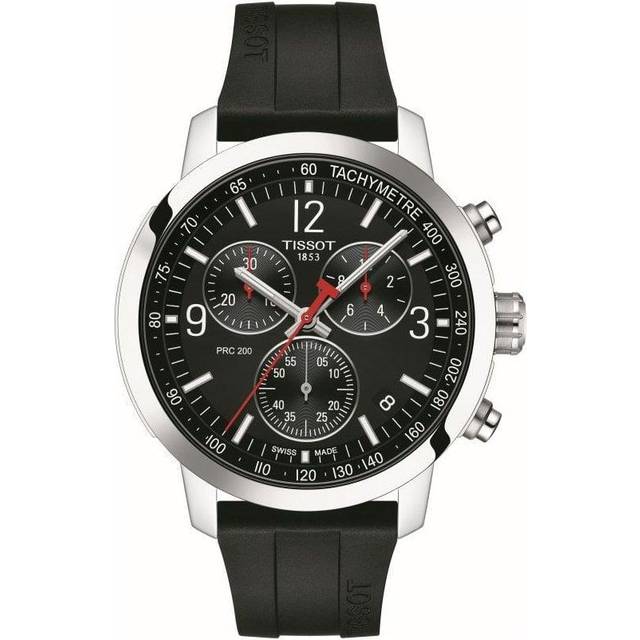
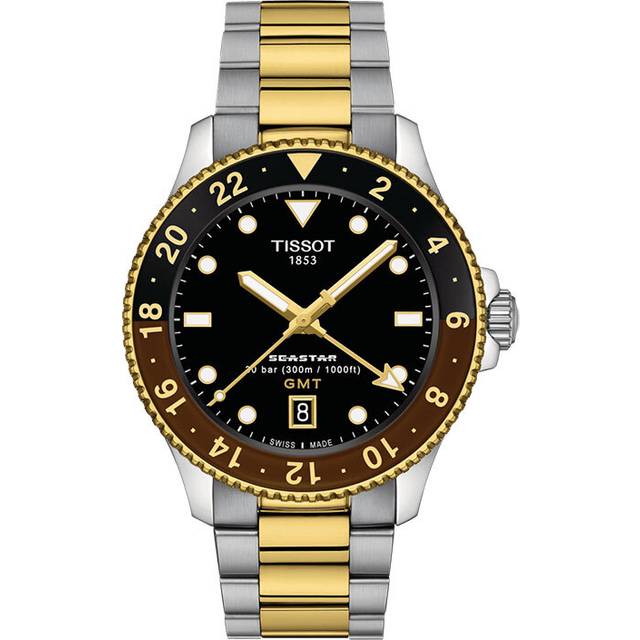
- Is the Tissot Seastar 1000 Quartz good for swimming and diving?
- Yes. It is rated to 300 m with a screw-down crown, which covers swimming, snorkeling and recreational diving. Have the gaskets checked at service intervals to keep the rating valid.
- How does it compare with the automatic Seastar 1000 Powermatic?
- The quartz version is thinner, lighter and more accurate day to day, and it needs only a battery change. The Powermatic 80 automatic costs more, has an 80-hour power reserve and appeals to mechanical-watch fans.
- Does it have sapphire crystal?
- No. It uses mineral glass, which resists knocks but scratches more easily than sapphire. Owners who are hard on watches often factor in a later crystal replacement.
- What is the difference between the steel bracelet and silicone strap versions?
- The watch head is the same; only the strap differs. The steel bracelet suits office and everyday wear, while the silicone strap is lighter and quicker to dry after swimming.
- How often does the battery need changing?
- Quartz batteries typically last two to three years. A jeweler or watchmaker can replace it and re-seal the case to protect the water resistance.
- Is it too big for smaller wrists?
- The case is on the large side for a dive watch, so it wears prominently on slim wrists. Try it on if you can, or check the lug-to-lug measurement against a watch you already own.
- Where is the Tissot Seastar 1000 Quartz Watch cheapest?
- At Belk, for $495.00, as of our latest check.