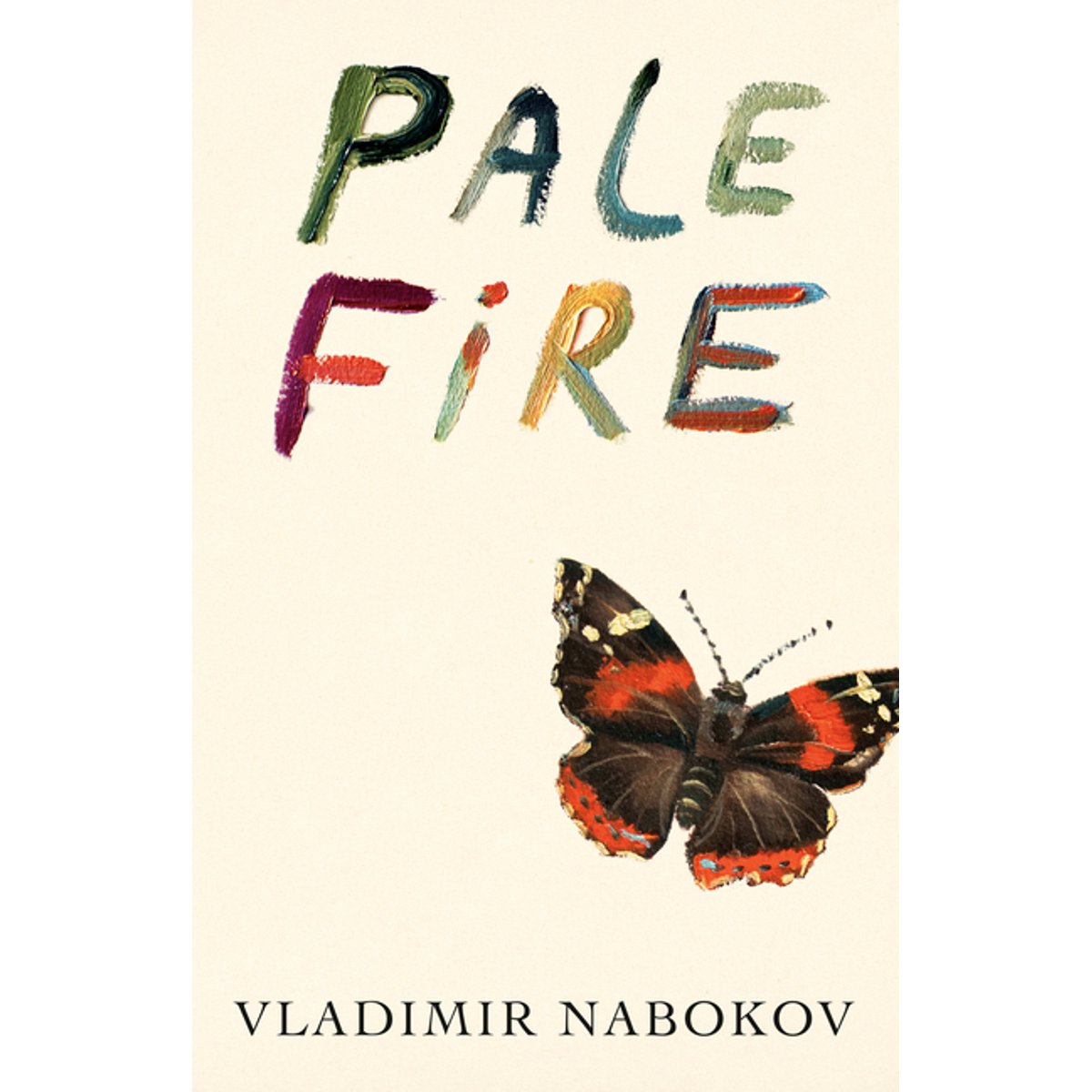

Pale Fire is Nabokov's 1962 novel built as a 999-line poem by fictional poet John Shade, wrapped in a foreword and commentary by the deluded scholar Charles Kinbote. Kinbote's notes drift from literary analysis into a fantastical account of an assassin from Zembla hunting a deposed king. It is a puzzle-box of a book: a parody of detective fiction and academic annotation at once. Readers who like unreliable narrators and formal games rank it with Lolita; those who want a straight story often find the commentary a slog.
In stock
Critics and readers treat Pale Fire as one of Nabokov's major achievements, admired for its construction and its comic scholar-narrator. Many note it demands patience and a second read. Others find the annotation-heavy format slow going.
Pale Fire is a novel by Vladimir Nabokov. It is a darkly comic work of suspense that mixes literary idolatry and one-upmanship with political intrigue, and it is constructed as a parody of detective fiction and of learned commentary.
At the center of the book is a 999-line poem written by the poet John Shade just before his death. Around the poem sit a foreword and a commentary by Charles Kinbote, a demented scholar.
Kinbote's commentary interweaves adoring literary analysis with the fantastical tale of an assassin from the land of Zembla who is in pursuit of a deposed king.
It checks today's price at every store, compares the alternatives and answers in about a minute.