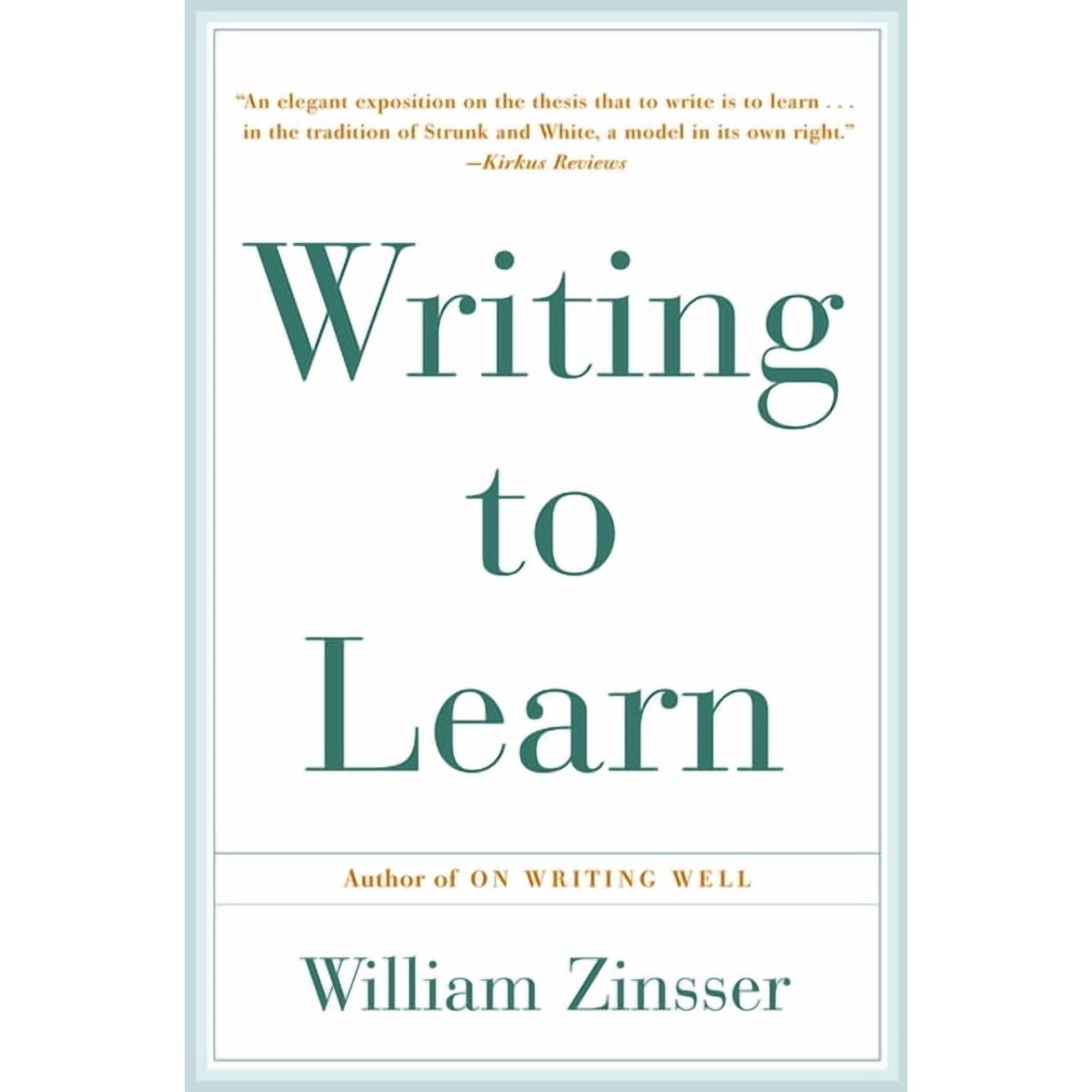
Writing to Learn is a book by William Zinsser about writing clearly on any subject and using writing as a way to learn. Zinsser looks at the writing-to-learn approach. He visits Gustavus Adolphus College in Minnesota to see how professors in chemistry and economics use papers to teach reasoning.
The book covers how instructors outside English departments build regular drafting into coursework, from introductory psychology to instrumental analysis. It includes chapters on accessible prose in geology, mathematics and physics. Zinsser analyzes model passages by Rachel Carson on ocean waters, Albert Einstein on relativity and Primo Levi on the properties of tin.
It also describes practical teaching methods, from five-minute summary papers in psychology to chemistry lab reports judged on clear explanation. Student work from Germantown Friends School shows math journals and letters used to reason through calculus and exponential growth. A nursing case study shows students synthesizing professional journal articles and advocating for health care. The book separates explanatory writing from exploratory drafting and shows how continuous revision strips away jargon, passive verbs and clutter.
- Author
- William Zinsser
- Subjects covered
- Chemistry, economics, psychology, geology, mathematics, physics, nursing
- Model writers
- Rachel Carson, Albert Einstein, Primo Levi