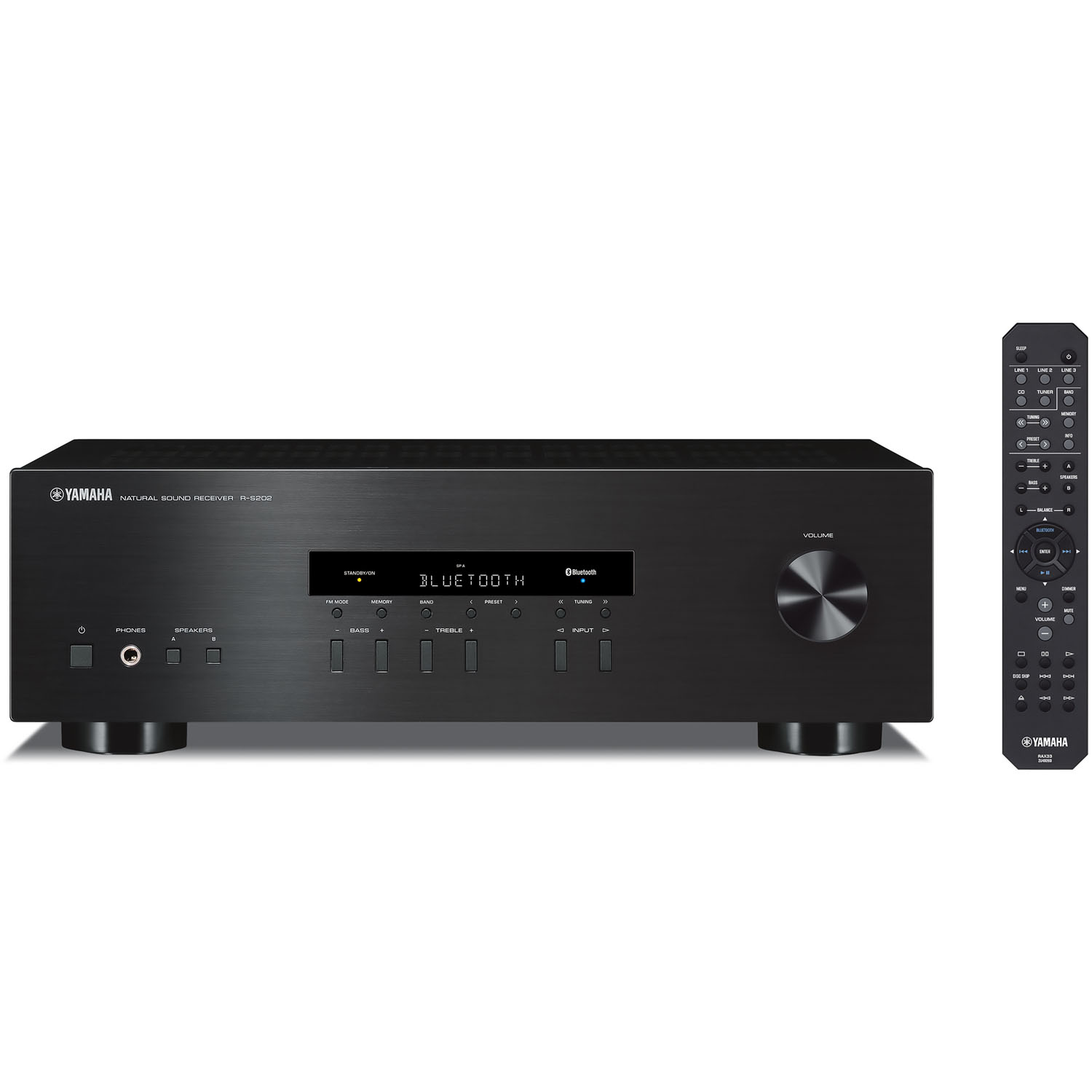
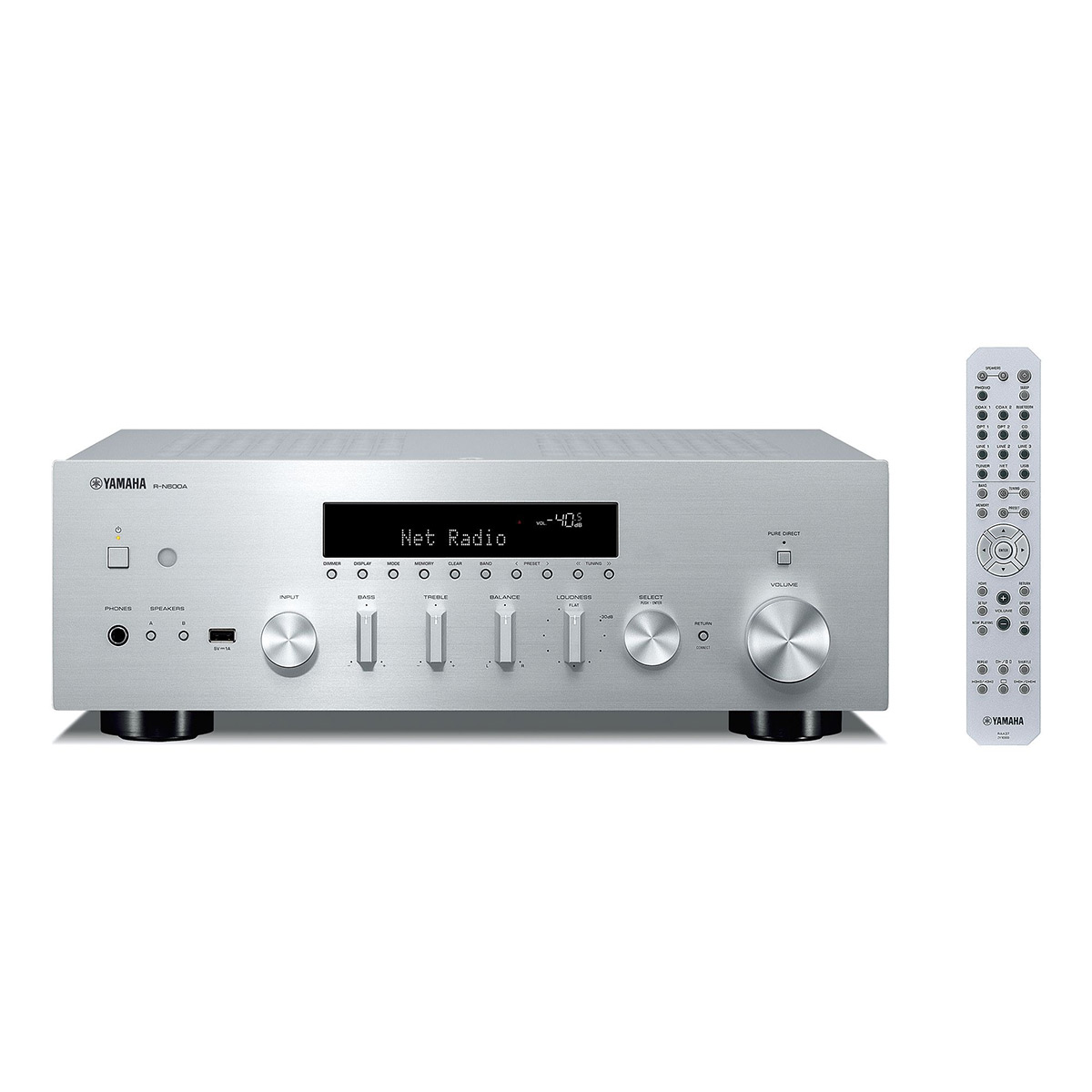
The Yamaha A-S801 is a two-channel integrated amplifier rated at 100W per channel into 8 ohms and 120W into 6 ohms, with 4-ohm capability for harder-to-drive speakers. Its standout feature is a built-in ESS Sabre ES9010K2M DAC fed by USB, optical and coaxial inputs, playing DSD up to 5.6 MHz and PCM up to 32-bit/384 kHz from a computer. It also has two speaker outputs, a subwoofer terminal, gold-plated binding posts and a Pure Direct mode that bypasses tone and balance circuits. It suits listeners building a stereo system around digital files, a TV or a disc player who want DAC and amplification in one box; against rivals it adds a strong DAC and subwoofer output, but it has no streaming, no room correction and no HDMI, and owners note the DAC is the older Sabre chip rather than the newest generation.
In stockReturn policy
Also available at
Owners rate it well as a flexible, powerful stereo amp with a useful built-in DAC. Some say the digital section is showing its age and that it lacks modern streaming features.
The Yamaha A-S801 is an integrated stereo amplifier rated at 100 watts per channel into 8 ohms (20-20,000 Hz, 0.019% THD) and up to 120 watts per channel at 6 ohms. It also works with 4-ohm speakers. It has optical and coaxial digital inputs for devices such as TVs and Blu-ray/DVD players, and a USB input for playing music from a computer.
Its 32-bit ESS SABRE ES9010K2M digital-to-analog converter plays DSD and PCM files. The USB device controller has its own master clock, which eliminates PC jitter. Two pairs of speaker terminals let you power speakers in two rooms and switch between them or play both at once. A subwoofer output adds bass.
The circuit layout follows Yamaha's ToP-ART concept, with symmetrical left and right channels and a straight signal path. The chassis has a double bottom made with a 1 mm iron plate. The power transformer and heat sinks sit on an ART (Anti-Resonance and Tough) base, and a solid center bar adds rigidity. Pure Direct mode sends signals by the shortest route through the circuitry. CD Direct Amplification mode matches input from CD players for a higher signal-to-noise ratio.