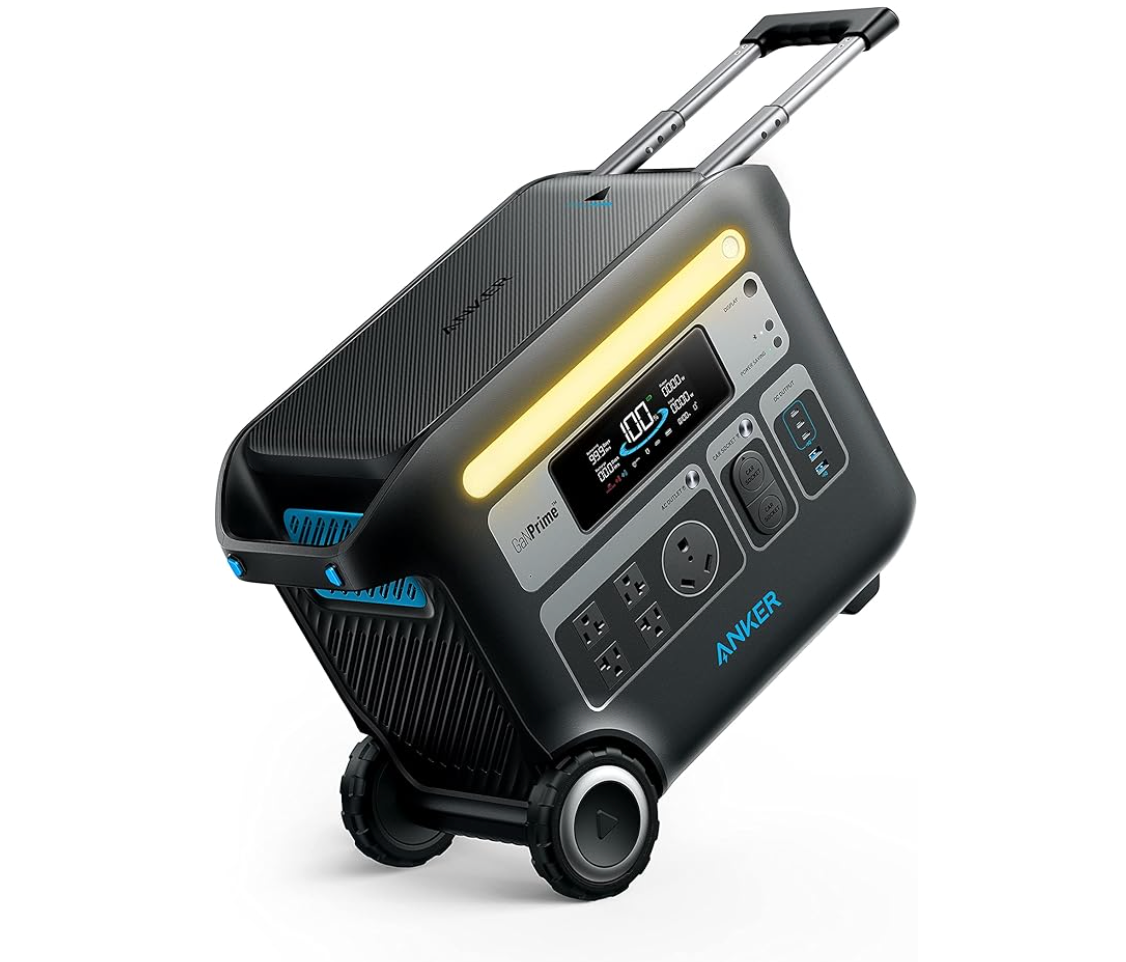
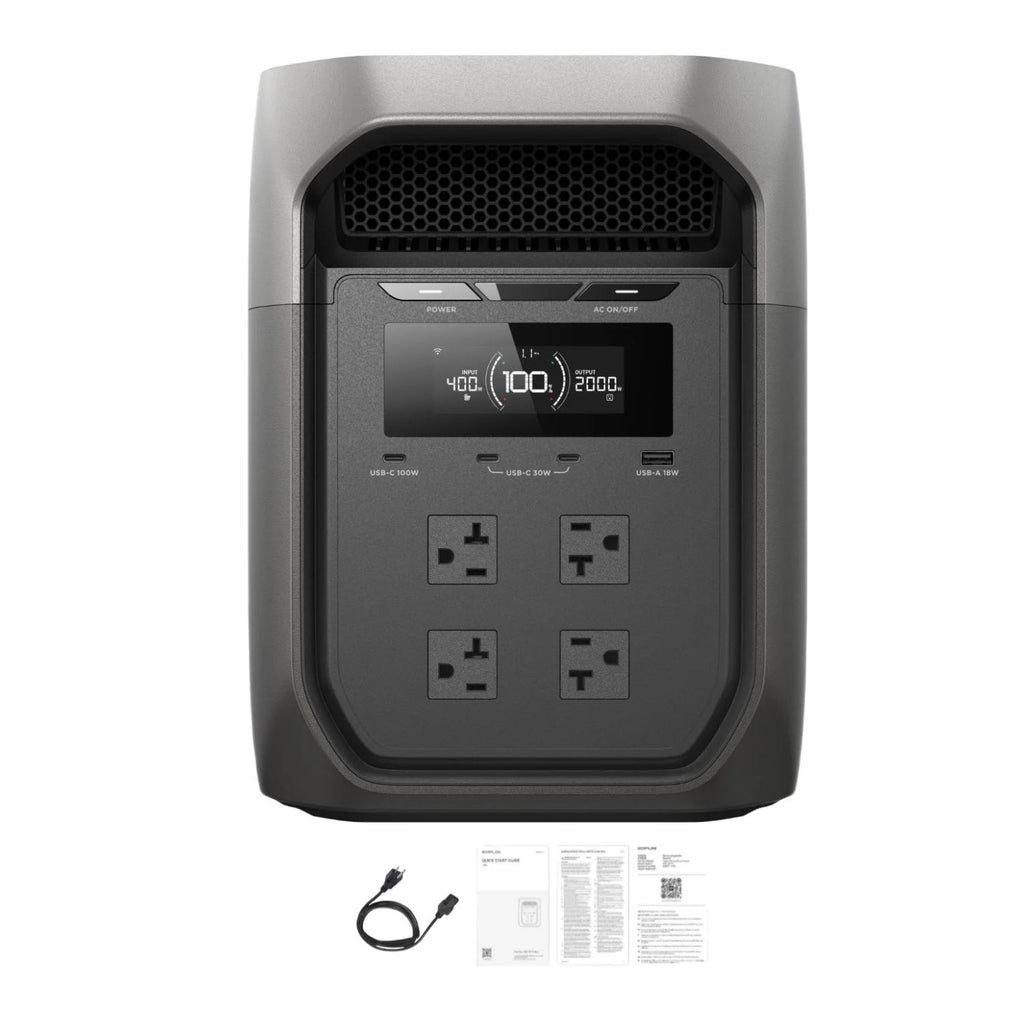
- Which one runs a bigger appliance?
- The EcoFlow Delta 3 Max. Its 2,400 W rated output and 4.8 kW surge are far above the Anker's 1.44 kW rated output, though the Anker's SurgePad covers brief spikes up to 3,600 W.
- Do they hold the same amount of energy?
- Yes. Both are 2,048 Wh, so runtime on the same load is close. The difference is how much power each can deliver at once.
- Which has the better warranty?
- The Anker, with a 5-year full-device warranty. The EcoFlow specs given do not state a warranty term, so check it before buying.
- Can I charge the Anker with solar panels?
- Yes, it is listed as solar-capable and owners report good results with 400 W portable panels. Some owners say rigid panels matching its specs are hard to find.
- Which is better for a power outage at home?
- The EcoFlow for large loads like well pumps or space heaters, thanks to its 2,400 W rated output and 4.8 kW surge. The Anker is fine for a fridge, router, TV and fans, and its warranty is longer.
- How many devices can the Anker run at once?
- Up to 12, across 4 AC ports, 3 USB-C, 2 USB-A, 2 car outlets and an RV port. The EcoFlow has four 120V AC outlets plus USB-C, USB-A and 12V DC outputs.
- What kind of battery does the EcoFlow use?
- A 2,048 Wh LiFePO4 (LFP) battery with automotive-grade full-tab cells and 24/7 BMS protection. The Anker uses its GaNPrime PowerHouse battery with an InfiniPower lifespan claim.
- How can I charge the EcoFlow?
- From a wall outlet, solar panels, a vehicle, a generator or an EcoFlow Alternator Charger. The Anker ships with AC, car and solar charging cables.
- Which one charges faster?
- The EcoFlow. It reaches 80% in 68 minutes on 1,800 W wall or generator charging, while the Anker takes about 1.4 hours to reach 80% on AC.
- Does the EcoFlow keep a NAS or server running through an outage?
- Yes. Its 10 ms auto-switch is designed to keep critical devices like NAS systems and servers running when grid power drops.