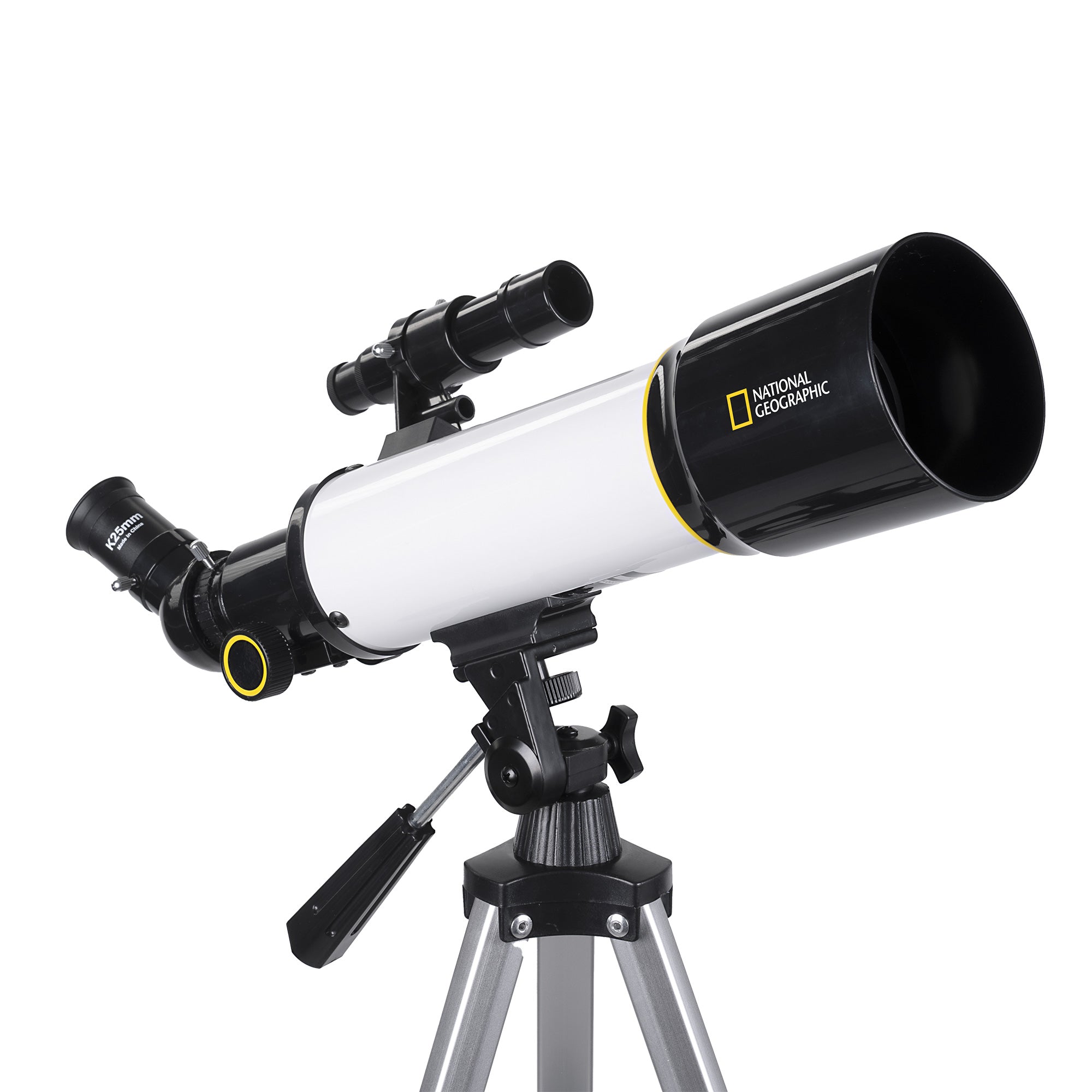
Celestron StarSense Explorer DX 102AZ Refractor Telescope
4.3Best price now
$489.95at Mile High AstronomyObserved at 12:17 PM
Prices are checked against each store and labelled with when.

Prices are checked against each store and labelled with when.
In stockReturn policy
A 4" refractor that uses your phone your phone to find galaxies, nebulae and planets
Why we like the StarSense Explorer DX 102AZ:
Finding things is the easy part: the StarSense app reads the sky through your phone's camera and shows arrows to your target, so beginners spend the night observing instead of searching. No batteries or motors needed.
Nothing to adjust: a refractor's lens stays aligned for life, so there's no collimating and it's ready to use the moment you carry it outside.
Works in daytime too: the included erect-image diagonal shows the view right side up, so it doubles as a spotting scope for birds and mountain views.
Worth knowing: like most refractors in this price range, it shows a faint purple fringe around very bright objects such as Jupiter and Venus. Most beginners never notice it, but if planets are your main interest, compare it with the DX 5" SCT .
The Celestron StarSense Explorer DX 102AZ is a 102mm (4") refractor on a manual alt-azimuth mount with Celestron's StarSense smartphone dock. Clip your phone into the dock, open the free StarSense Explorer app, and it builds a list of what's up tonight and guides you to each object. It's one of the telescopes we recommend most often for families and first-time observers, and the whole kit weighs 14.2lb (6.4kg).
Key specs: 102mm (4") refractor · 660mm focal length, f/6.5 · 25mm (26x) and 10mm (66x) eyepieces · highest useful magnification 240x · StarSense smartphone dock · manual alt-az mount with slow-motion controls · 49" aluminum tripod · 14.2lb total
The StarSense Explorer DX 102AZ is on display in our Denver store, so you can see it in person before you buy.
What you'll see
The Moon: craters, mountain ranges and the long shadows along the terminator.
Planets: Saturn's rings, Jupiter's cloud belts and four largest moons, the phases of Venus, and Mars near opposition.
Star clusters: the Pleiades, the Double Cluster in Perseus and the Hercules Cluster (M13), which this scope's wider field frames nicely.
Nebulae and galaxies: the Orion Nebula from the city, and the Andromeda Galaxy, the Ring Nebula and the Dumbbell Nebula from darker skies.
How it works
Put your phone in the StarSense dock and align the dock to the telescope once, using a bright star or a distant object in daytime. It takes about 2 minutes. After that, the app recognizes star patterns through your phone's camera, works out where the telescope is pointed, and shows arrows that lead you to your target. When the bullseye turns green, it's in the eyepiece. The app also explains what you're seeing.
The mount has slip clutches and slow-motion knobs on both axes, so you can swing it quickly and then make small moves to follow an object as it drifts. The telescope needs no power. Celestron lists the current app as compatible with iPhone XR or newer (iOS 18+) and Android 12 or newer, so check your phone on Celestron's compatibility page before you buy.
Using it in Colorado
City skies: the Moon, planets, bright clusters and the Orion Nebula all look good from a Denver backyard.
Cold nights: your phone battery drains faster in the cold, so keep a USB power bank in your pocket.
Camping trips: at 14.2lb, it rides easily in the car to a dark site, where galaxies and fainter nebulae show up.
What to add for the best results
Celestron X-Cel LX 7mm eyepiece : 94x, a good planet power with comfortable eye relief.
Celestron 2x Omni Barlow : doubles both included eyepieces to 52x and 132x.