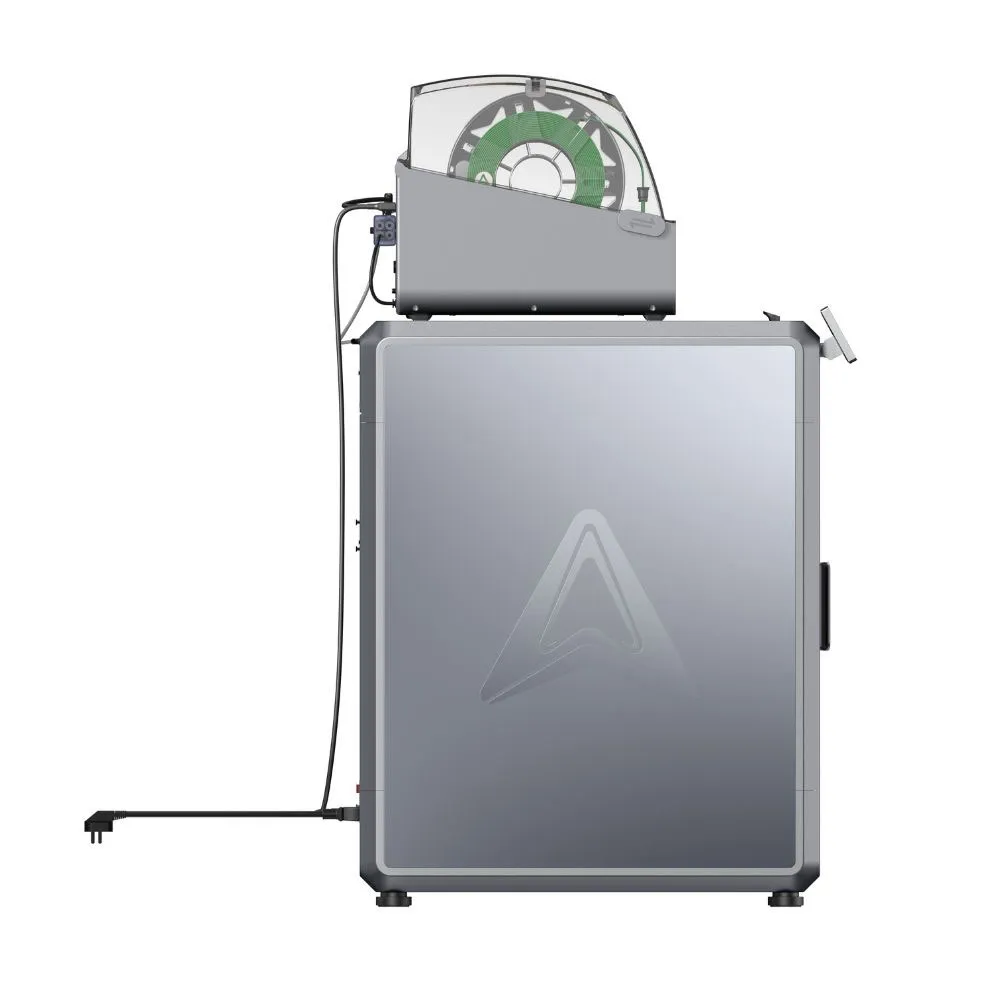
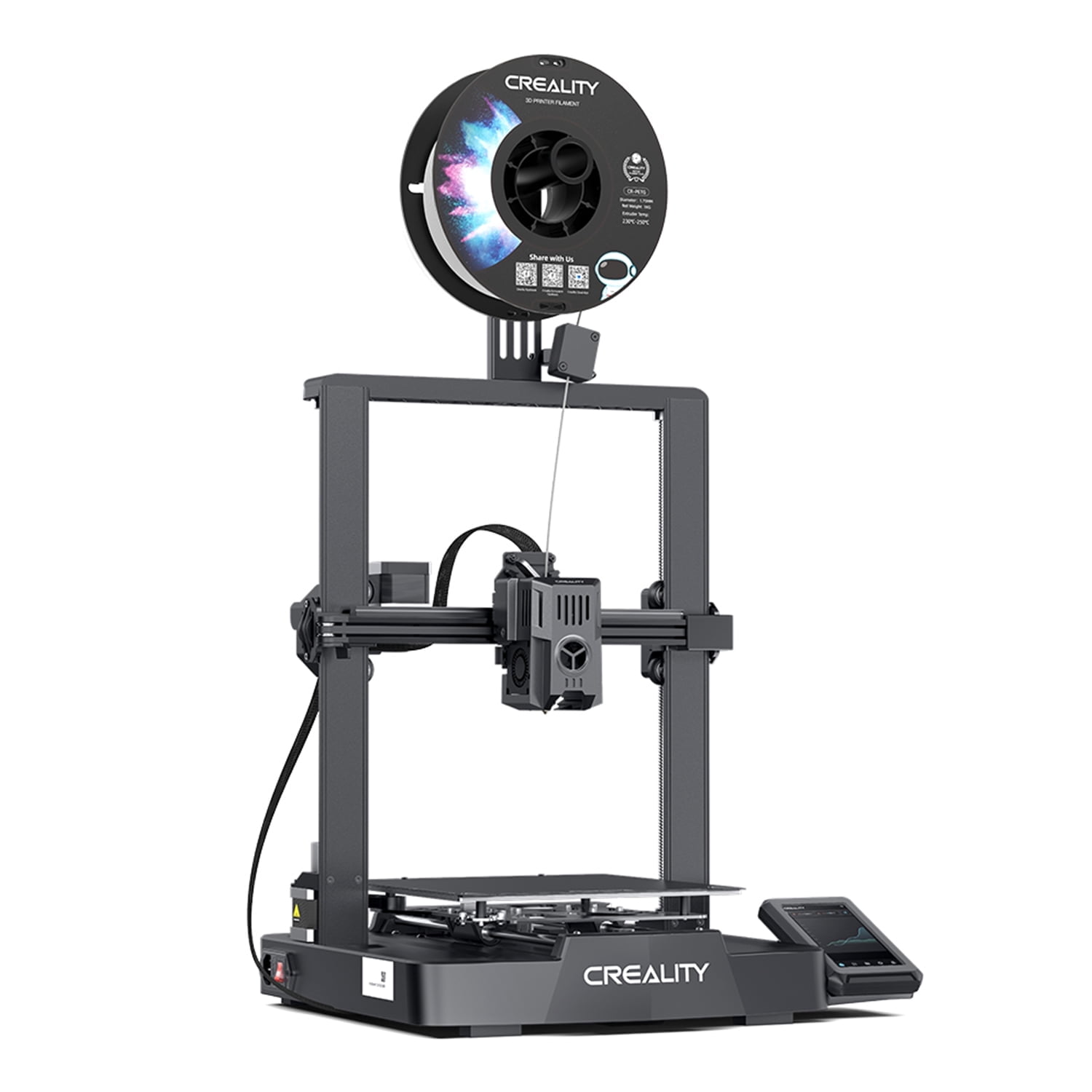
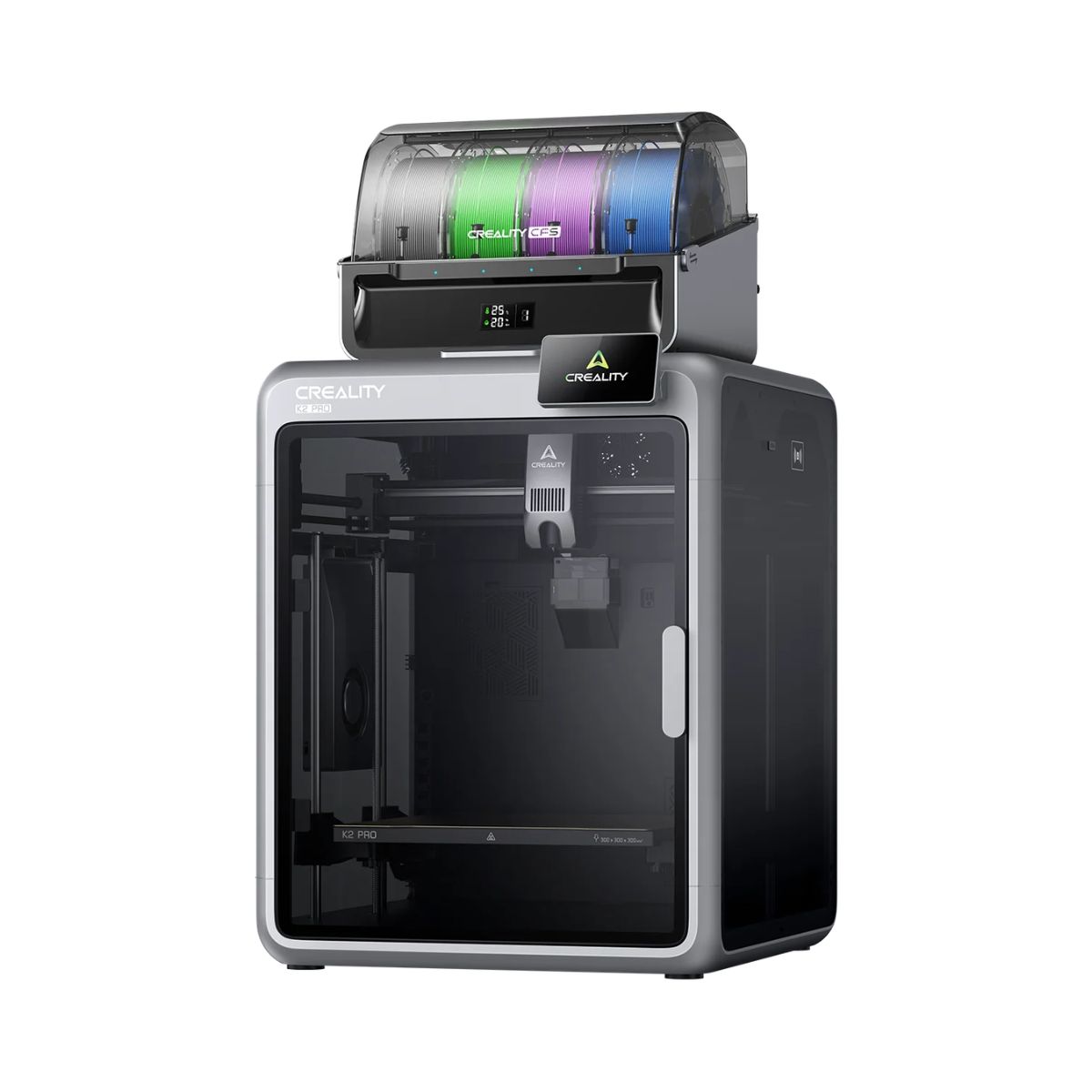
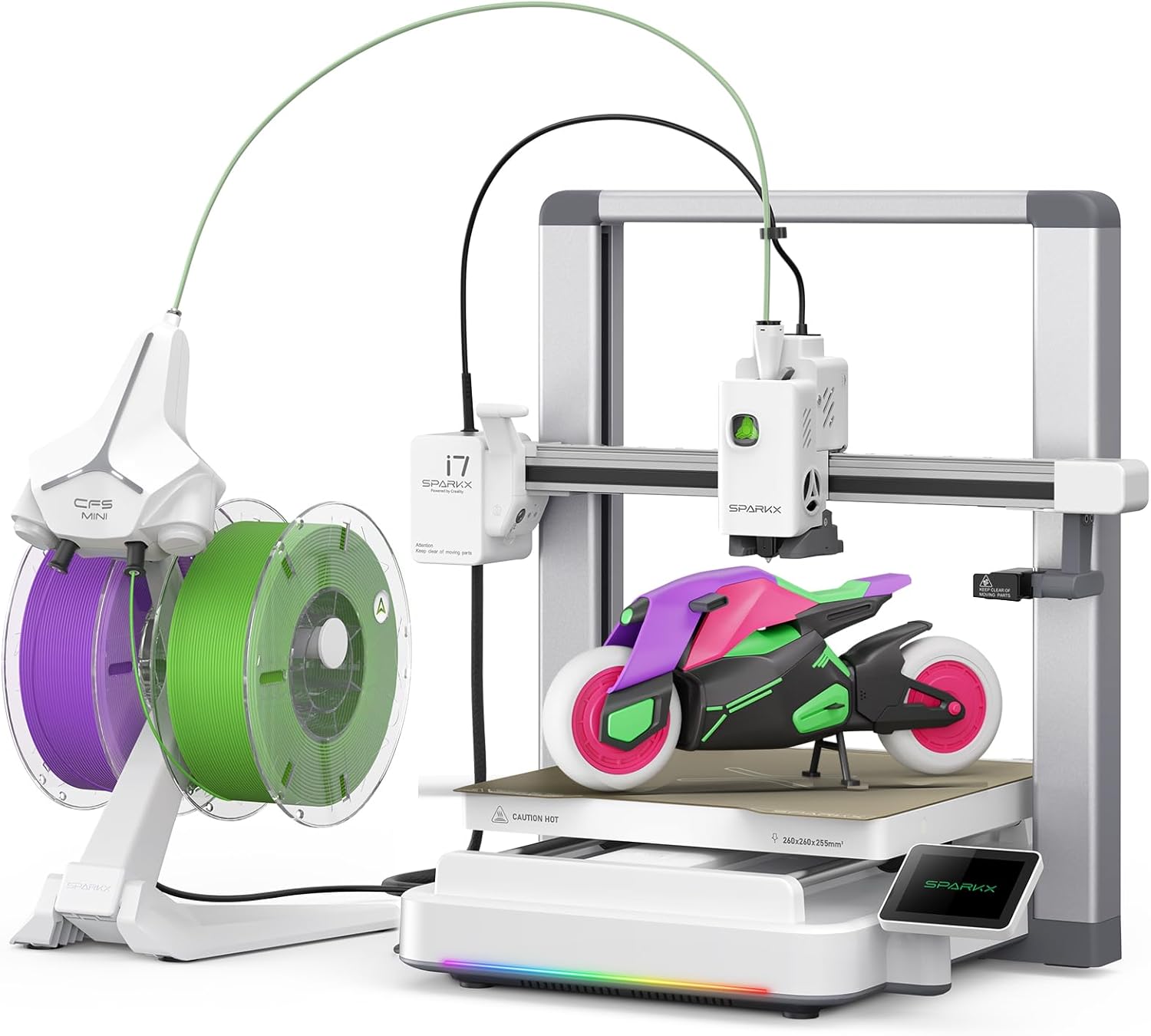
The Creality K1 Max 2025 is a high-speed CoreXY FDM 3D printer. It has a 300 × 300 × 300 mm print volume and prints at up to 600 mm/s. The CoreXY frame and a 190 g print head keep moving mass low, so the printer can accelerate quickly on complex shapes.
The ceramic heater surrounds the whole hotend and reaches 200 °C in 40 seconds. A dual-gear direct extruder delivers 50 N of extrusion force, and maximum flow is 32 mm³/s. The titanium alloy heatbreak and copper alloy nozzle work up to 300 °C, so the printer can handle engineering materials. A large fan on the print head cools the part directly, and an 18 W auxiliary fan in the chamber adds to that cooling for bridges and overhangs.
LiDAR AI checks the first layer and pauses the print if it finds a problem. An AI camera watches for errors, spaghetti failures and foreign objects, and it supports time-lapse. The printer runs Creality OS and connects over Wi-Fi or Ethernet. You can control it remotely with Creality Print or Creality Cloud, and manage several printers at once. The unibody frame is CNC-machined die-cast aluminum alloy, and an improved Z axis is designed to remove Z banding.
- Model
- K1 Max 2025
- Printer type
- FDM, CoreXY
- Build volume
- 300 × 300 × 300 mm
- Max speed
- 600 mm/s
- Max flow
- 32 mm³/s
- Nozzle temperature
- Up to 300 °C
- Hotend
- Ceramic heater, titanium alloy heatbreak, copper alloy nozzle; reaches 200 °C in 40 seconds
- Extruder
- Dual-gear direct drive, 50 N extrusion force
- Print head weight
- 190 g
- Cooling
- Large model-cooling fan on the print head, 18 W auxiliary chamber fan