- What can I run on a modified sine wave inverter?
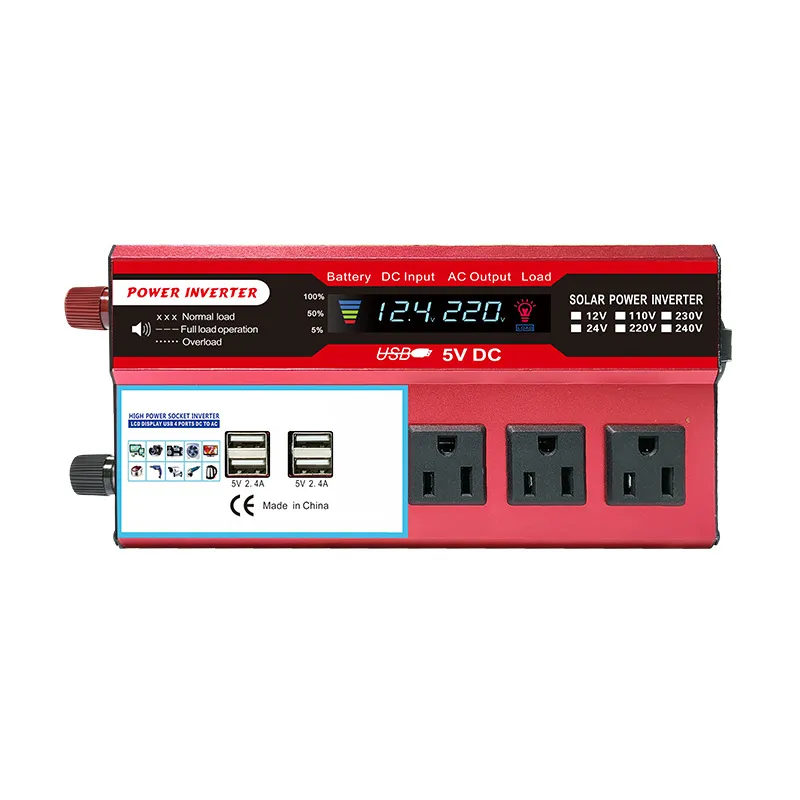
- Simple resistive and switched loads: lamps, phone and laptop chargers, fans, small TVs and basic power tools. Avoid laser printers, medical devices, audio gear and appliances with motors or compressors that expect a pure sine wave.
- Should I pick the 12V or 24V version?
- Match it to your battery bank. A 12V version suits most cars and single-battery RV setups; a 24V version suits two-battery series systems and many solar installations. The output is 110V either way.
- How much power do I need?
- Add up the watts of everything you will run at once and leave headroom, since no surge rating is stated. The 500W suits chargers and small devices, the 1000W mid-size loads, and the 2000W heavier tools and appliances.
- Does it come with cables to the battery?
- The box lists the inverter only, and the adapter line is listed at 50 mm. Plan on your own battery cables sized for the current at 12V or 24V.
- Can I use it at home or with solar panels?
- Yes, it is listed for car, home, solar, photovoltaic and RV use. Connect it to a 12V or 24V battery bank, not directly to panels.
- What do the 100%, 50% and 5% markings mean?
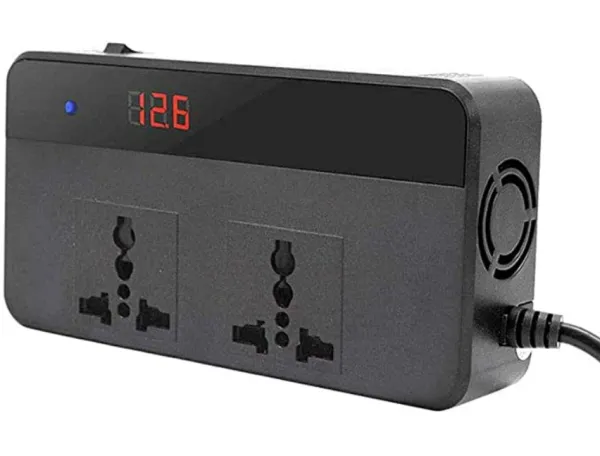
- They are load indicator markings on the front panel showing how much of the inverter's capacity is in use. The digital display shows the operating readout.
- Where is the Modified Wave Vehicle Power Inverter cheapest?
- At Deal.ai, for $72.99, as of our latest check.