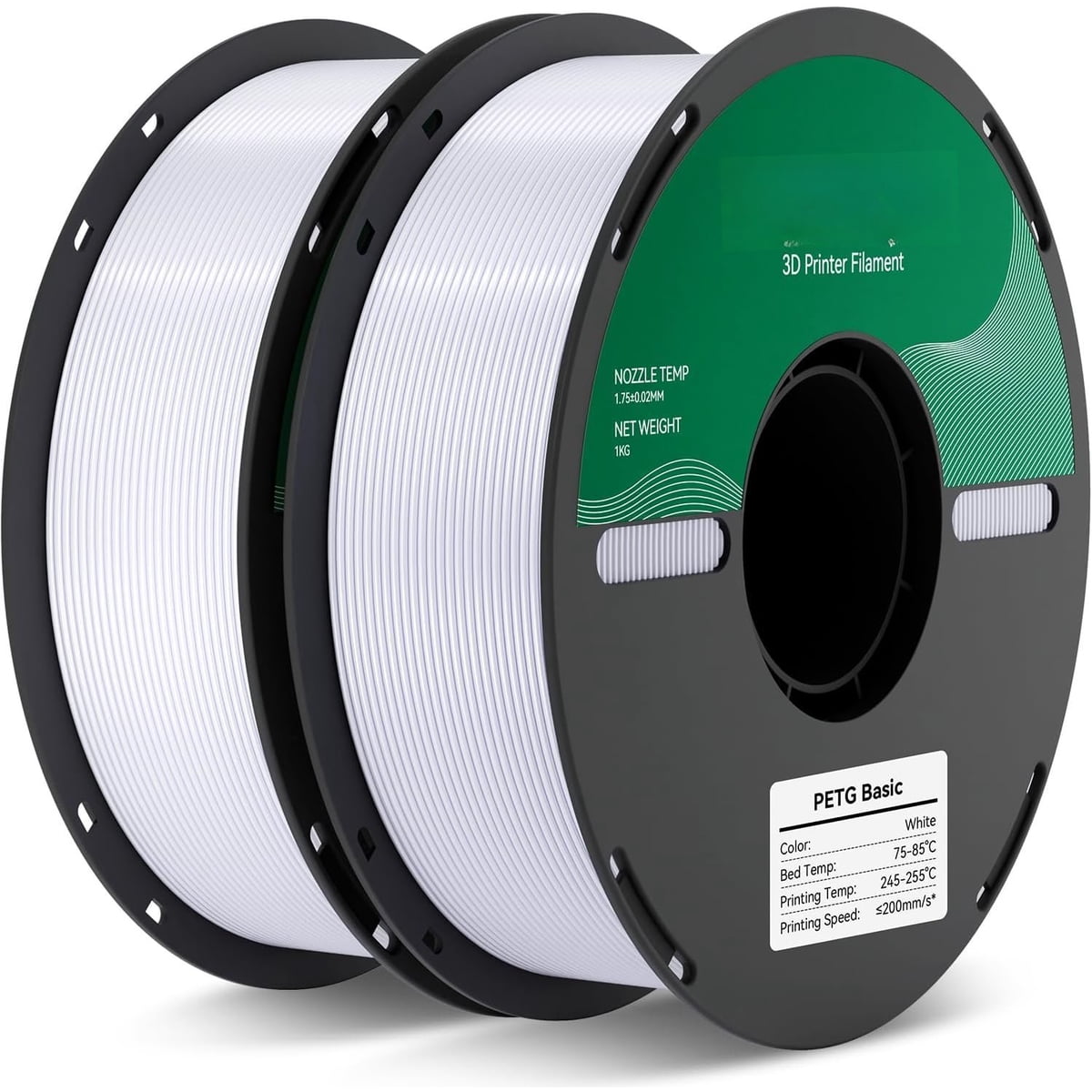
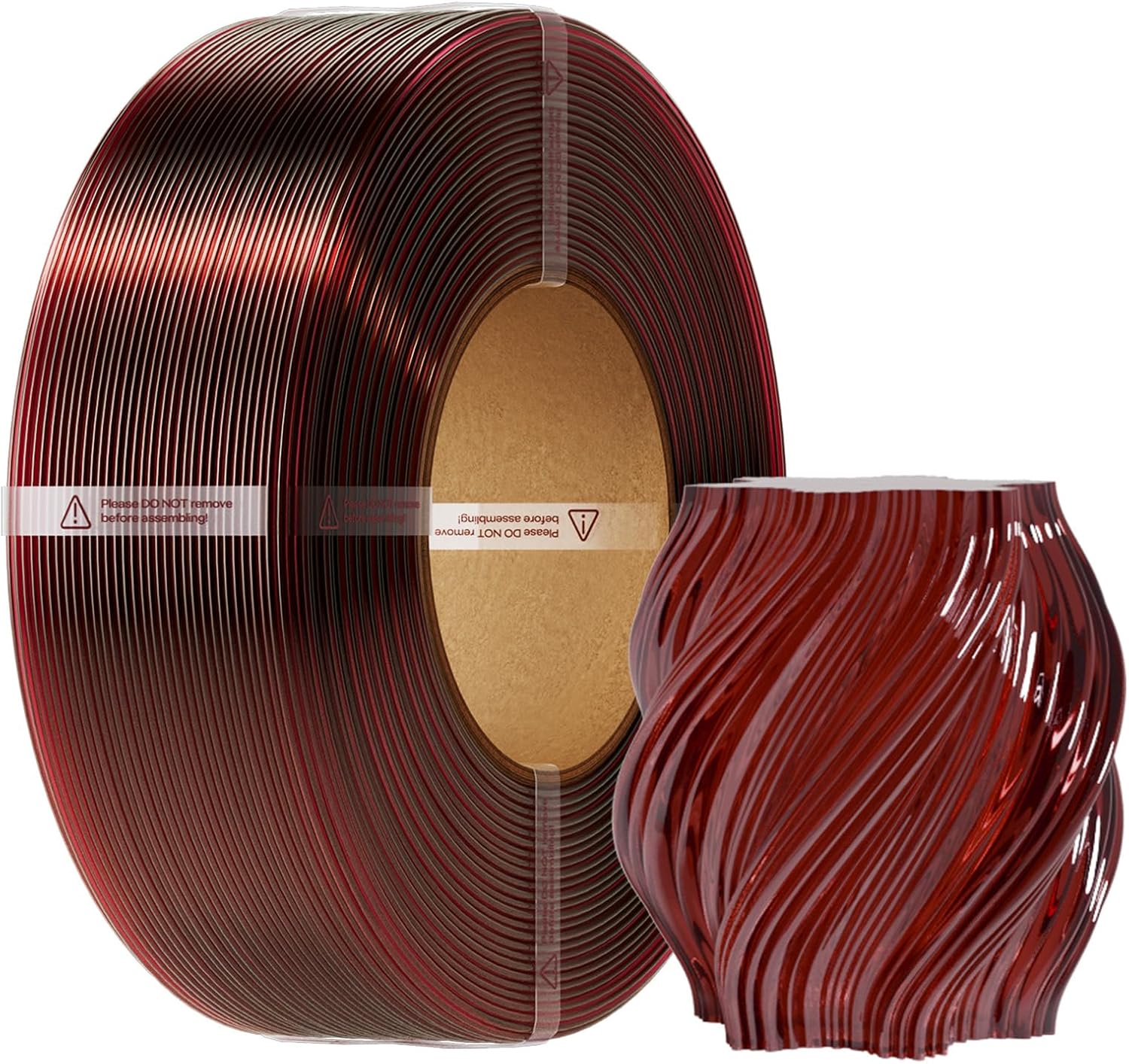
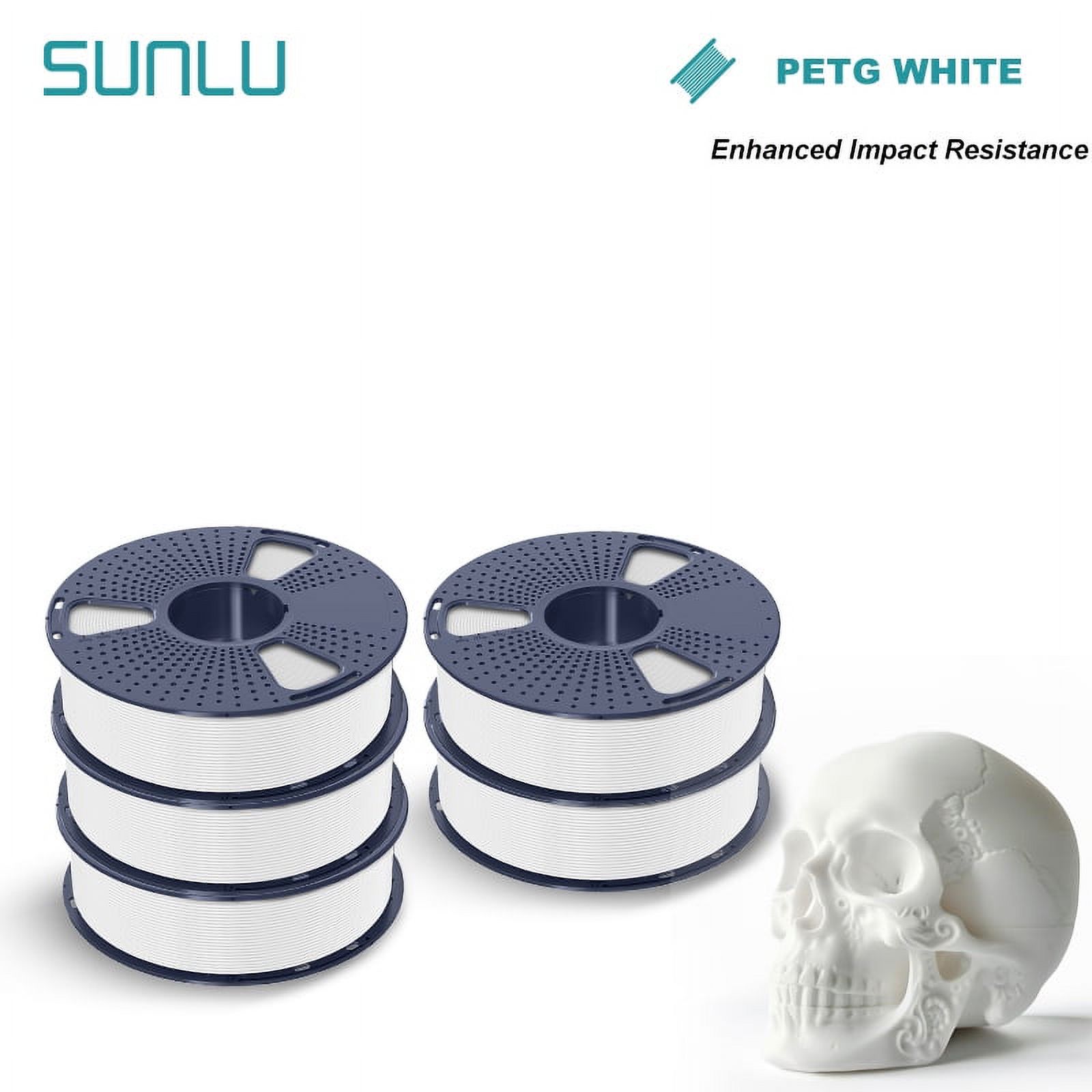
This is PETG printer filament with a 1.75 mm diameter, supplied as two 1 kg spools in white. Each spool ships vacuum-sealed, so an unopened spool can be printed straight from the box. PETG needs no enclosure, is easier to print than ABS, and is nearly odorless compared with ABS.
Print it with a nozzle at 245–255 °C and a bed at 75–85 °C, at 40–80 mm/s for the first layers and up to 120–150 mm/s after that. Low shrinkage and good layer adhesion give clean first layers with minimal warping. A clean PEI or spring-steel sheet works as the bed surface, with lower part cooling for the first 2–3 layers; a squished first layer or a brim stops corner lift, and glue acts as a release layer on smooth PEI. Normal PETG stringing is handled with retraction of about 1–2 mm more than PLA on a Bowden setup, or 0.5–1 mm on direct drive, along with cooler printing and wipe or coasting.
The filament is tougher than PLA and resists temperatures of 75–85 °C, and it is used for brackets, gears and frames indoors and in light outdoor use. It is mildly hygroscopic, so store opened spools in a sealed bag or dry box, and dry damp filament at 60–65 °C for 4–6 hours.
- Material
- PETG
- Diameter
- 1.75 mm
- Spools
- 2 spools, 1 kg each
- Total weight
- 2 kg
- Color
- White
- Nozzle temperature
- 245–255 °C
- Bed temperature
- 75–85 °C
- First-layer speed
- 40–80 mm/s
- Print speed
- Up to 120–150 mm/s
- Heat resistance
- 75–85 °C
- Enclosure
- Not required
- Bed surface
- Clean PEI or spring-steel sheet
- Part cooling
- Lower for the first 2–3 layers
- Retraction, Bowden
- 1–2 mm more than PLA
- Retraction, direct drive
- 0.5–1 mm
- Drying
- 60–65 °C for 4–6 hours
- Storage
- Sealed bag or dry box after opening
- Packaging
- Vacuum-sealed spools