- Is 80mm enough for a beginner?
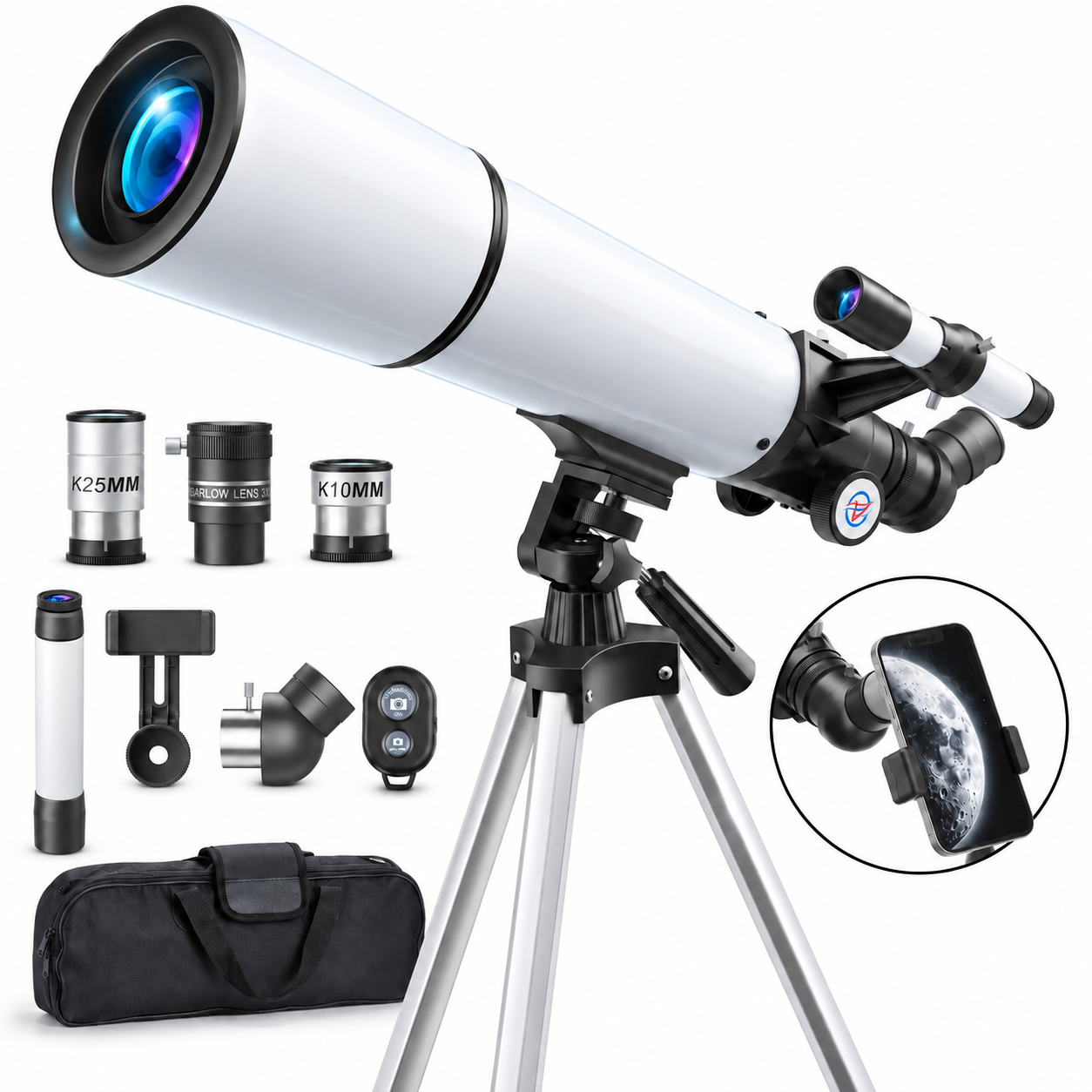
- Yes. 80mm is a solid starter aperture: it shows craters on the Moon, Saturn's rings and Jupiter's moons, plus brighter nebulae and star clusters. It will not show faint galaxies well.
- Can it reach 150x usefully?
- It can reach 150x with the Barlow, but that is near the limit for 80mm. Expect a dim, soft image at the top end; the scope is at its best between 20x and 80x.
- Does it need collimation?
- No. Refractors hold their alignment, so there is nothing to adjust before viewing.
- Can I attach a camera?
- There is no built-in camera and no tracking mount. You can try afocal photography by holding a phone to the eyepiece, but it is not designed for astrophotography.
- What targets suit it best?
- The Moon, Saturn, Jupiter and bright deep-sky objects like the Orion Nebula and Pleiades. It is a lunar and planetary scope first.
- Is it good for kids?
- Yes, with an adult to set it up and aim it. The light tripod is easy to knock, so supervise younger children.
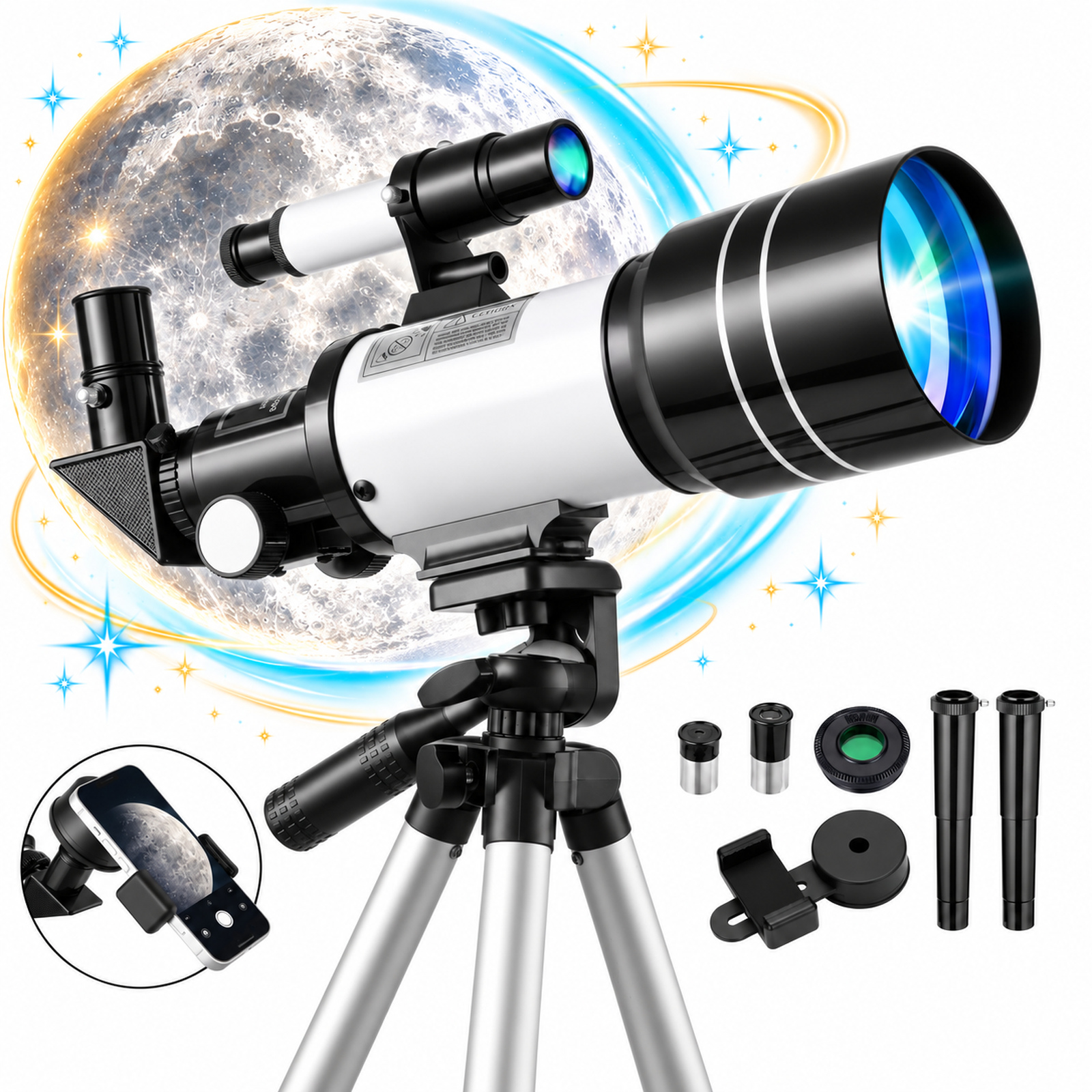
- Where is the Sugift 80mm Aperture 500mm Refractor Telescope 20x to 150x Portable Astronomical Telescope cheapest?
- At Amazon, for $69.99, 39% under what the other stores charge, as of our latest check.
- Where can I buy the Sugift 80mm Aperture 500mm Refractor Telescope 20x to 150x Portable Astronomical Telescope?
- 4 stores we checked sell it, including Lowe's, Best Buy, Target, Amazon.