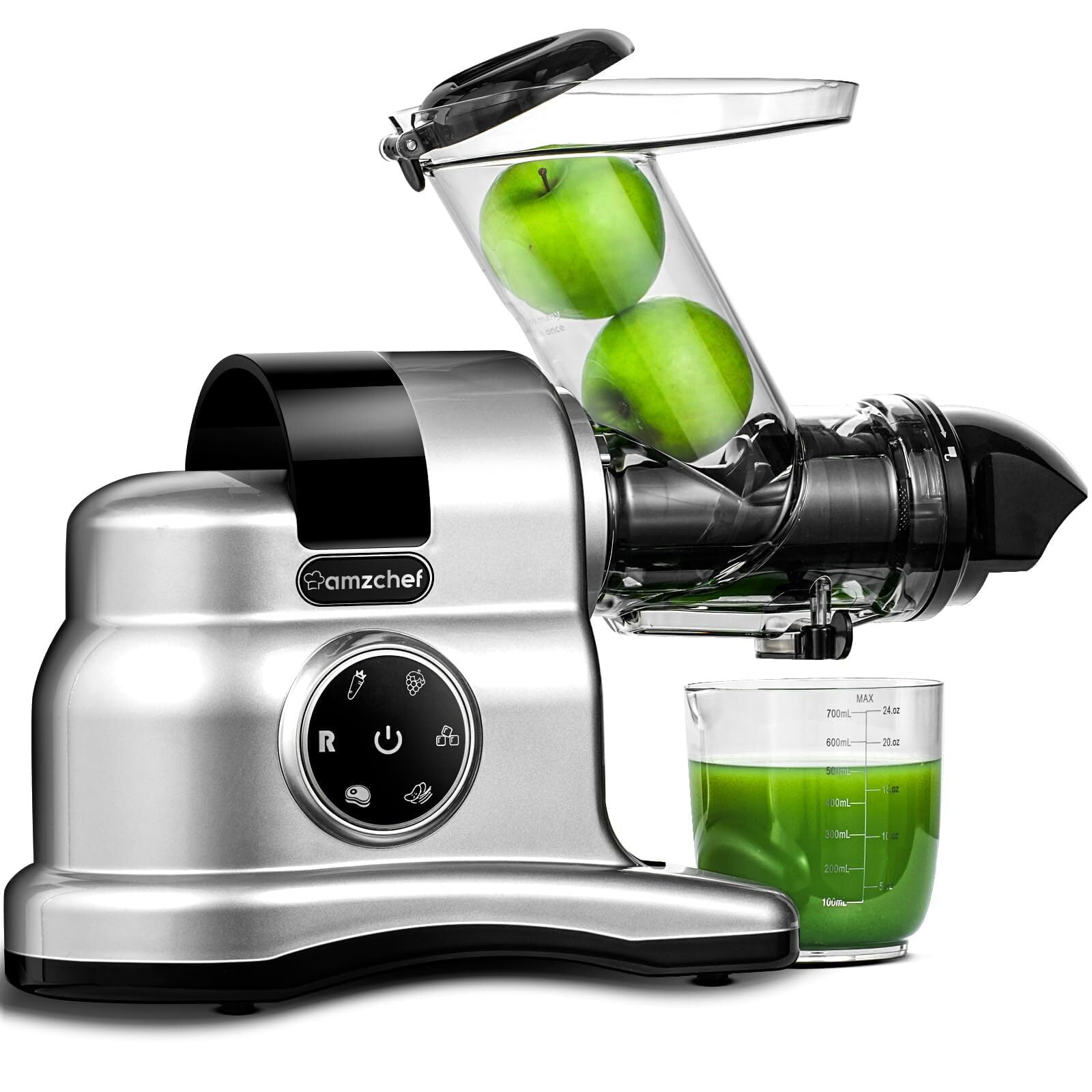
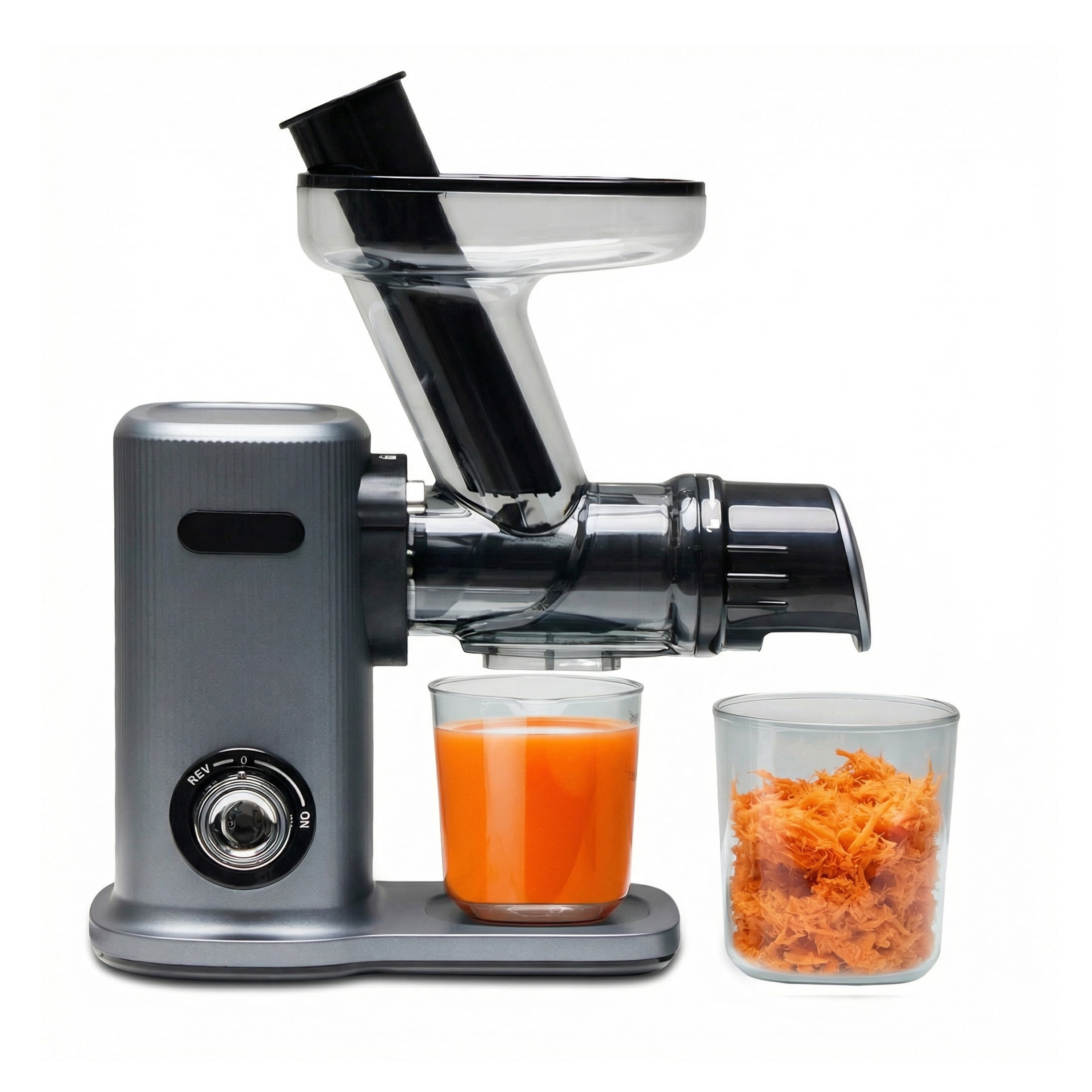
- How is a slow masticating juicer different from a centrifugal one?
- It crushes and presses produce at low speed instead of shredding it against a fast spinning basket. That produces less heat and foam and usually more juice from greens and hard vegetables.
- Can it juice wheatgrass and leafy greens?
- Yes. The slow auger is built for exactly that, and greens are where it beats a centrifugal juicer most clearly. Feed them in small bunches with harder produce to keep the flow steady.
- What do the two speeds do?
- The slower setting suits soft fruits and leafy greens, the faster one hard items like carrots and beets. Start slow and switch up only when the produce is dense.
- Does it need the produce chopped first?
- The feed opening is not wide, so large items should be cut to fit. Smaller pieces also reduce strain on the 180W motor.
- Is it hard to clean?
- Masticating juicers have more parts than centrifugal models, so expect to rinse the auger, screen and pulp container after each use. Rinsing right away keeps fibrous pulp from drying on the screen.
- Who is it not for?
- Anyone juicing large volumes daily or mostly soft fruit may want more power and a wider feed chute. This is a compact, modest-motor machine for regular home batches.
- Where is the Whall ZM1913M Slow Masticating Juicer cheapest?
- At Lowe's, for $89.99, as of our latest check.