DealsBuying guidesBrandsStoresTermsPrivacydeal.ai apps

© Deal.ai Inc.

Deal.ai
S
Sidara Nano 114

Sidara Nano 114

Best price now

$199.99at B&H Photo-Video AudioObserved at 12:34 PM

Compared across 2 stores. Prices are checked against each store and labelled with when.

Ask our shopping agent

Enter to send, Shift+Enter for a new line

Sidara Nano 114 prices at every store

  • B&H Photo-Video AudioNew

    Availability unknown

    $199.99Observed at 12:34 PM
    Visit store
  • Ontario Telescope and AccessoriesNew

    Availability unknown

    $202.00Observed at 12:34 PM
    Visit store

Sidara Nano 114 price history

Lowest price we've seen: $199.99 on Nov 3 at B&H Photo-Video Audio. Tracked across 2 stores since Nov 3.

From Ontario Telescope and Accessories

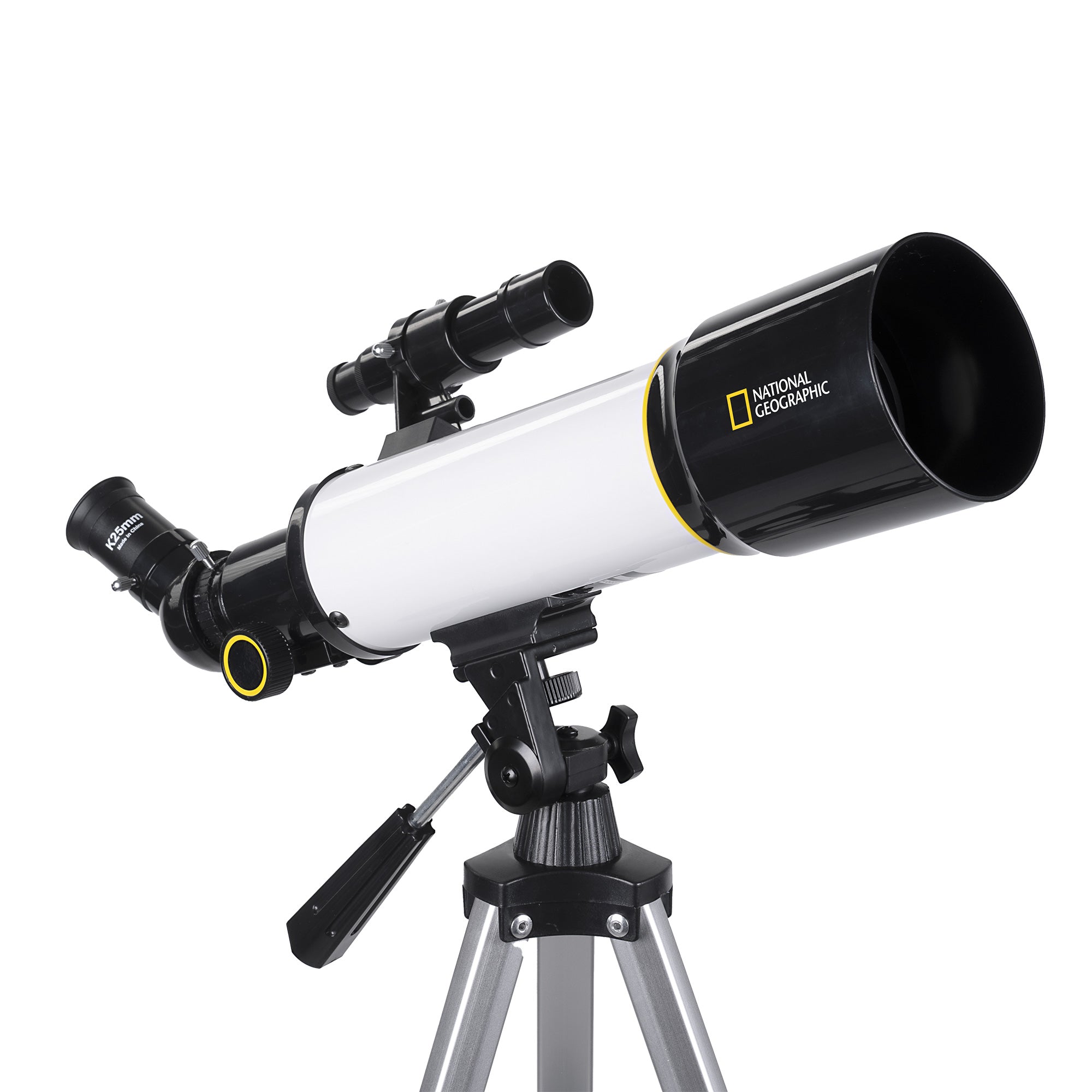
  • 114mm Newtonian reflector on a lightweight Nano alt-azimuth mount
  • Short focal length keeps the field of view wide and finding objects straightforward
  • SkyAssist integrated navigation technology to simplify locating objects
  • Mirror optics with no chromatic aberration
  • Complete package: telescope, Nano mount, tripod, eyepieces and accessories
  • Alt-azimuth motion (up-down, left-right) with no polar alignment needed
Shipping
Stock: On Backorder — ships when available
In the box
Telescope, Nano alt-azimuth mount, Tripod, Eyepieces, Accessories

About the Sidara Nano 114

Product Overview

The Explore Scientific Sidara Nano 114 is a complete telescope package built around a 114mm Newtonian reflector on a lightweight Nano alt-azimuth mount. Explore Scientific describes it as a short focal length instrument, chosen so the field of view stays wide and finding objects stays straightforward, and the package is supplied with the telescope, the Nano mount, a tripod, eyepieces and accessories.

The other element Explore Scientific highlights is SkyAssist, an integrated navigation technology intended to simplify locating objects. They describe the function rather than the mechanism, so the operational detail is not something we will invent here — we can put the specific question to our Explore Scientific rep if it is the deciding factor for you.

What 114mm of aperture means in practice is fixed by physics rather than by marketing: an area roughly 265 times that of a fully dark-adapted 7mm eye pupil. That is enough for the Galilean moons, the phases of Venus, the cratered lunar terminator in detail, the brighter Messier clusters and the larger nebulae.

Who It's For

Observers who want aperture without bulk: a 114mm mirror gathers substantially more light than a small refractor, and the Nano mount is built around keeping the whole package light enough to carry out in one trip.

Casual and spontaneous observers: this is a good match if you want something that goes from the cupboard to the driveway in a couple of minutes rather than something that needs a setup ritual.

Observers who prefer alt-azimuth motion: up-down and left-right is how the sky looks from where you are standing, without the equatorial step of polar alignment.

Anyone who wants navigation help: this is a good match if star-hopping from printed charts is not how you want to spend your first hour under the sky.

Questions and answers

Where is the Sidara Nano 114 cheapest?
At B&H Photo-Video Audio, for $199.99, as of our latest check.
Where can I buy the Sidara Nano 114?
2 stores we checked sell it, including B&H Photo-Video Audio, Ontario Telescope and Accessories.

Shoppers also compared

  • G
    Gskyer 70 Explore
    Gskyer 70 Explore
  • S
    SKY VIEW 70 70mm Refractor Telescope with Panhandle Mount
    SKY VIEW 70 70mm Refractor Telescope with Panhandle Mount
  • G
    Gskyer 90 Explore
    Gskyer 90 Explore
  • N
    NexStar 130 SLT Computerized Telescope
    NexStar 130 SLT Computerized Telescope
  • C
    Celestron StarSense Explorer DX 130AZ Reflector Telescope
    Celestron StarSense Explorer DX 130AZ Reflector Telescope
  • C
    Celestron PowerSeeker 127EQ Newtonian
    Celestron PowerSeeker 127EQ Newtonian

Wide-field observers: a short focal ratio keeps large clusters and nebulae inside a single field rather than filling it with a fraction of the object.

Key Features & Design

114mm Newtonian reflector: mirror optics, which means no chromatic aberration of any kind — a mirror reflects every wavelength to the same focus.

Short focal length: specified by Explore Scientific as the basis for the wide viewing angles that make locating objects easier.

Nano alt-azimuth mount: two-axis motion in the directions the eye expects, on a mount designed around portability.

SkyAssist navigation technology, integrated into the package as Explore Scientific's answer to finding targets.

Complete package: telescope, Nano mount, tripod, eyepieces and accessories are all part of the published contents.

Optical Design

A Newtonian reflector collects light on a concave primary mirror at the base of the tube and returns it up to a flat secondary mirror set at 45 degrees, which turns the cone of light out through the side of the tube into the focuser. The eyepiece sits near the front of the tube rather than at the back, which is why a Newtonian on an alt-azimuth mount is comfortable to use standing up.

The trade-offs are equally structural. The secondary mirror and its support sit in the light path, which produces the four-point diffraction spikes visible around bright stars. The two mirrors also need to stay aligned with each other, and that alignment — collimation — drifts slowly with transport and handling. It is adjusted with a collimation cap or a laser collimator in a few minutes, and it is a routine maintenance step on any Newtonian rather than a fault. We stock collimation tools and can include one.

Explore Scientific does not publish a focal length, focal ratio, eyepiece specification or weight for this model, so those figures are absent from the specifications below rather than estimated from the model designation. If any of them decides the purchase for you, ask and we will get them confirmed before you order.

Recommended Uses

Lunar observing, where 114mm resolves crater chains, rilles and terracing along the terminator.

Planetary viewing — the Galilean moons, Saturn's rings, Venus through its phases and Mars near opposition.

Bright deep-sky objects: the Orion Nebula, the Pleiades, the Andromeda Galaxy, the brighter globulars.

Specifications

Type
Reflector
Mount Type
Altazimuth Mount
Focal Ratio
f/4.4
Aperture
114 mm
C
Celestron National Park Foundation FirstScope
  • C
    Celestron NexStar 6SE Computerized Telescope
    Celestron NexStar 6SE Computerized Telescope